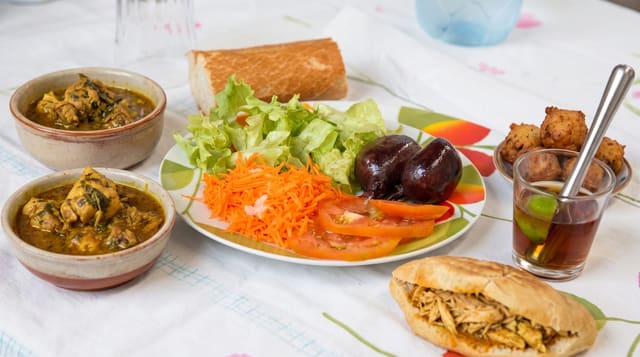
Attiéké
Fermented grated cassava steamed into fine pale grains, the everyday starch of southern Côte d'Ivoire.
Updated 2 September 2026
UNESCO Intangible Cultural Heritage
Attiéké is made by peeling and grating cassava, mixing it with a portion of previously fermented root as a starter, pressing out the liquid, breaking the pressed cake into grains and steaming them. The result is pale, slightly sour and about the size of couscous, and it is what most of southern Côte d'Ivoire eats with grilled fish or chicken. The skills are held largely by women in the lagoon villages, and UNESCO inscribed them on the Representative List in 2024.
What to look for
- The production - grating, fermenting, pressing and steaming, done by hand in the villages.
- The sour note - the fermentation that distinguishes attieke from plain cassava.
- The garba - attieke with fried tuna, the standard cheap street plate.
- The maquis meal - attieke with grilled fish, the everyday restaurant order.
When to go
Year round; it is sold everywhere every day. Lunchtime and the evening are when the maquis are busiest. Production villages around Abidjan work in the mornings.
Before you go
Quality varies enormously and cheap attieke can be coarse or over-sour. Industrially made versions have spread and are not the same thing. Cassava must be processed properly to be safe, which is what the fermentation is partly for.
Nearby
Abidjan's maquis are the easiest place to eat it, and the lagoon villages are where it is made.
What to pack for Attiéké
Chosen from what this place is for. Tap a kit for the full checklist.
- Reef-safe sunscreen - High SPF that will not bleach the coral you are swimming over. Find on Amazon
- A reusable bag or container - For market produce and cutting down on packaging. Find on Amazon
- Quick-dry towel - A microfibre towel packs small and dries in minutes. Find on Amazon
- Wet wipes + hand sanitiser - Street food and washbasins do not always go together. Find on Amazon
Some links on this page are Amazon affiliate links - if you buy through them we may earn a small commission at no extra cost to you.
All packing kitsPlan your trip
Where to start if Attiéké is going on the list.
Booking links on this page are affiliate links - if you book through them we may earn a small commission at no extra cost to you. It never changes what we write about a place.
Opening times, ticket prices and seasonal closures change - check the official source before you go: official site.