Turin
The first capital of united Italy, laid out on a Roman grid with baroque arcades, a spiral museum inside a failed synagogue dome.
Updated 18 October 2026
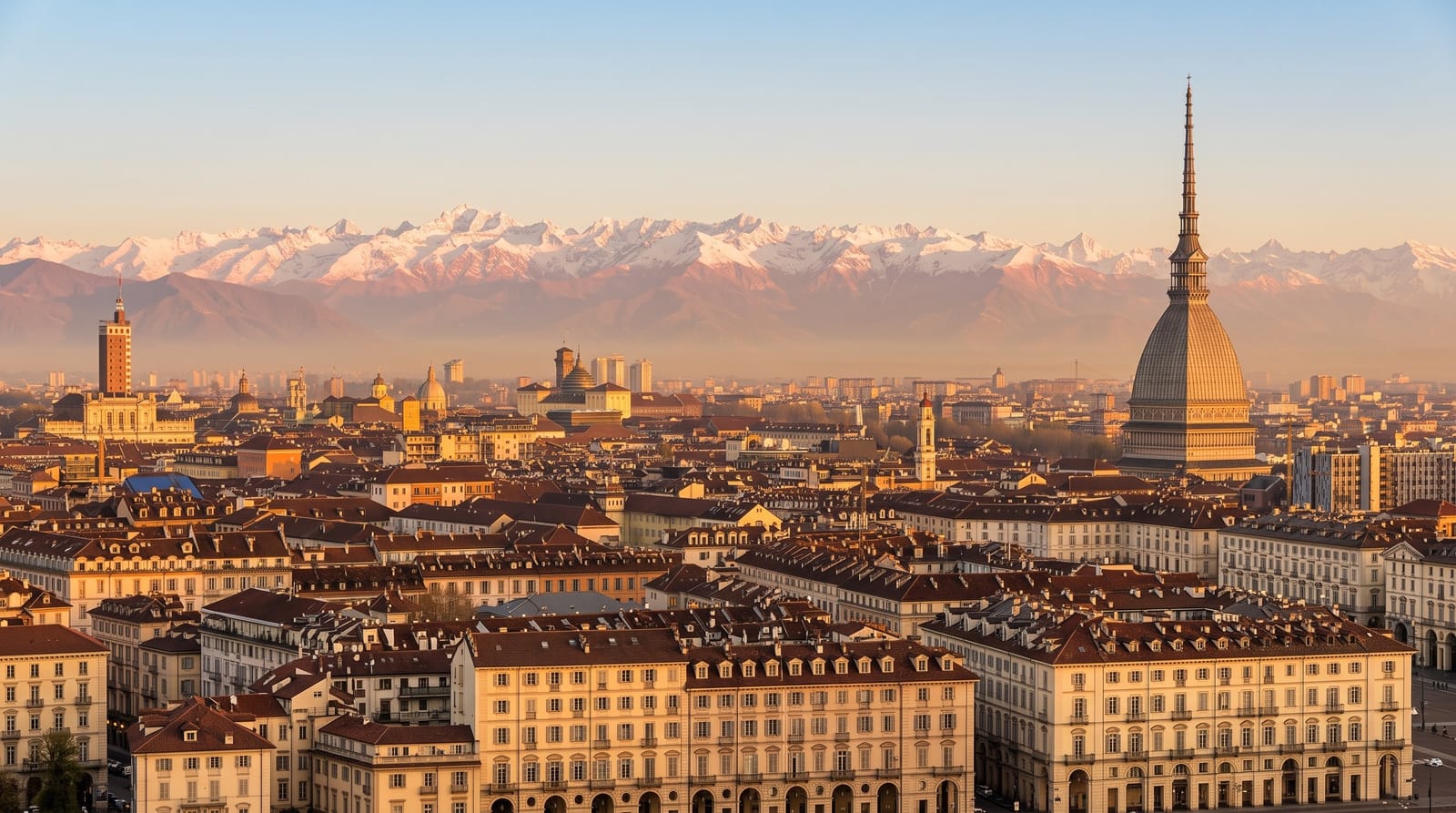
AI illustration
UNESCO World Heritage
Turin was the seat of the House of Savoy and the first capital of Italy after unification, and it looks like neither Rome nor Milan: a Roman grid filled with baroque and neoclassical building, eighteen kilometres of arcaded pavement, and a series of royal residences carrying a joint World Heritage listing. The Mole Antonelliana was begun as a synagogue, ran wildly over budget, and was on its completion in 1889 the tallest brick building in Europe - the top of its spire, torn off by a 1953 storm, was rebuilt as a metal frame faced in stone - and since 2000 it has held the national cinema museum, with a glass lift running up the middle of the void. The Egyptian Museum holds the largest collection outside Cairo.
History
The Taurini, a Celto-Ligurian Alpine people, held the upper Po valley, and in 218 BC Hannibal took their chief town after a three-day siege; the Romans founded Augusta Taurinorum in the 1st century BC, and Via Garibaldi still follows its decumanus, while the Porta Palatina survives near the cathedral. After the Heruli, Ostrogoths, Lombards and Franks, the county of Turin was founded in the 940s, and through the marriage of Adelaide of Susa the Counts of Savoy gained control; by the end of the 13th century the city had 20,000 people. Emmanuel Philibert made it the capital of the Duchy of Savoy in 1563, and in the 17th century the walls were twice enlarged, with Piazza San Carlo, Via Roma, the Royal Palace and the arcaded Via Po. In 1706 the French besieged the city for 117 days without taking it, and the Basilica of Superga was built in thanks; Turin went on to be the capital of the Kingdom of Sardinia and, from 1861 to 1865, the first capital of the Kingdom of Italy, and in 1997 the Residences of the Royal House of Savoy became a World Heritage Site (Wikipedia, Turin).
The main sights
- The Egyptian Museum - the largest collection outside Cairo.
- The Mole Antonelliana - the cinema museum in a spiralling brick tower.
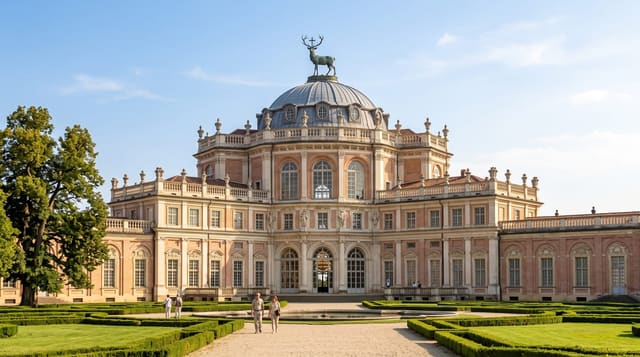
- The Savoy residences - the palaces and hunting lodges, jointly listed.
- The arcades - eighteen kilometres of covered pavement.
When to go
April to June and September to October. Turin is cold and often foggy in winter, though the Alps are visible from the streets on clear days. The Salone del Gusto and other food events fill the autumn. August empties the city.
Before you go
The Shroud is almost never on display and the cathedral holds a replica; expectations need managing. Winter fog can sit for days. The city is less immediately charming than Florence or Venice and rewards a few days rather than a stop. Some Savoy residences are well outside the centre.
Nearby
The Langhe wine country is an hour south; Milan is an hour east.
Key facts
Source: Wikidata, item Q495, read on 18 October 2026.
What to pack for Turin
Chosen from what this place is for. Tap a kit for the full checklist.
- Comfortable walking shoes - Sightseeing means kilometres of pavement and cobbles daily. Find on Amazon
- Modest clothing - Shoulders and knees covered - the single most common requirement. Find on Amazon
- A slim anti-theft daypack - Zips that close properly; keep it in front in crowds and on transit. Find on Amazon
- A scarf or shawl - To cover the head or shoulders on entry; women especially at mosques. Find on Amazon
Some links on this page are Amazon affiliate links - if you buy through them we may earn a small commission at no extra cost to you.
All packing kitsPlan your trip
Where to start if Turin is going on the list.
Booking links on this page are affiliate links - if you book through them we may earn a small commission at no extra cost to you. It never changes what we write about a place.
Opening times, ticket prices and seasonal closures change - check the official source before you go: official site.