Taranto
A Greek colony whose museum holds gold jewellery so fine it was long assumed to be later work.
Updated 19 October 2026
AI illustration
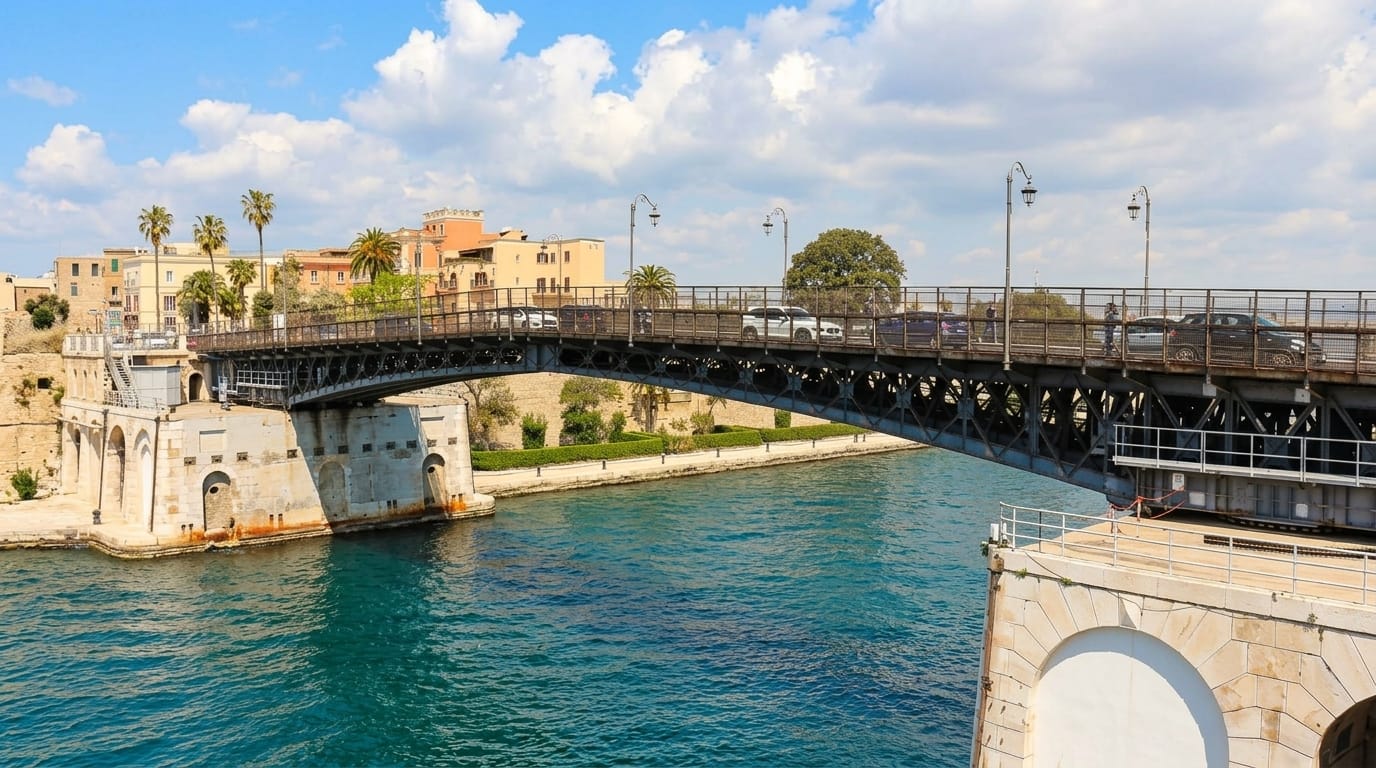
Taras was founded by Spartan colonists in the eighth century BC and became one of the wealthiest cities of Magna Graecia. MArTA, the national archaeological museum, holds the Ori di Taranto, gold jewellery from local tombs of the fourth and third centuries BC worked in filigree and granulation of extreme fineness, alongside ceramics, terracottas and the columns of a Doric temple that survive in the old town. The city sits between two seas, the open Mar Grande and the enclosed Mar Piccolo, joined by a channel with a swing bridge; mussel farming in the inner basin is a long-standing trade.
History
Spartan colonists founded the city in the 8th century BC and named it Taras after a mythical hero, and it became one of the most important cities of Magna Graecia, home to the philosopher Archytas and the writer Livius Andronicus. The Romans called it Tarentum and joined it to Rome with an extension of the Appian Way (Wikipedia, Taranto).
The main sights
- The Ori di Taranto - Greek gold jewellery in filigree and granulation.
- The Doric columns - remains of a temple standing in the old town.
- The two seas - the open bay and the enclosed inner basin.
- The swing bridge - a rotating bridge linking the old and new towns.
When to go
April to June and September to October; the museum closes some Mondays. Summer heat is heavy. The old town is under long-running restoration in parts.
Good to know
The old town on the island is run down with many closed buildings. The city is heavily industrial around its edges. The museum is the main reason to come.
Nearby
Martina Franca lies northeast; Metaponto is west in Basilicata.
What to pack for Taranto
Chosen from what this place is for. Tap a kit for the full checklist.
- Comfortable walking shoes - Sightseeing means kilometres of pavement and cobbles daily. Find on Amazon
- Modest clothing - Shoulders and knees covered - the single most common requirement. Find on Amazon
- A slim anti-theft daypack - Zips that close properly; keep it in front in crowds and on transit. Find on Amazon
- A scarf or shawl - To cover the head or shoulders on entry; women especially at mosques. Find on Amazon
Some links on this page are Amazon affiliate links - if you buy through them we may earn a small commission at no extra cost to you.
All packing kitsPlan your trip
Where to start if Taranto is going on the list.
Booking links on this page are affiliate links - if you book through them we may earn a small commission at no extra cost to you. It never changes what we write about a place.
Opening times, ticket prices and seasonal closures change - check the official source before you go: official site.