Sorrento
A town on a tufa cliff facing Vesuvius, built over Roman villas and known for its lemons.
Updated 19 October 2026
AI illustration
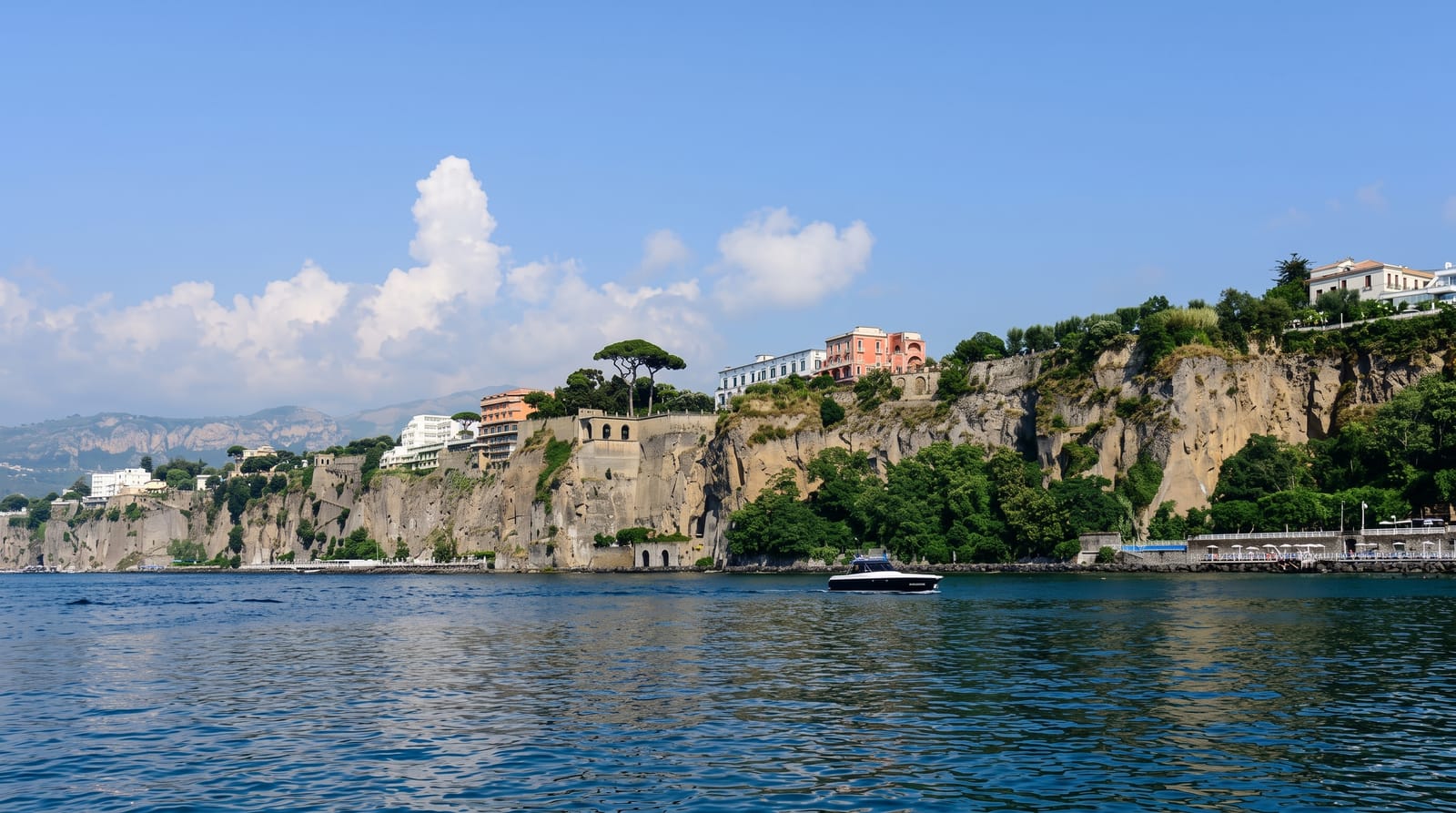
Sorrento stands on a shelf of tufa about fifty metres above the sea, with the cliff dropping straight to two small marinas reached by steps and lifts, and Vesuvius across the water. The Greek grid of the old town is still legible in the street plan, and Roman villas underlie parts of the coast. Lemons of the local Femminello Sorrento variety, large and thick-skinned, grow on the terraces under chestnut-pole shelters, and limoncello is made from the peel; the drink's commercial history here is recent, from the twentieth century, though infusions of the kind are older. Intarsio, inlaid woodwork, is the town's other long trade.
History
From the 8th century BC indigenous villages here stood on a crossing point for Etruscan traffic, and the oldest ruins of Surrentum are Oscan, from about 600 BC. In antiquity the town was famous for its wine, its fish and its red Campanian vases, and its chief temples were those of Athena, which gave its name to the promontory, and of the Sirens; oranges and lemons, now widely grown here, had not yet reached Italy (Wikipedia, Sorrento).
The main sights
- The tufa cliff - a town shelf fifty metres above two small marinas.
- The lemon terraces - Femminello groves under pole shelters.
- The inlaid woodwork - intarsio workshops and a dedicated museum.
- The Vesuvius view - the volcano across the bay from the cliff walks.
When to go
April to June and September to October; July and August are extremely crowded and hot. The Circumvesuviana train is slow and packed in season.
Practical notes
There is no real beach, only platforms and small marinas. The centre is heavily geared to tourism with high prices. Train access is crowded and unreliable.
Nearby
Pompeii lies north; the Amalfi Coast is over the peninsula.
Key facts
Source: Wikidata, item Q72672, read on 18 October 2026.
What to pack for Sorrento
Chosen from what this place is for. Tap a kit for the full checklist.
- Comfortable walking shoes - Sightseeing means kilometres of pavement and cobbles daily. Find on Amazon
- Modest clothing - Shoulders and knees covered - the single most common requirement. Find on Amazon
- A slim anti-theft daypack - Zips that close properly; keep it in front in crowds and on transit. Find on Amazon
- A scarf or shawl - To cover the head or shoulders on entry; women especially at mosques. Find on Amazon
Some links on this page are Amazon affiliate links - if you buy through them we may earn a small commission at no extra cost to you.
All packing kitsPlan your trip
Where to start if Sorrento is going on the list.
Booking links on this page are affiliate links - if you book through them we may earn a small commission at no extra cost to you. It never changes what we write about a place.
Opening times, ticket prices and seasonal closures change - check the official source before you go: official site.