Santo Stefano di Sessanio
A Medici wool village nearly abandoned, then rebuilt as a hotel scattered through its own empty houses.
Updated 19 October 2026
AI illustration
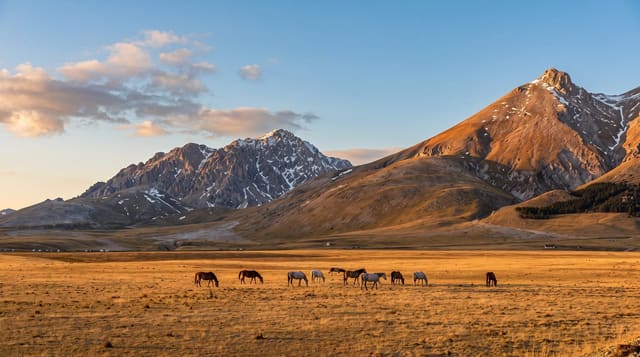
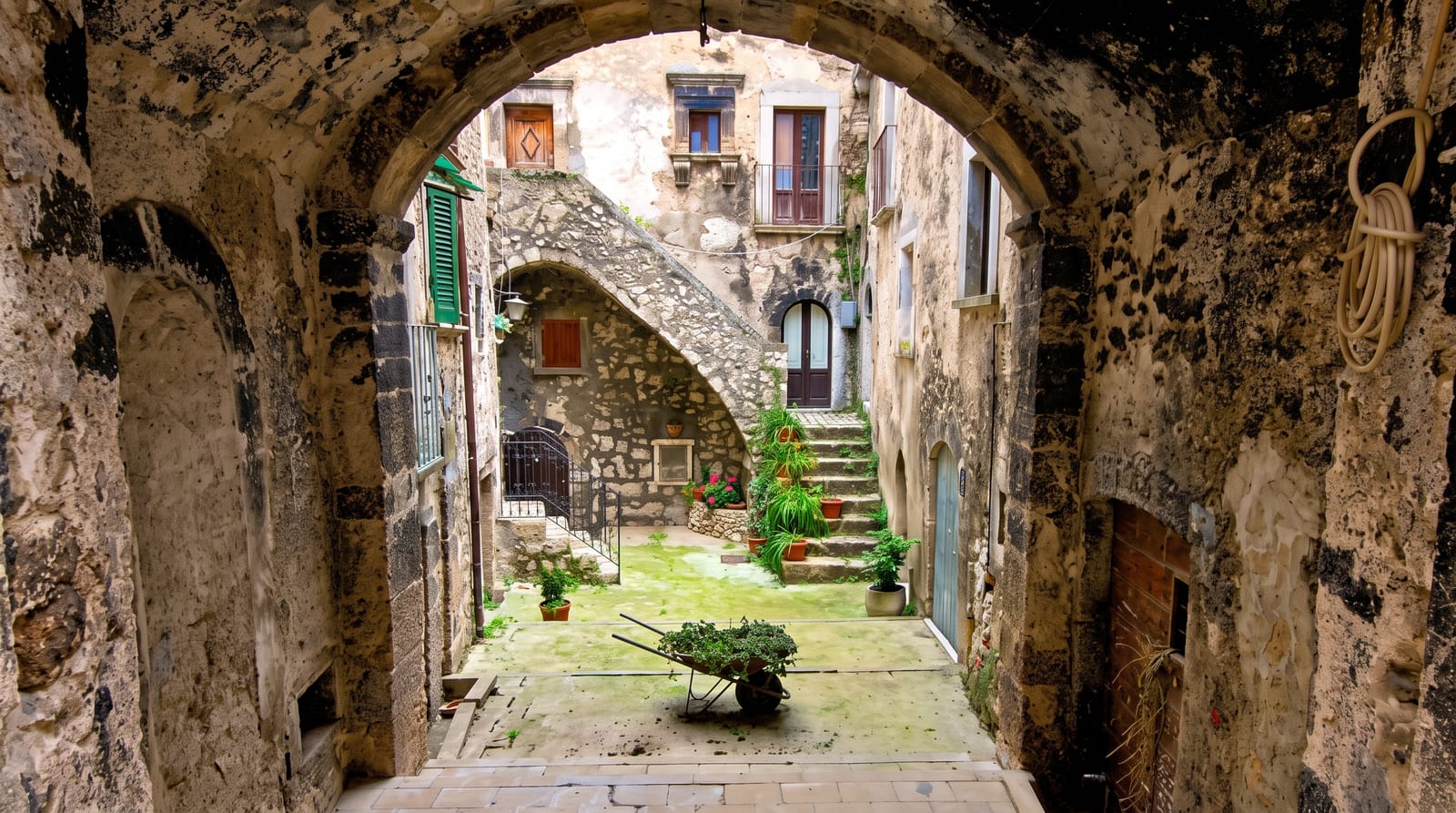
The village sits at about thirteen hundred metres on the edge of the Campo Imperatore plateau and belonged to the Medici from 1579, who ran the carfagna wool trade through it; their arms are still on buildings. Depopulation reduced it to a few dozen residents by the late twentieth century. From 2005 a project bought and restored empty houses as an albergo diffuso, a hotel whose rooms are scattered through the village rather than in one building, using traditional materials. The Medici tower collapsed in the 2009 earthquake and was rebuilt from its recovered stones. Lentils grown on the plateau are a protected local crop.
History
Many buildings date from the 11th to the 15th centuries, and in the 12th century the village belonged to the Baronage of Carapelle. The village gate, with the Medici arms, and the round tower were built by the Medici, and in the earthquake of 2009 the Medici Tower collapsed entirely, while the 17th-century Church of the Madonna del Lago lost most of its front (Wikipedia, Santo Stefano di Sessanio).
What's there
- The scattered hotel - rooms restored inside houses across the village.
- The Medici tower - rebuilt from its own stones after the 2009 earthquake.
- The stone village - a fortified hamlet on the Campo Imperatore edge.
- The plateau lentils - a small protected crop grown on the high ground.
When to go
May to October; the plateau is cold and often snowbound from November. The village is small and busiest on summer weekends. Lentil harvest is late summer.
Good to know
The village is very small and seen in an hour. Some buildings still show earthquake damage or restoration. Accommodation is limited and expensive.
Nearby
Rocca Calascio stands nearby; Campo Imperatore is above.
Key facts
Source: Wikidata, item Q50147, read on 18 October 2026.
What to pack for Santo Stefano di Sessanio
Chosen from what this place is for. Tap a kit for the full checklist.
- Comfortable walking shoes - Sightseeing means kilometres of pavement and cobbles daily. Find on Amazon
- A slim anti-theft daypack - Zips that close properly; keep it in front in crowds and on transit. Find on Amazon
- A refillable water bottle - Many cities have public fountains; save money and plastic. Find on Amazon
- A light layer + compact umbrella - For museum air-con and a sudden shower. Find on Amazon
Some links on this page are Amazon affiliate links - if you buy through them we may earn a small commission at no extra cost to you.
All packing kitsPlan your trip
Where to start if Santo Stefano di Sessanio is going on the list.
Booking links on this page are affiliate links - if you book through them we may earn a small commission at no extra cost to you. It never changes what we write about a place.
Opening times, ticket prices and seasonal closures change - check the official source before you go: official site.