Populonia and the Gulf of Baratti
The only Etruscan city built on the sea, whose tombs were buried and preserved under its own iron slag.
Updated 4 September 2026
AI illustration
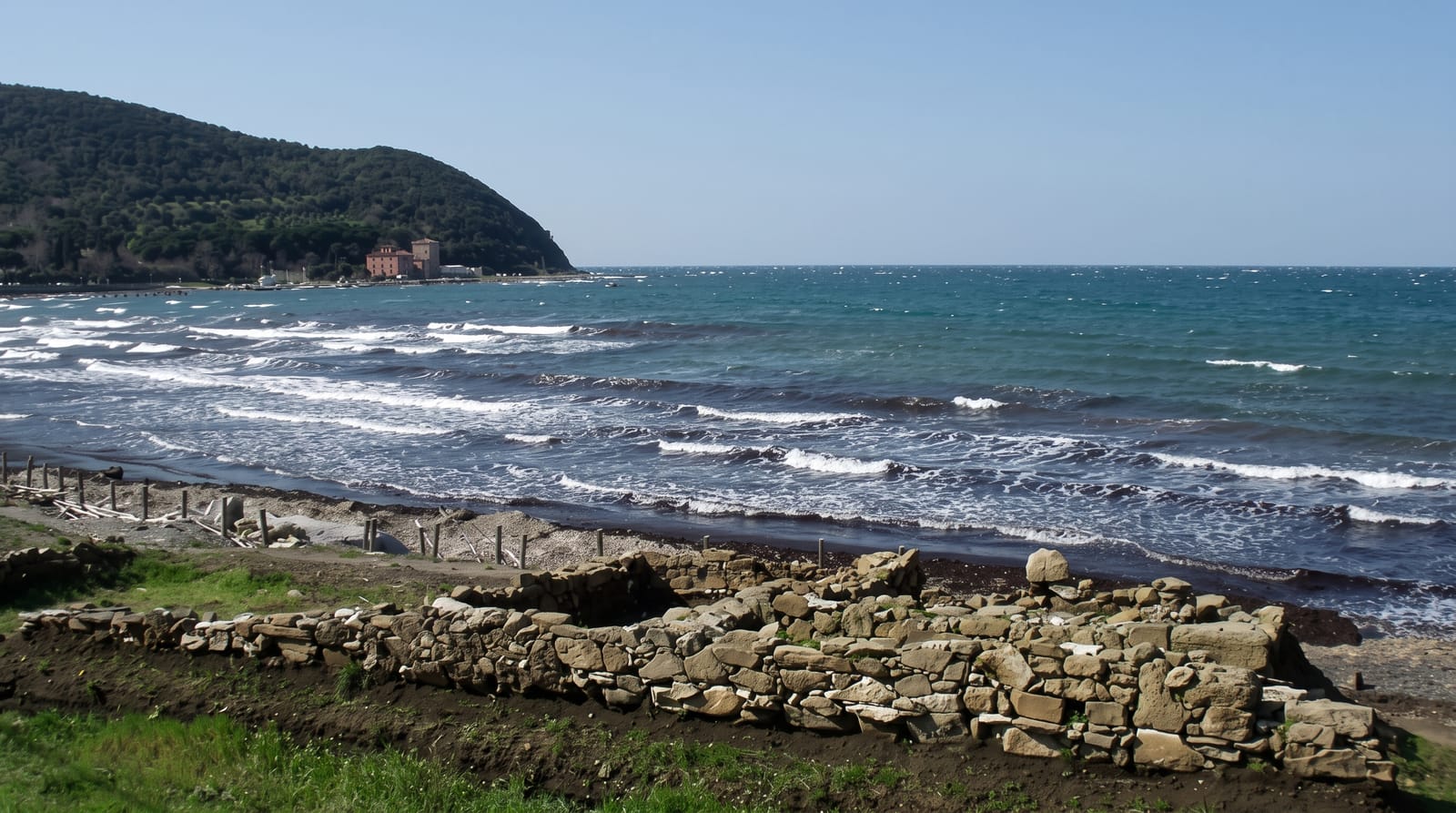
Populonia smelted iron ore shipped from Elba on an industrial scale, and the waste from the furnaces piled up over the necropolis below the town until the tombs were buried under metres of slag. The slag was quarried again in the twentieth century for its remaining iron content, and that work uncovered the monumental tombs, which had been protected rather than destroyed by their covering. Domed tumuli and small temple-shaped tombs now stand in a pine wood above a curved bay of clear water. The acropolis on the hill above holds the Roman-era town, and the medieval village and castle occupy the summit.
What's there
- The slag-buried tombs - a necropolis preserved under Etruscan iron waste.
- The domed tumuli - monumental tombs in a pine wood above the bay.
- The acropolis - Roman streets and temple foundations on the hill.
- The Gulf of Baratti - a curved bay with dark iron-bearing sand.
When to go
April to October; the park is open all year but hot and shadeless in parts in summer. The bay is busy in August. Allow half a day for park and acropolis.
Practical notes
The park is spread across two areas with a walk or shuttle between them. Signage is uneven. The village above is small with limited parking in season.
Nearby
Piombino and the Elba ferry lie south; Bolgheri is north.
What to pack for Populonia and the Gulf of Baratti
Chosen from what this place is for. Tap a kit for the full checklist.
- Comfortable walking shoes - Sightseeing means kilometres of pavement and cobbles daily. Find on Amazon
- Modest clothing - Shoulders and knees covered - the single most common requirement. Find on Amazon
- A slim anti-theft daypack - Zips that close properly; keep it in front in crowds and on transit. Find on Amazon
- A scarf or shawl - To cover the head or shoulders on entry; women especially at mosques. Find on Amazon
Some links on this page are Amazon affiliate links - if you buy through them we may earn a small commission at no extra cost to you.
All packing kitsPlan your trip
Where to start if Populonia and the Gulf of Baratti is going on the list.
Booking links on this page are affiliate links - if you book through them we may earn a small commission at no extra cost to you. It never changes what we write about a place.
Opening times, ticket prices and seasonal closures change - check the official source before you go: official site.