Pietra di Bismantova
A flat-topped rock rising sheer from the Apennine hills, which Dante used to describe the mountain of Purgatory.
Updated 4 September 2026
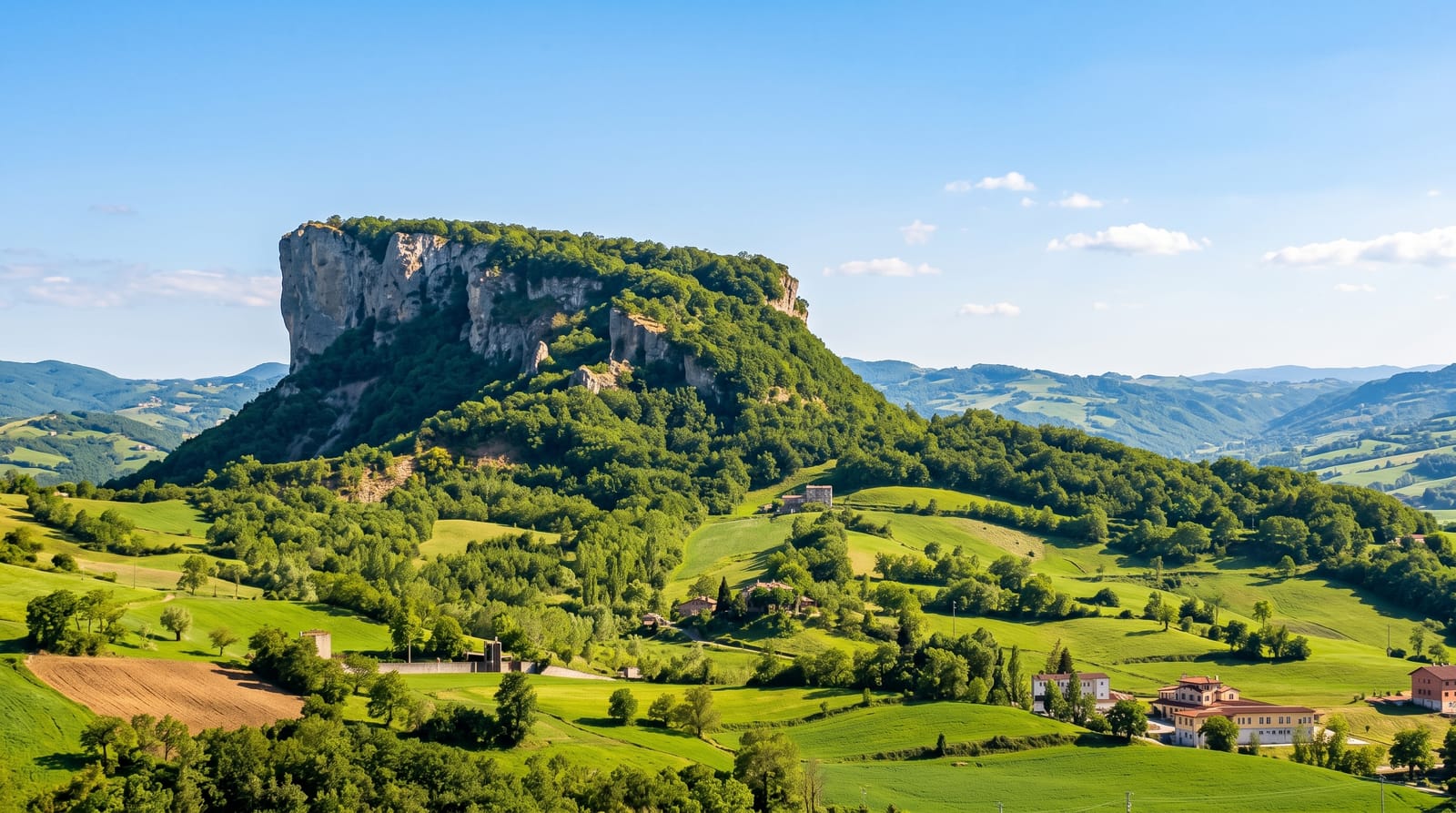
AI illustration
The Pietra is a block of marine sandstone about a kilometre long and three hundred metres wide, standing with vertical walls up to a hundred and twenty metres high and a flat grassy top at just over a thousand metres. Dante names it in the fourth canto of Purgatorio, comparing the steepness of the climb he faces to Bismantova, which means he had seen it. A path winds up the eastern side to the plateau, where there is grass, a small chapel and views over the Apennines. The walls are a long-established climbing area with hundreds of routes, and a hermitage sits at the base.
What you'll find
- The vertical walls - sandstone faces up to 120 metres high.
- The flat summit - a grassy plateau at just over a thousand metres.
- The Dante reference - the rock named in Purgatorio as an image of steepness.
- The climbing routes - hundreds of established lines on the faces.
When to go
April to October; the summit path is exposed and can be icy in winter. Summer weekends bring crowds to the small parking area. Autumn gives the clearest views.
Practical notes
The walk up is steep with loose sections and takes about forty minutes. Parking below is limited on weekends. The top is exposed with no shade or shelter.
Nearby
Reggio Emilia lies north; the Apennine ridge runs south.
Key facts
Source: Wikidata, item Q510076, read on 18 October 2026.
What to pack for Pietra di Bismantova
Chosen from what this place is for. Tap a kit for the full checklist.
- Broken-in walking shoes or boots - Grip and ankle support matter more than looks; never hike in brand-new boots. Find on Amazon
- Layers + a waterproof shell - Mountain weather turns fast; a packable rain jacket saves the day. Find on Amazon
- Daypack with rain cover - 20-30 litres holds water, snacks, layers and a first-aid kit. Find on Amazon
- Offline maps + a power bank - Download the trail before you lose signal; carry backup charge. Find on Amazon
Some links on this page are Amazon affiliate links - if you buy through them we may earn a small commission at no extra cost to you.
All packing kitsPlan your trip
Where to start if Pietra di Bismantova is going on the list.
Booking links on this page are affiliate links - if you book through them we may earn a small commission at no extra cost to you. It never changes what we write about a place.
Opening times, ticket prices and seasonal closures change - check the official source before you go: official site.