Merano
A spa town in a sheltered basin where palms grow at Alpine latitude, favoured by an empress in the 1870s.
Updated 19 October 2026
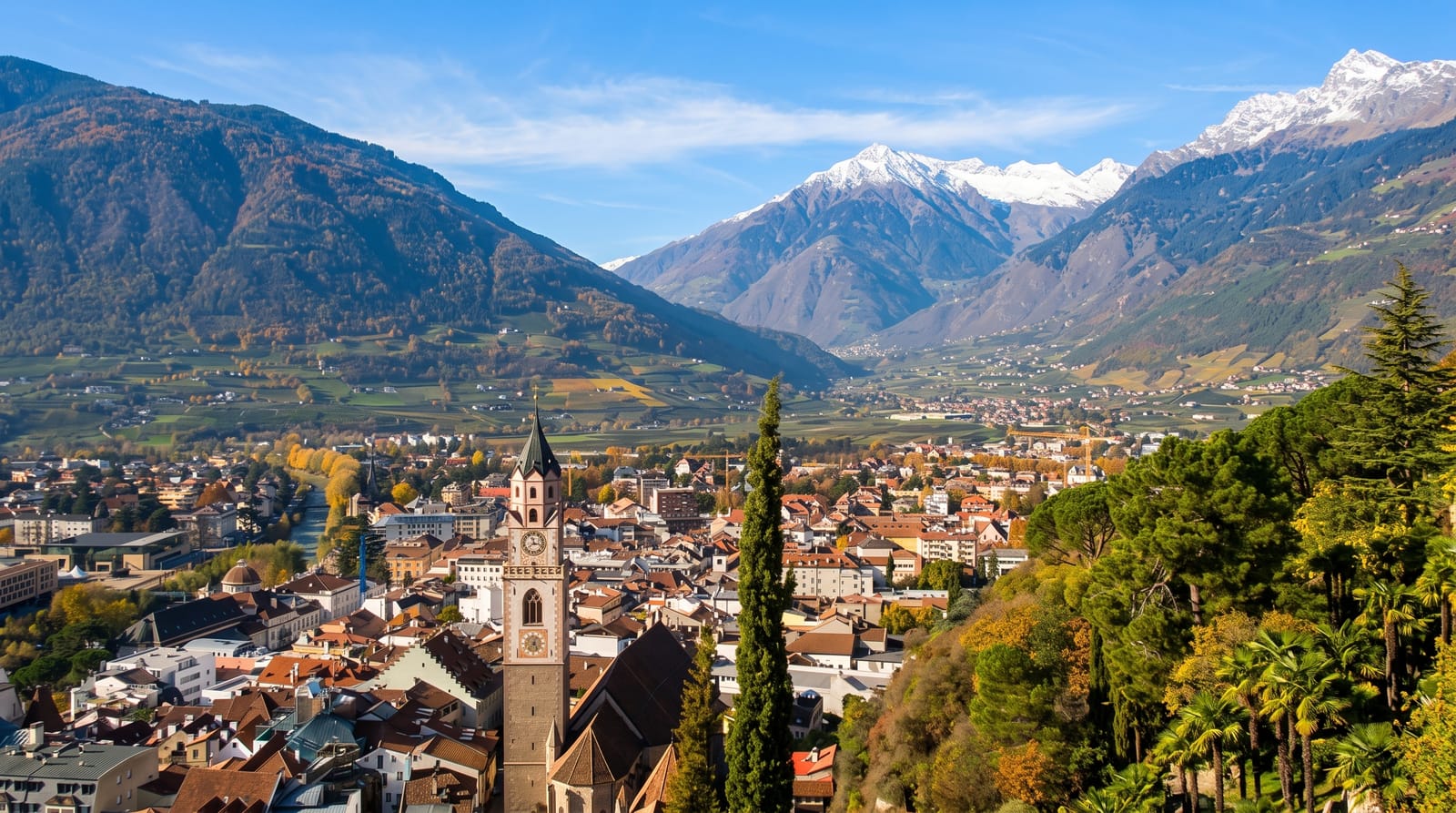
AI illustration
Merano sits in a basin where several valleys meet, sheltered by mountains on three sides, and the resulting mild climate allowed palms, cypresses and citrus to grow well north of where they usually would. It became a health resort in the nineteenth century, and the Empress Elisabeth of Austria stayed in the 1870s, which fixed its reputation across the empire; the belle époque promenades along the Passirio, the Kurhaus and the covered walks date from that period. The Winter Promenade and Summer Promenade run on opposite banks for sun or shade. Above the town, the Waalwege follow old irrigation channels through vineyards and apple orchards.
History
The city began as a medieval Tyrolean settlement and in the 13th century became the capital of the County of Tyrol, before power shifted to Innsbruck; in the 19th century its mild Alpine climate turned it into a spa resort (Wikipedia, Merano).
The main sights
- The promenades - riverside walks built for sun or shade by season.
- The Kurhaus - a belle époque assembly building on the Passirio.
- The mild-climate planting - palms and citrus at Alpine latitude.
- The Waalwege - paths along centuries-old irrigation channels above the town.
When to go
April to October for gardens and walks; the Christmas market runs in December and the grape festival in October. The thermal baths operate year-round.
What to expect
The modern spa complex is a large 2005 building, not a historic bath house. The town is bilingual and German-dominant, which surprises some. Prices are high.
Nearby
Trauttmansdorff gardens lie above the town; Bolzano is south.
Key facts
Source: Wikidata, item Q131605, read on 18 October 2026.
What to pack for Merano
Chosen from what this place is for. Tap a kit for the full checklist.
- Comfortable walking shoes - Sightseeing means kilometres of pavement and cobbles daily. Find on Amazon
- Swimwear - Needed at most public thermal pools; some traditional baths are nude and single-sex. Find on Amazon
- A slim anti-theft daypack - Zips that close properly; keep it in front in crowds and on transit. Find on Amazon
- Quick-dry towel + flip-flops - For wet changing areas and hot poolside stone. Find on Amazon
Some links on this page are Amazon affiliate links - if you buy through them we may earn a small commission at no extra cost to you.
All packing kitsPlan your trip
Where to start if Merano is going on the list.
Booking links on this page are affiliate links - if you book through them we may earn a small commission at no extra cost to you. It never changes what we write about a place.
Opening times, ticket prices and seasonal closures change - check the official source before you go: official site.