Marsala
A port whose fortified wine was invented by an English merchant sheltering from a storm in 1773.
Updated 19 October 2026
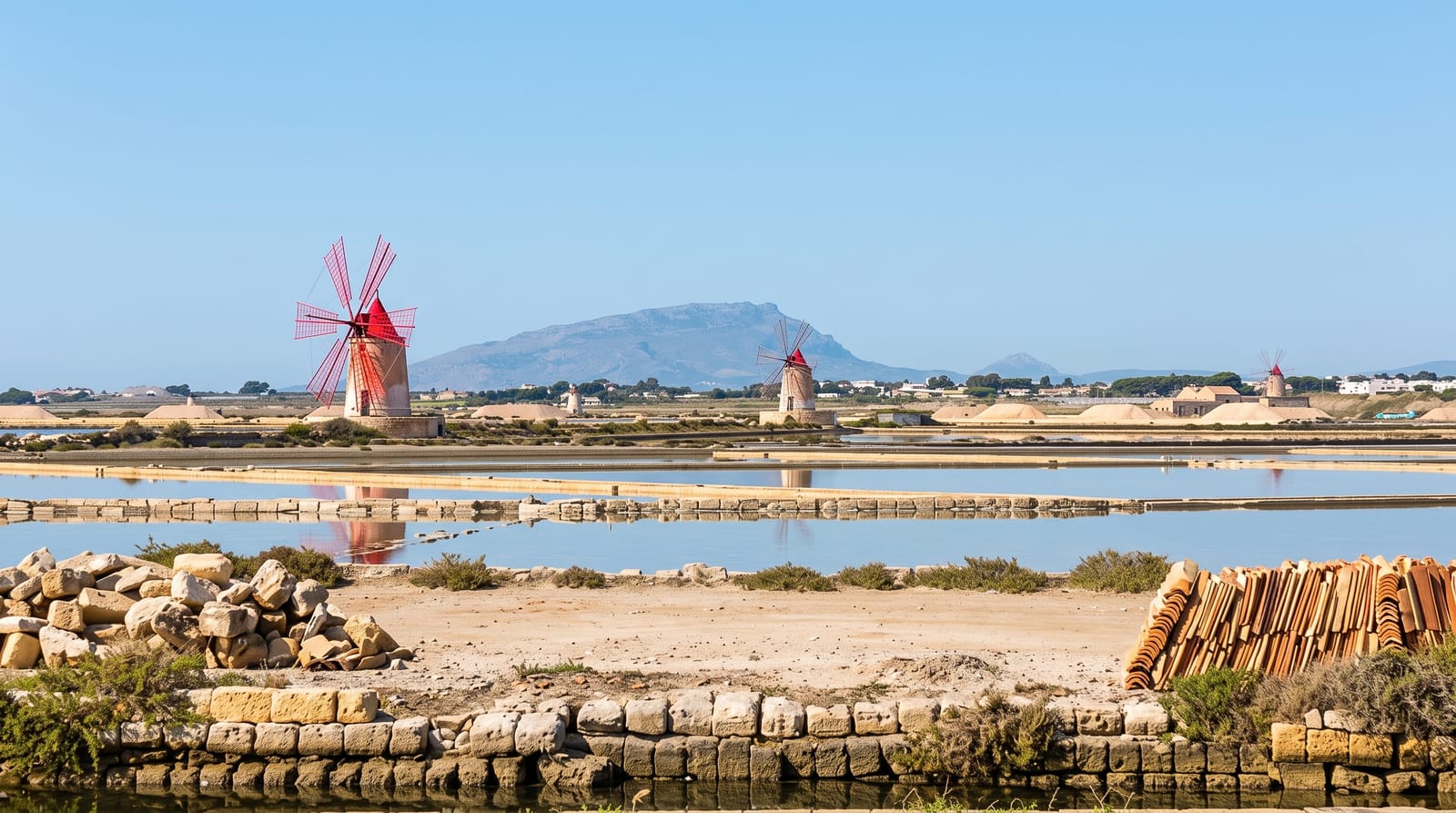
AI illustration
John Woodhouse, a Liverpool merchant, put into Marsala in 1773, tasted the local wine kept in a solera-like system, and shipped it to England fortified with spirit so it would survive the voyage; it took hold, other British firms followed, and the trade shaped the town. The old baglio warehouses along the shore still hold cellars open for visits. The archaeological museum displays a Punic warship recovered from the sea in the 1970s, one of very few ancient warships found, with its hull timbers marked by shipwrights. The town's baroque centre is compact and largely pedestrian.
History
The town, Roman Lilybaeum, is famous for Giuseppe Garibaldi's landing on 11 May 1860, the start of the Expedition of the Thousand, and for its wine; the modern name probably comes from the Arabic marsa Ali, "Ali's harbour", or marsa Allah, "God's harbour" (Wikipedia, Marsala, Sicily).
What you'll find
- The wine cellars - baglio warehouses along the shore, open for visits.
- The Punic ship - recovered hull timbers of an ancient warship.
- The baroque centre - a compact pedestrian old town.
- The fortification story - how an English merchant created the wine.
When to go
April to October; cellar visits usually need booking. Harvest is late summer. The town is quieter than Trapani and less geared to visitors.
Practical notes
Cellar tours are commercial and often require booking. Much marsala sold cheaply is cooking grade and unrepresentative. Summer heat is severe.
Nearby
Mozia lies in the lagoon north; Selinunte is southeast.
Key facts
Source: Wikidata, item Q481514, read on 18 October 2026.
What to pack for Marsala
Chosen from what this place is for. Tap a kit for the full checklist.
- Reef-safe sunscreen - High SPF that will not bleach the coral you are swimming over. Find on Amazon
- Comfortable walking shoes - Sightseeing means kilometres of pavement and cobbles daily. Find on Amazon
- Shelter suited to the place - Tent, tarp or hut booking - match it to the terrain and rules. Find on Amazon
- Quick-dry towel - A microfibre towel packs small and dries in minutes. Find on Amazon
Some links on this page are Amazon affiliate links - if you buy through them we may earn a small commission at no extra cost to you.
All packing kitsPlan your trip
Where to start if Marsala is going on the list.
Booking links on this page are affiliate links - if you book through them we may earn a small commission at no extra cost to you. It never changes what we write about a place.
Opening times, ticket prices and seasonal closures change - check the official source before you go: official site.