Franciacorta
Hills making bottle-fermented sparkling wine, on moraine soil left behind by a retreating glacier.
Updated 19 October 2026
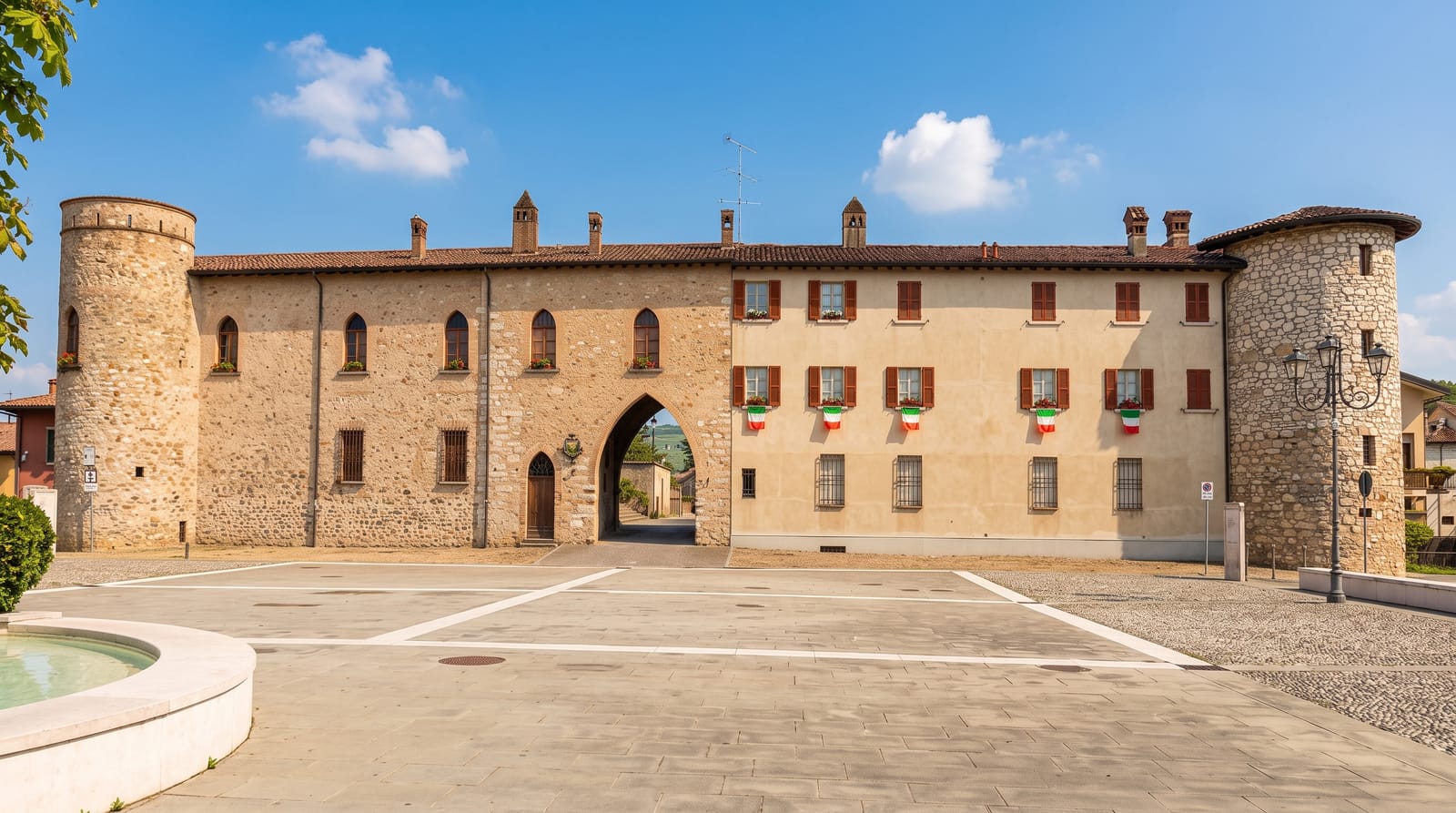
AI illustration
The hills south of Lake Iseo sit on moraine left by the glacier that carved the lake basin, giving stony well-drained soil. Sparkling wine has been made here commercially only since 1961, when a young oenologist produced a bottle-fermented wine from Pinot and Chardonnay; the zone received DOCG status in 1995, and the name Franciacorta now denotes the place, the method and the wine together, without needing the word spumante. Satèn is a local style, made only from white grapes at lower pressure. The name may derive from medieval tax-exempt monastic holdings, curtes francae.
History
The name first appears in 1277 and comes from the corti franche, medieval villages exempt from taxes and levies. The area has been lived in since the Palaeolithic, with remains left by the Cenomani of Brixia, the Romans and the Lombards (Wikipedia, Franciacorta).
What you'll find
- The moraine hills - stony ground left by the glacier that cut Lake Iseo.
- The bottle fermentation - a method established here only since 1961.
- The Satèn style - a softer white-grape wine at lower pressure.
- The cellars - producers open for booked visits across the zone.
When to go
April to October; the Festival Franciacorta opens cellars over two weekends in September, during harvest. Individual visits need booking at other times.
Things to know
Cellar visits require advance booking and many producers are closed to walk-ins. The area is dispersed and needs a car, which conflicts with tasting.
Nearby
Lake Iseo lies north; Brescia is east.
Key facts
Source: Wikidata, item Q140131034, read on 18 October 2026.
What to pack for Franciacorta
Chosen from what this place is for. Tap a kit for the full checklist.
- Warm base layers - Merino or synthetic against the skin - never cotton, which chills when damp. Find on Amazon
- Comfortable walking shoes - Sightseeing means kilometres of pavement and cobbles daily. Find on Amazon
- An insulated + windproof jacket - A down or synthetic layer under a hard shell handles most cold. Find on Amazon
- A slim anti-theft daypack - Zips that close properly; keep it in front in crowds and on transit. Find on Amazon
Some links on this page are Amazon affiliate links - if you buy through them we may earn a small commission at no extra cost to you.
All packing kitsPlan your trip
Where to start if Franciacorta is going on the list.
Booking links on this page are affiliate links - if you book through them we may earn a small commission at no extra cost to you. It never changes what we write about a place.
Opening times, ticket prices and seasonal closures change - check the official source before you go: official site.


