Fonti del Clitunno
Springs the Romans treated as a god, praised by Virgil and Byron, and still rising clear into willow pools.
Updated 4 September 2026
AI illustration
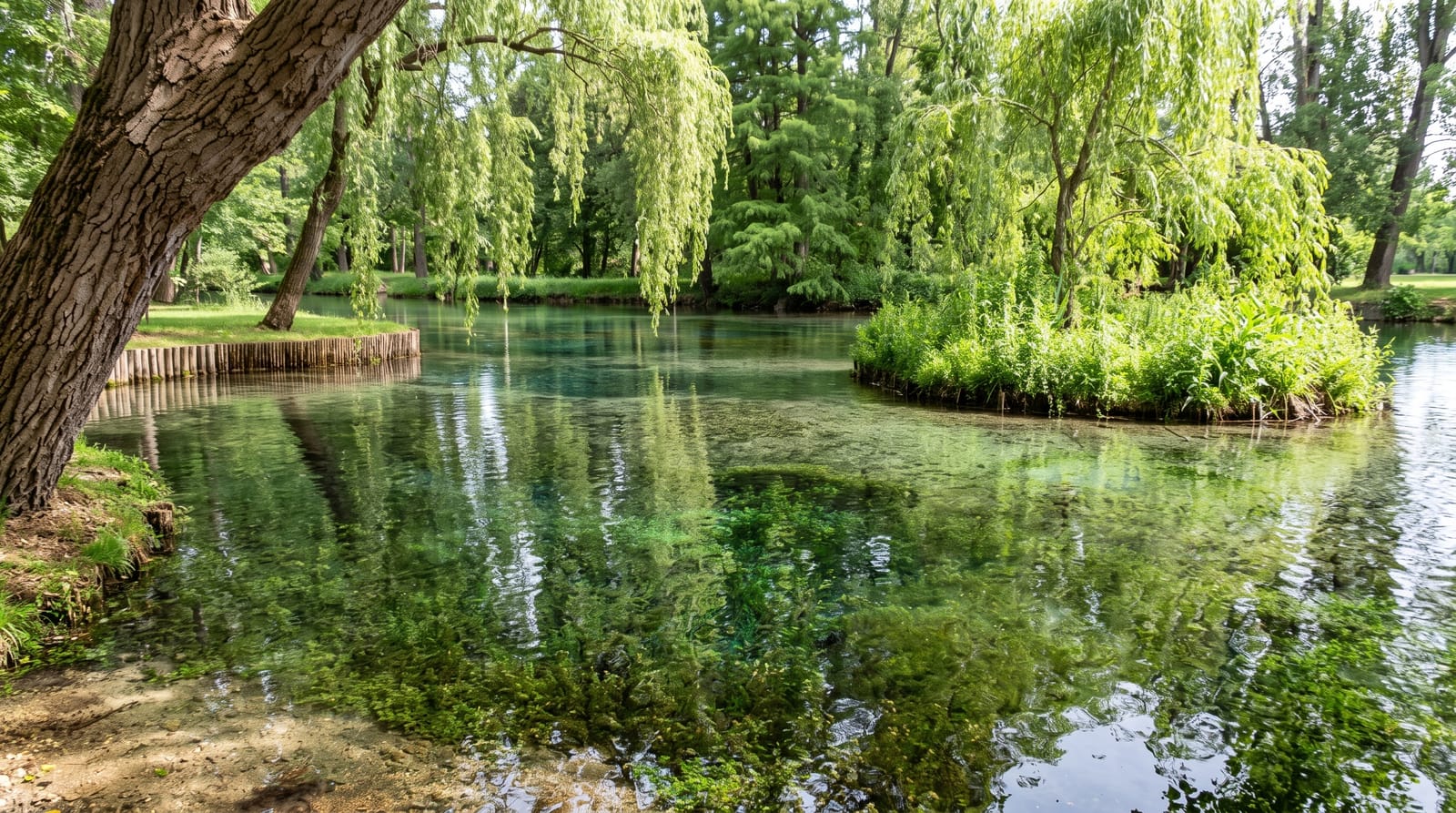
Water rises here from the limestone through the floor of a shallow basin and forms clear pools among willows and poplars, feeding the Clitunno river. The Romans regarded the spring as a god and built a temple and oracle nearby; Pliny the Younger described the place in a letter, Virgil wrote that the white cattle bathed in the water were used for sacrifices, and later Byron and Carducci both wrote about it. A small building known as the Tempietto del Clitunno stands a short distance away, built from reused Roman materials in the early Middle Ages and listed by UNESCO in 2011 as part of the Longobard sites.
Highlights
- The clear pools - water rising through the basin floor among willows.
- The Tempietto - an early medieval chapel built from Roman fragments.
- The literary record - Pliny, Virgil, Byron and Carducci on the same spot.
- The waterfowl - swans and ducks on the still pools.
When to go
April to October; flow varies with the season and can be reduced after dry spells. The gardens are small and take under an hour. The Tempietto is separately visited.
Things to know
The site is a small landscaped garden beside a busy road, not wild. The Tempietto is a short drive away and keeps separate hours. Flow drops in dry years.
Nearby
Spoleto lies south; Montefalco is northwest.
Key facts
Source: Wikidata, item Q123916516, read on 18 October 2026.
What to pack for Fonti del Clitunno
Chosen from what this place is for. Tap a kit for the full checklist.
- Broken-in walking shoes or boots - Grip and ankle support matter more than looks; never hike in brand-new boots. Find on Amazon
- Modest clothing - Shoulders and knees covered - the single most common requirement. Find on Amazon
- Layers + a waterproof shell - Mountain weather turns fast; a packable rain jacket saves the day. Find on Amazon
- A scarf or shawl - To cover the head or shoulders on entry; women especially at mosques. Find on Amazon
Some links on this page are Amazon affiliate links - if you buy through them we may earn a small commission at no extra cost to you.
All packing kitsPlan your trip
Where to start if Fonti del Clitunno is going on the list.
Booking links on this page are affiliate links - if you book through them we may earn a small commission at no extra cost to you. It never changes what we write about a place.
Opening times, ticket prices and seasonal closures change - check the official source before you go: official site.