Cortina d'Ampezzo
A resort in a bowl ringed by Dolomite walls, which hosted the Winter Olympics in 1956 and again in 2026.
Updated 18 October 2026
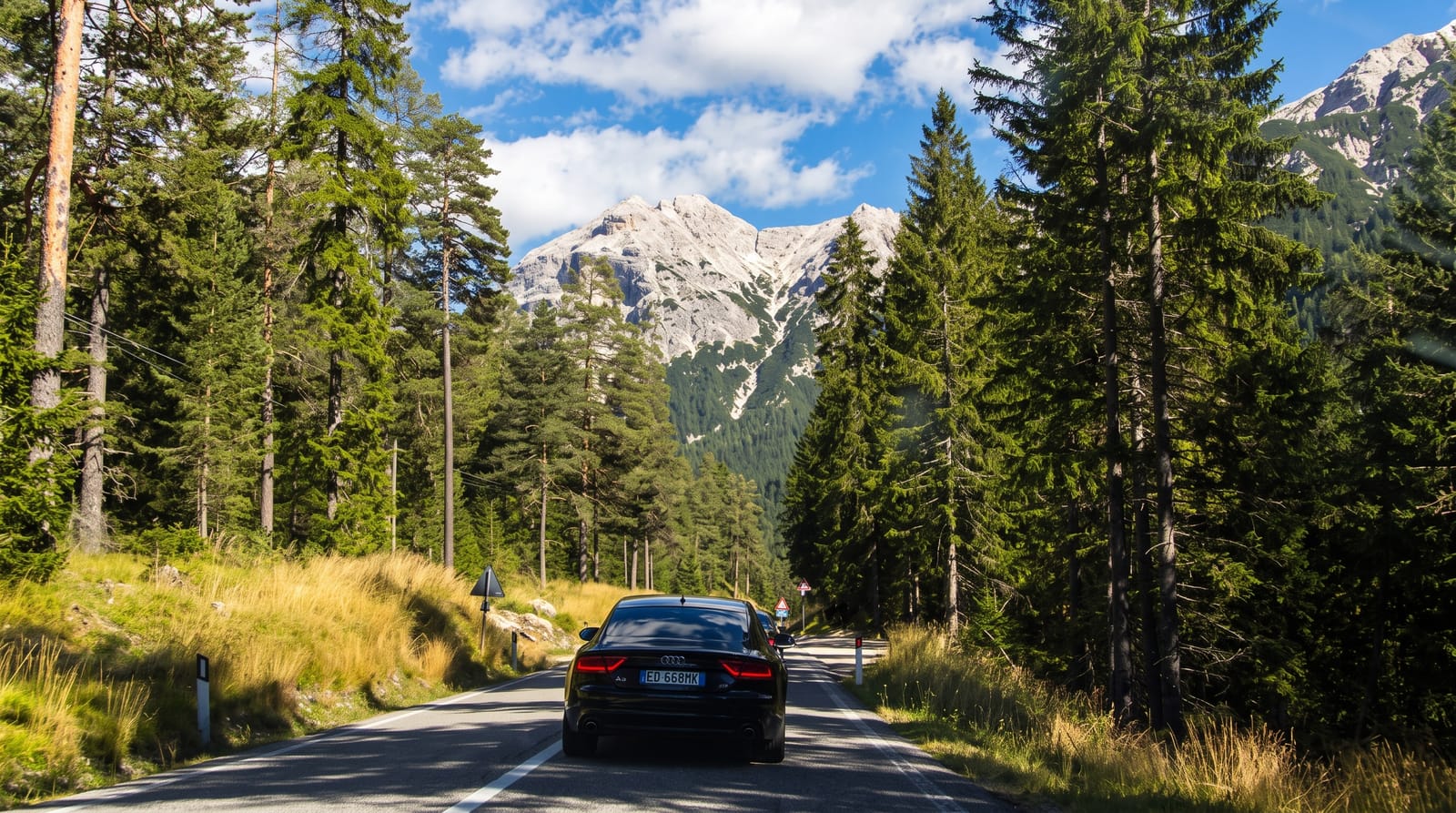
AI illustration
Cortina sits at about twelve hundred metres in a broad basin with the Tofane, Cristallo, Sorapis and Pomagagnon walls standing around it, which gives it an amphitheatre setting that few resorts match. It hosted the Winter Olympics in 1956, the first to be televised, and was a host again in February 2026, sharing the Games with Milan. The ski jump remains and the ice stadium date from the earlier Games; the bobsleigh track on the 1956 site was rebuilt from scratch for 2026. Summer brings via ferrata routes, many of them following First World War military lines through the Tofane and Lagazuoi, where tunnels cut into the rock are still walkable with a torch.
History
A Mesolithic burial found in 1987 at Mondeval de Sora, high in the mountains south of the town, shows people here by the 6th millennium BC, and the Romans, who absorbed the Raeti and Veneti from the 3rd century BC, called the valley Amplitium, from amplus, wide, the root of today's Ampezzo. In the Middle Ages it came under the Patriarchate of Aquileia and the Holy Roman Empire; Venice took it in 1420 and the Habsburgs in 1508, and it stayed Austrian, apart from French rule in 1810-1813, until it was ceded to Italy in 1920 and joined the province of Belluno in 1923, keeping its Ladin language throughout. Already favoured by British visitors in the late 19th century, it was chosen for the 1944 Winter Olympics, cancelled by the war, and after hosting the Games of 1956 it grew into a world-famous resort (Wikipedia, Cortina d'Ampezzo).
What to look for
- The Dolomite ring - Tofane, Cristallo and Sorapis walls around the basin.
- The 1956 legacy - ski jump remains, ice stadium and the bobsleigh track.
- The Lagazuoi tunnels - wartime galleries cut into the rock, walkable today.
- The via ferrata network - protected climbing routes across the ranges.
When to go
December to April for skiing and June to September for walking and via ferrata. Cortina has no railway, so access is by road.
Good to know
It is expensive by Alpine standards and the town centre is oriented to shopping. Road access can be slow on peak weekends. Via ferrata require equipment and experience.
Nearby
Tre Cime lie north; Lago di Braies is over the pass.
What to pack for Cortina d'Ampezzo
Chosen from what this place is for. Tap a kit for the full checklist.
- Comfortable walking shoes - Sightseeing means kilometres of pavement and cobbles daily. Find on Amazon
- A slim anti-theft daypack - Zips that close properly; keep it in front in crowds and on transit. Find on Amazon
- A refillable water bottle - Many cities have public fountains; save money and plastic. Find on Amazon
- A light layer + compact umbrella - For museum air-con and a sudden shower. Find on Amazon
Some links on this page are Amazon affiliate links - if you buy through them we may earn a small commission at no extra cost to you.
All packing kitsPlan your trip
Where to start if Cortina d'Ampezzo is going on the list.
Booking links on this page are affiliate links - if you book through them we may earn a small commission at no extra cost to you. It never changes what we write about a place.
Opening times, ticket prices and seasonal closures change - check the official source before you go: official site.