Cervia Salt Pans
Salt pans harvested by hand once a year, producing a salt so low in bitter minerals it is called sweet.
Updated 4 September 2026
AI illustration
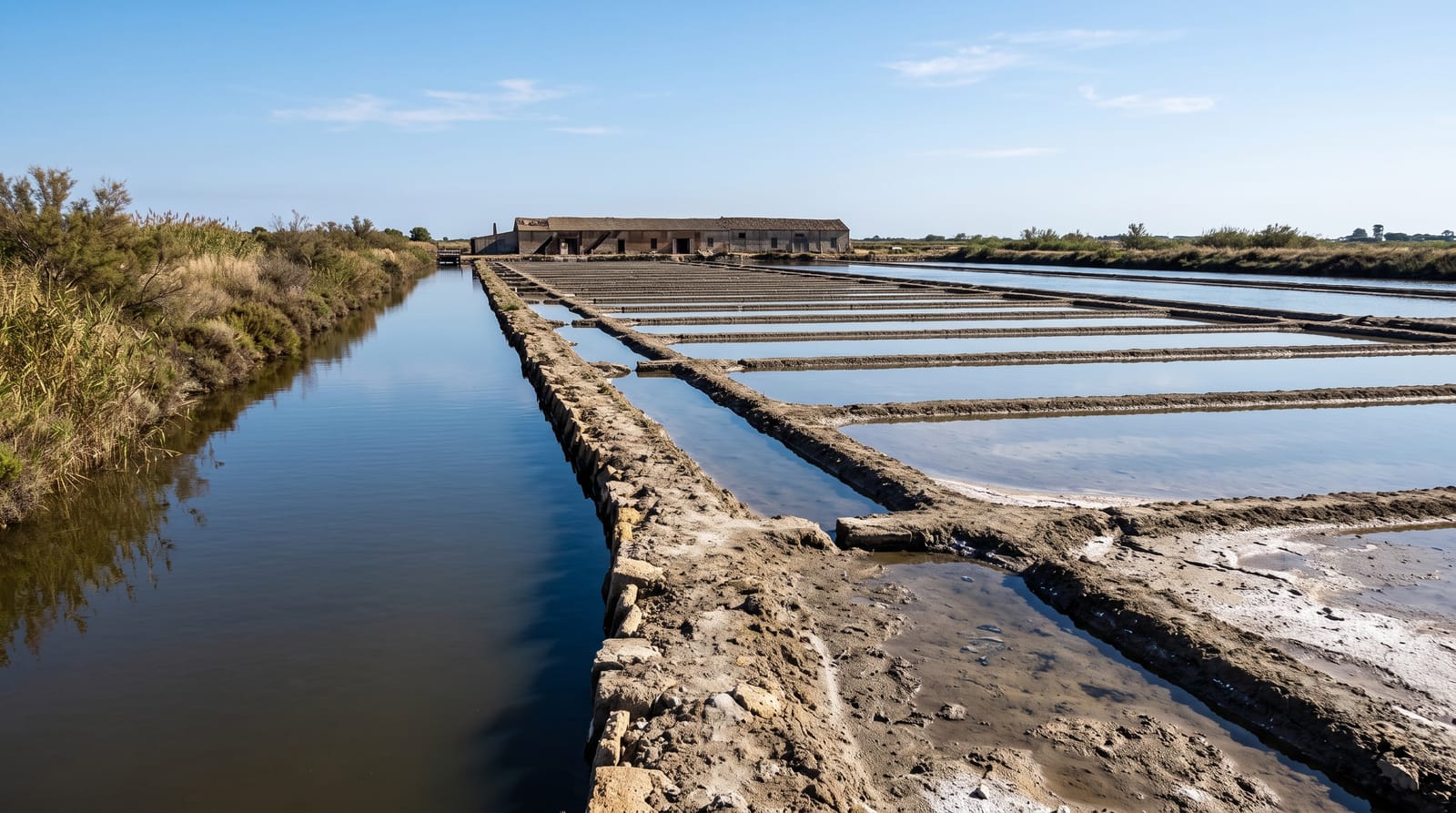
The Cervia pans are the northernmost in Italy and were worked for the papal states, which built the town around a fortified warehouse to control the trade. The salt is called sale dolce, sweet salt, because the harvesting method takes the crystals before the more bitter magnesium and potassium salts precipitate, giving a cleaner taste; it holds a Slow Food presidium. Most of the basin is now a single industrial pan, but the Camillone pan is still worked by hand in the traditional way by volunteers, and is harvested through the summer. Flamingos, avocets and stilts feed in the shallow water.
What you'll find
- The Camillone pan - the last basin still harvested by hand.
- The sweet salt - crystals taken before the bitter minerals form.
- The flamingos - waders and flamingos feeding in the shallow basins.
- The salt warehouse - the papal-era store the town was built around.
When to go
April to October; hand harvesting at Camillone runs through summer and can be watched. Birds are best in spring and autumn. Boat and walking tours are seasonal.
Practical notes
Access is by booked tour on set days, not free wandering. The pans are exposed with no shade and can be very hot. Mosquitoes are present at dusk.
Nearby
Ravenna lies north; the Romagna beach resorts are alongside.
Key facts
Source: Wikidata, item Q55443101, read on 18 October 2026.
What to pack for Cervia Salt Pans
Chosen from what this place is for. Tap a kit for the full checklist.
- Comfortable walking shoes - Sightseeing means kilometres of pavement and cobbles daily. Find on Amazon
- A slim anti-theft daypack - Zips that close properly; keep it in front in crowds and on transit. Find on Amazon
- A refillable water bottle - Many cities have public fountains; save money and plastic. Find on Amazon
- A light layer + compact umbrella - For museum air-con and a sudden shower. Find on Amazon
Some links on this page are Amazon affiliate links - if you buy through them we may earn a small commission at no extra cost to you.
All packing kitsPlan your trip
Where to start if Cervia Salt Pans is going on the list.
Booking links on this page are affiliate links - if you book through them we may earn a small commission at no extra cost to you. It never changes what we write about a place.
Opening times, ticket prices and seasonal closures change - check the official source before you go: official site.