Si-o-se-pol
A thirty-three-arch Safavid bridge across the Zayanderud in Isfahan, used as a promenade and a place to sing.
Updated 19 October 2026
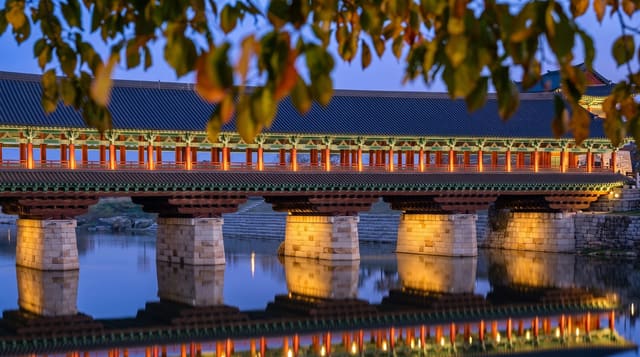
Si-o-se-pol, the bridge of thirty-three arches, was built around 1600 under Shah Abbas I to carry the Chahar Bagh avenue over the Zayanderud, and it is close to three hundred metres long, in two levels: a roadway on top and an arcaded walkway beneath running the full length, with alcoves along it. That lower arcade is what makes it a social place rather than a crossing, and Isfahanis use it constantly, sitting in the alcoves in the evening, and the vaults have acoustics that people sing into, which happens most evenings without arrangement. The river beneath it has run dry for long periods in recent years because of upstream abstraction and drought, so the bridge frequently stands over sand rather than water.
History
The bridge was built between 1599 and 1602 in the reign of Abbas the Great, the fifth Safavid shah, under the supervision of his commander-in-chief Allahverdi Khan Undiladze, a Georgian, after whom it is officially named. It was made to serve as both a bridge and a dam and is the largest of the eleven historic bridges on the Zayanderud (Wikipedia, Si-o-se-pol).
What you'll find
- Thirty-three arches - close to three hundred metres of Safavid bridge.
- The lower arcade - a vaulted walkway with alcoves along its length.
- Singing in the vaults - the acoustics people use most evenings.
- Evening lighting - the arches lit and reflected when there is water.
When to go
March to May and September to November. Evenings, which is when Isfahanis use it and when the singing happens. One to two hours. Water in the river is seasonal and unpredictable.
Practical notes
The river is dry for much of the year in recent times, which removes half the effect and disappoints many visitors. The bridge is very busy on warm evenings. There is no interpretation. Nowruz and holidays fill it completely.
Nearby
Khaju Bridge is downstream; Naqsh-e Jahan lies north.
Key facts
Source: Wikidata, item Q667674, read on 18 October 2026.
What to pack for Si-o-se-pol
Chosen from what this place is for. Tap a kit for the full checklist.
- Comfortable walking shoes - Sightseeing means kilometres of pavement and cobbles daily. Find on Amazon
- A slim anti-theft daypack - Zips that close properly; keep it in front in crowds and on transit. Find on Amazon
- A refillable water bottle - Many cities have public fountains; save money and plastic. Find on Amazon
- A light layer + compact umbrella - For museum air-con and a sudden shower. Find on Amazon
Some links on this page are Amazon affiliate links - if you buy through them we may earn a small commission at no extra cost to you.
All packing kitsPlan your trip
Where to start if Si-o-se-pol is going on the list.
Booking links on this page are affiliate links - if you book through them we may earn a small commission at no extra cost to you. It never changes what we write about a place.
Opening times, ticket prices and seasonal closures change - check the official source before you go: official site.