National Museum of Indonesia
Jakarta's largest collection of statuary, bronzes and ethnography from across the archipelago, in an old building known for its bronze elephant.
Updated 19 October 2026
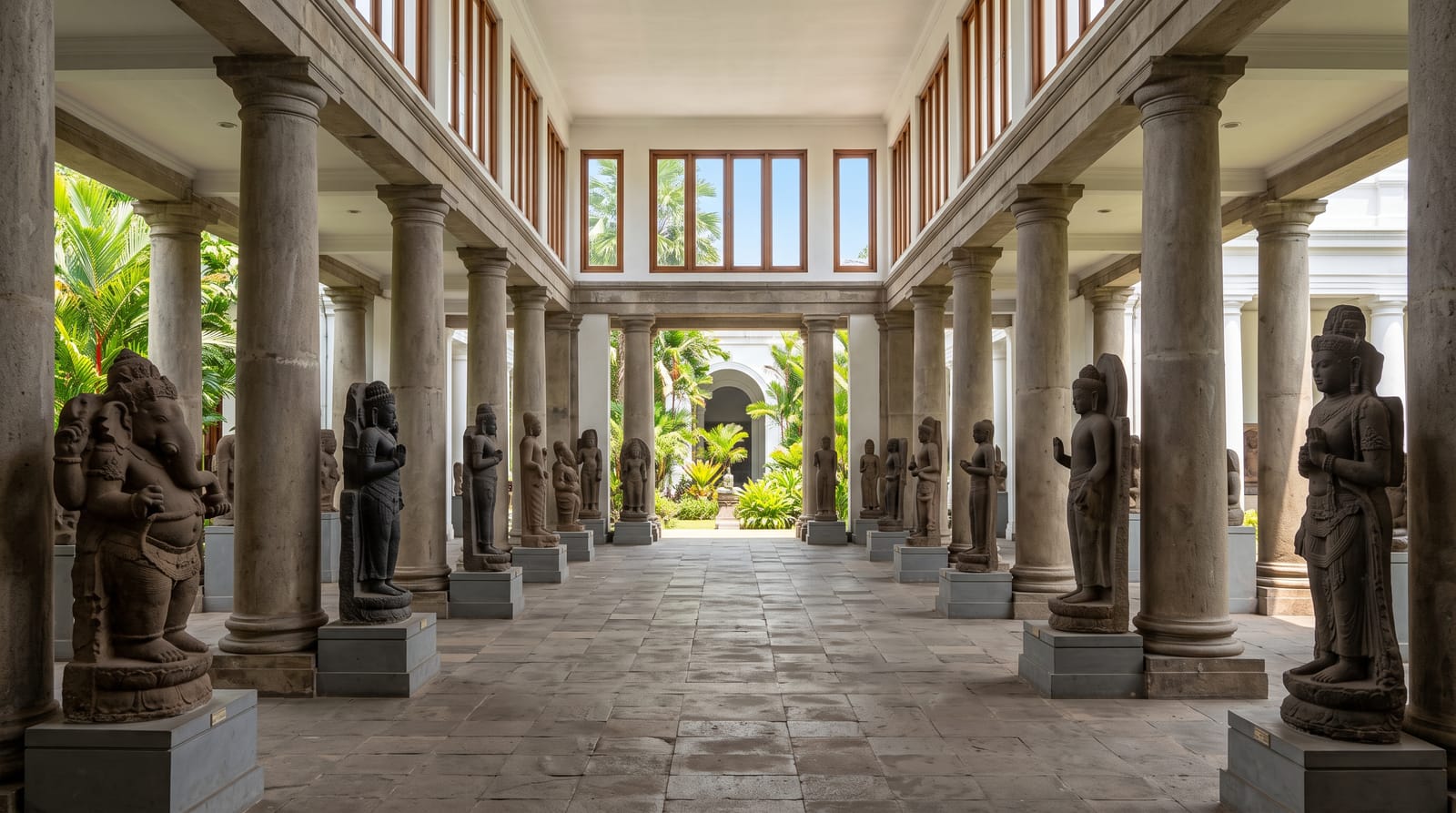
AI illustration
The museum stands on Merdeka Square and is known locally as Gedung Gajah, the elephant building, after the bronze elephant that has sat in front of it since it was given by the king of Siam in the nineteenth century. The collection runs from prehistoric bronzes and Dong Son drums through Hindu and Buddhist stone sculpture gathered from Javanese temple sites, to ceramics traded in from China and a large ethnographic floor covering textiles, houses and boats from islands most visitors never reach. A newer wing holds a treasure room of gold work. A fire in 2023 closed the museum for a long period and it has reopened in stages.
History
The museum grew from the Royal Batavian Society of Arts and Sciences, founded by Dutch intellectuals on 24 April 1778 to promote research in history, archaeology, ethnography and physics. One of its founders, J. C. M. Radermacher, gave a building in Old Batavia with a collection of cultural objects and books to start a museum and library; today it holds about 141,000 objects and is known as the Elephant Museum after the statue in its forecourt (Wikipedia, National Museum of Indonesia).
What you'll find
- The stone sculpture halls - Hindu and Buddhist figures brought in from Javanese temple sites.
- Dong Son bronzes - large prehistoric drums traded across the archipelago.
- The ethnographic floor - textiles, house models and boats from the outer islands.
- The treasure room - gold work and court regalia in the newer wing.
When to go
Weekday mornings are quietest; school groups fill the halls from mid-morning and weekends are busy with families. Allow two to three hours. Check which wings are open before travelling, since parts of the building have been closed for restoration and the layout has changed. The museum shuts on Mondays.
Before you go
Labelling is uneven and much of it is brief, so the sculpture halls in particular reward reading up first. The building is old and the lighting in some rooms is poor for viewing and worse for photographs. Closures for restoration are frequent and not always signposted. Reaching Merdeka Square through Jakarta traffic can take longer than the visit itself.
Nearby
Merdeka Square and the tall national monument stand directly across the road.
Key facts
Source: Wikidata, item Q1467125, read on 18 October 2026.
What to pack for National Museum of Indonesia
Chosen from what this place is for. Tap a kit for the full checklist.
- Comfortable walking shoes - Sightseeing means kilometres of pavement and cobbles daily. Find on Amazon
- Modest clothing - Shoulders and knees covered - the single most common requirement. Find on Amazon
- A slim anti-theft daypack - Zips that close properly; keep it in front in crowds and on transit. Find on Amazon
- A scarf or shawl - To cover the head or shoulders on entry; women especially at mosques. Find on Amazon
Some links on this page are Amazon affiliate links - if you buy through them we may earn a small commission at no extra cost to you.
All packing kitsPlan your trip
Where to start if National Museum of Indonesia is going on the list.
Booking links on this page are affiliate links - if you book through them we may earn a small commission at no extra cost to you. It never changes what we write about a place.
Opening times, ticket prices and seasonal closures change - check the official source before you go: official site.


