Simlipal National Park
A sal forest reserve with two large waterfalls and an isolated tiger population in which near-black coats are unusually common.
Updated 19 October 2026
AI illustration
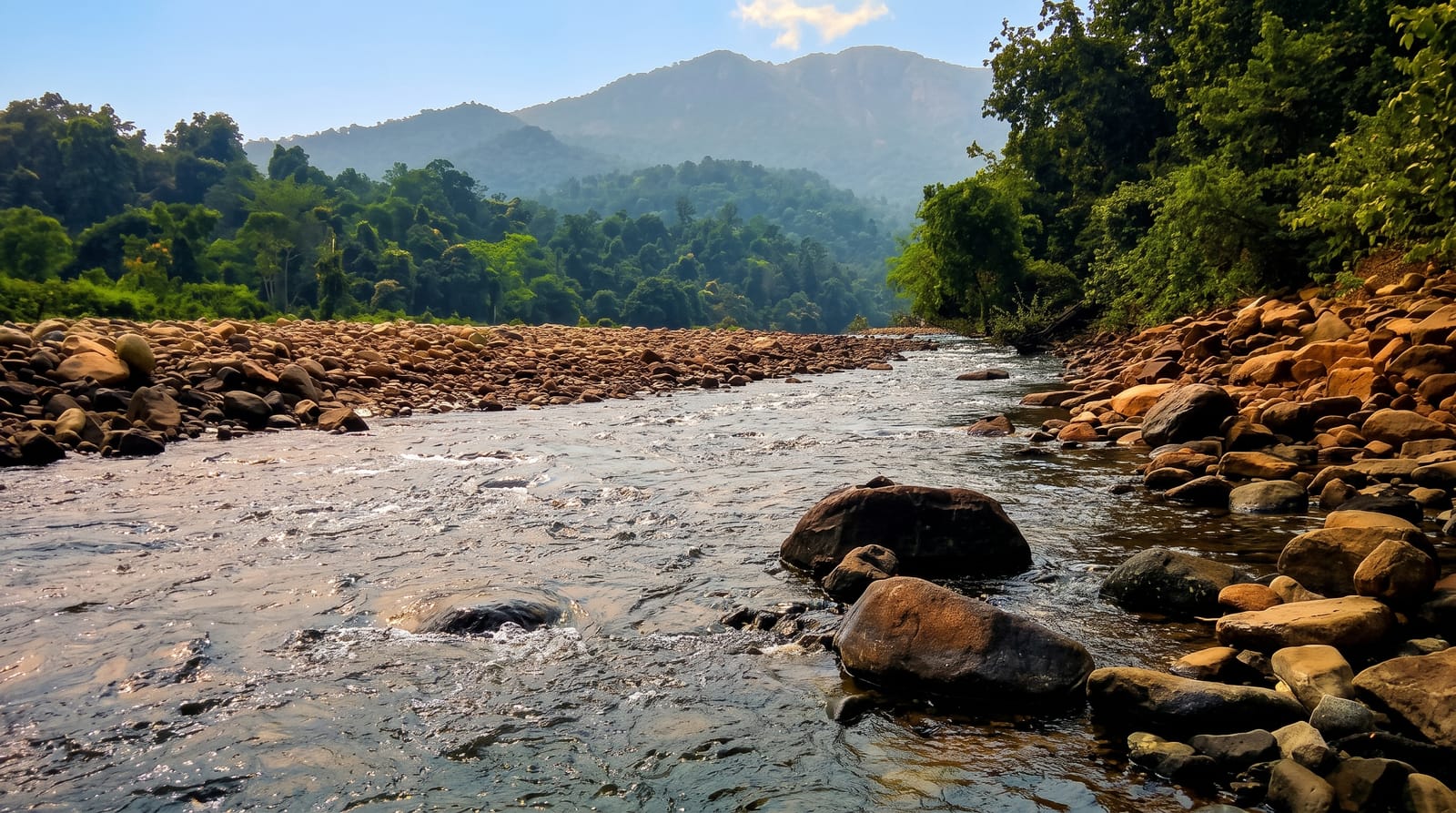
Simlipal covers around 2,750 square kilometres of sal forest, grassland and hill in northern Odisha, part of a biosphere reserve, with the Barehipani and Joranda waterfalls dropping around four hundred and one hundred and fifty metres respectively. Its tigers are its distinguishing feature: cut off from other tiger populations and descended largely from the four animals counted in 2014, about 37% of them show pseudo-melanism, a recessive trait that makes the coat look mostly black rather than orange with black stripes. Elephants, gaur, and 242 recorded bird species are also present, and Adivasi communities live within the reserve.
History
Simlipal began mainly as a royal hunting ground. It was designated a tiger reserve under Project Tiger in May 1973 and declared a wildlife sanctuary in 1979, part of it was proposed as a national park in 1980, the Government of India declared it a biosphere reserve in 1994, and in May 2009 UNESCO added it to its list of biosphere reserves (Wikipedia, Simlipal National Park).
Highlights
- The sal forest - dense broadleaf woodland across hills and valleys.
- Barehipani falls - a two-tiered drop of around four hundred metres.
- The pseudo-melanistic tigers - near-black coats, common here because the population is so inbred.
- The elephants - a significant herd through the reserve.
When to go
November to mid-June; the park closes for the monsoon from mid-June to October. Permits must be booked in advance and daily vehicle numbers are capped.
Things to know
Tiger sightings, black-coated or otherwise, are very rare here; the forest is dense and the population thinly spread. Permits and accommodation inside book out. Roads within the park are rough.
Nearby
Baripada lies east; Kolkata is northeast.
Key facts
Source: Wikidata, item Q61529, read on 18 October 2026.
What to pack for Simlipal National Park
Chosen from what this place is for. Tap a kit for the full checklist.
- Broken-in walking shoes or boots - Grip and ankle support matter more than looks; never hike in brand-new boots. Find on Amazon
- Binoculars - The single best wildlife tool - even a compact pair transforms a sighting. Find on Amazon
- Strong insect repellent - DEET or picaridin; the jungle is where bites and disease risk are highest. Find on Amazon
- Layers + a waterproof shell - Mountain weather turns fast; a packable rain jacket saves the day. Find on Amazon
Some links on this page are Amazon affiliate links - if you buy through them we may earn a small commission at no extra cost to you.
All packing kitsPlan your trip
Where to start if Simlipal National Park is going on the list.
Booking links on this page are affiliate links - if you book through them we may earn a small commission at no extra cost to you. It never changes what we write about a place.
Opening times, ticket prices and seasonal closures change - check the official source before you go: official site.