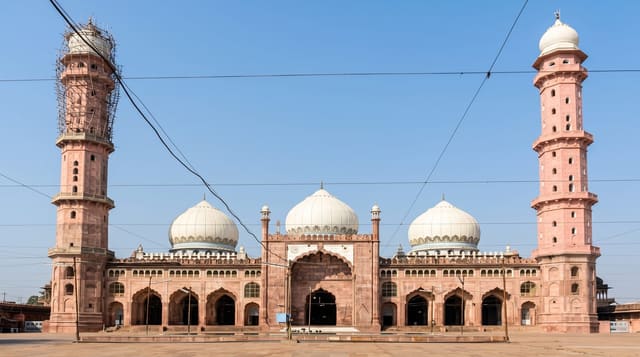
Mandu
A fortified plateau city of pavilions, tanks and tombs, built for pleasure and abandoned to the monsoon.
Updated 19 October 2026
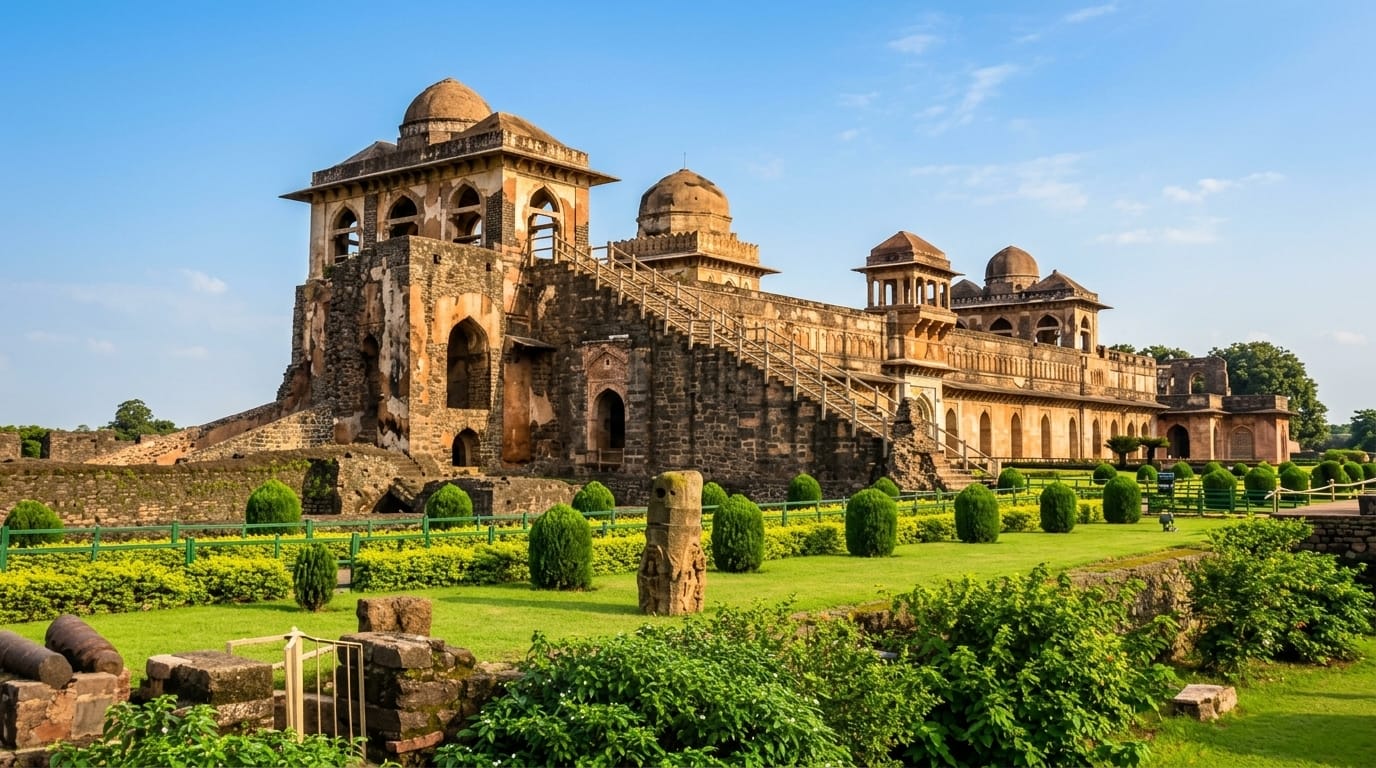
AI illustration
Mandu occupies a plateau in the Vindhyas ringed by a wall some thirty-seven kilometres long, and its buildings, mostly fifteenth and sixteenth century under the Malwa sultans, were designed around water and air: the Jahaz Mahal, a long narrow palace between two tanks so it appears to float; Hindola Mahal with sloping buttressed walls; Rupmati's pavilion on the escarpment, from which the Narmada can be seen far below; and the Jami Masjid and Hoshang Shah's tomb, an early marble mausoleum that the builders of the Taj Mahal are recorded as having studied. The monsoon is when it comes into its own.
History
An inscription dated 555 CE records a statue set up in a temple of Parshvanatha in the Mandapa Durg, the fort from whose name Mandu comes, and the town rose to prominence under the Paramaras in the 10th and 11th centuries. In 1305 Alauddin Khalji of Delhi took Malwa, and after Timur captured Delhi in 1401 the governor of Malwa, Dilawar Khan, founded his own Ghuri dynasty; his son Hoshang Shah moved the capital from Dhar to Mandu and raised it to its greatest splendour (Wikipedia, Mandu, Madhya Pradesh).
What to look for
- Jahaz Mahal - the ship palace between two tanks.
- Hoshang Shah's tomb - an early marble mausoleum studied by Taj builders.
- Rupmati's pavilion - a hilltop pavilion overlooking the Narmada valley.
- The tanks and baolis - the water system the city was built around.
When to go
July to March; unusually for India, the monsoon is a good season here, when the plateau greens and the tanks fill, which is what the architecture was designed for. April to June is severe.
Good to know
Monuments are spread over a large plateau and a vehicle or bicycle is needed. Several groups charge separately. Facilities are limited and accommodation basic.
Nearby
Maheshwar lies south; Indore is northeast.
What to pack for Mandu
Chosen from what this place is for. Tap a kit for the full checklist.
- Padded shorts - The one thing that makes a full day in the saddle bearable. Find on Amazon
- Strong insect repellent - DEET or picaridin; the jungle is where bites and disease risk are highest. Find on Amazon
- Comfortable walking shoes - Sightseeing means kilometres of pavement and cobbles daily. Find on Amazon
- Modest clothing - Shoulders and knees covered - the single most common requirement. Find on Amazon
Some links on this page are Amazon affiliate links - if you buy through them we may earn a small commission at no extra cost to you.
All packing kitsPlan your trip
Where to start if Mandu is going on the list.
Booking links on this page are affiliate links - if you book through them we may earn a small commission at no extra cost to you. It never changes what we write about a place.
Opening times, ticket prices and seasonal closures change - check the official source before you go: official site.