Loktak Lake
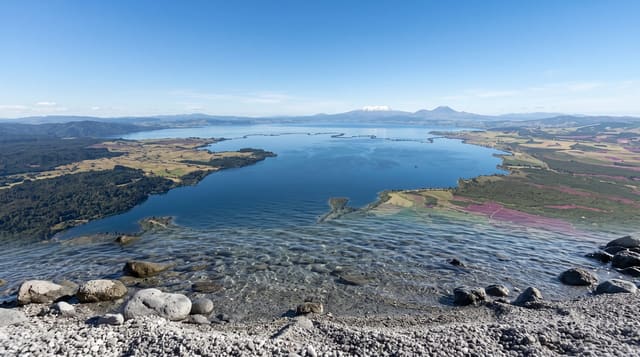
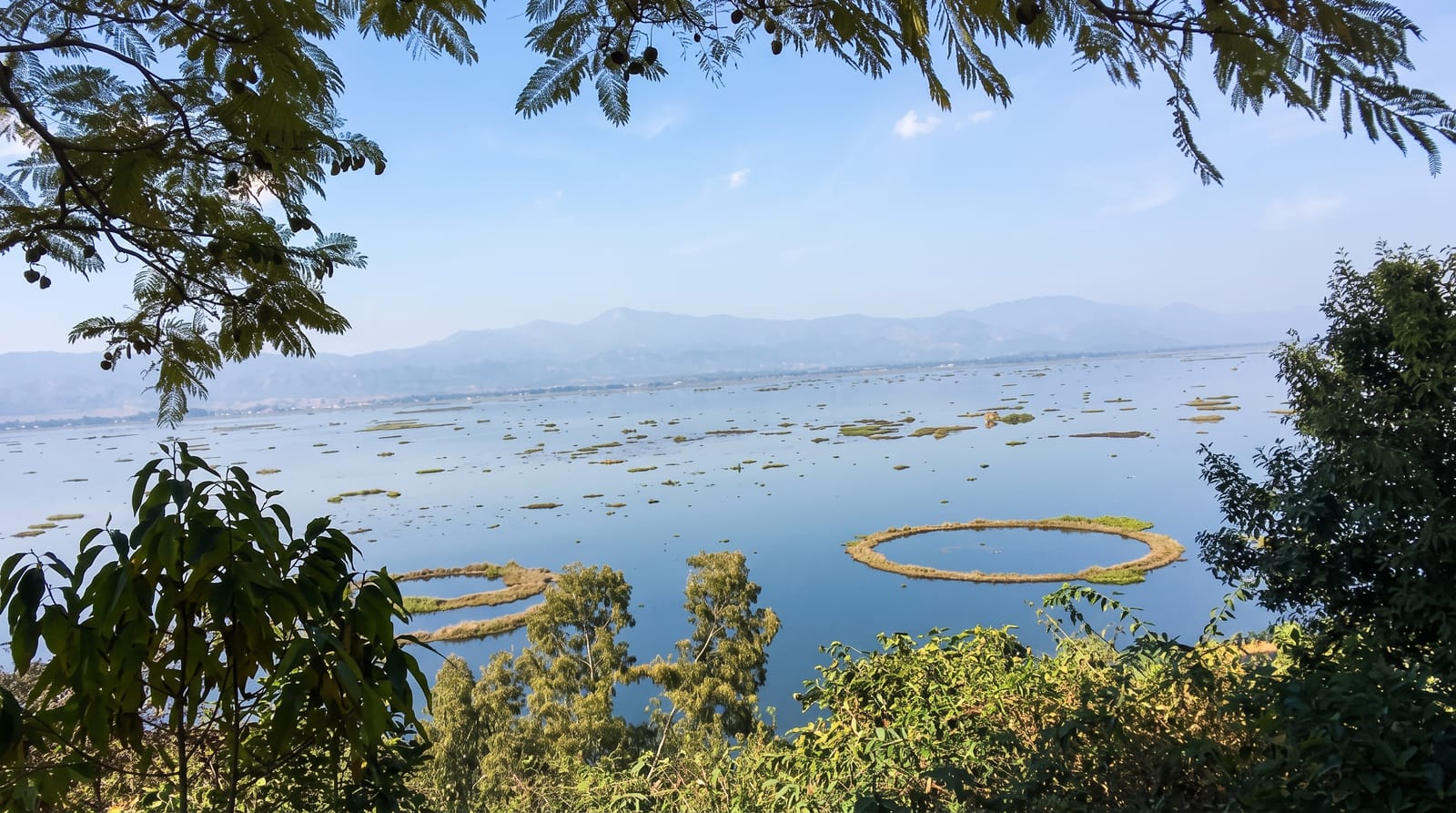
A lake covered with floating islands of matted vegetation, some cut into rings and used as fish pens.
Updated 19 October 2026
AI illustration
Loktak is the largest freshwater lake in northeast India, and what makes it unlike any other is the phumdi: floating masses of vegetation, soil and organic matter that build up into islands thick enough to walk on and to build huts on, drifting with the wind. Fishing families live on them, and many have been cut into rings, phum, which act as enclosures for fish farming, so the lake from above shows hundreds of dark circles on the water. A hydroelectric barrage built in the 1980s changed water levels permanently and has thinned the phumdi, which is the central conservation problem here.
Background
Loktak is a pulsating lake near Moirang whose surface swells from 250 km2 to 500 km2 in the rains, though it usually spreads over about 287 km2. Its name joins the Meitei words lok, stream, and tak, the end. The largest phumdi covers 40 km2 on the southeastern shore and carries Keibul Lamjao National Park, the last natural refuge of the sangai. The lake supplies water for hydropower, irrigation and drinking, and about 100,000 people live in 55 hamlets around it. It became a Ramsar site on 23 March 1990 and was placed on the Montreux Record of threatened sites on 16 June 1993, and Loktak Day is held each year on 15 October.
Source: Wikipedia, "Loktak Lake"
What you'll find
- The phumdi rings - hundreds of circular fish pens cut from floating vegetation.
- The floating huts - fishing families living on the islands.
- The boat routes - canoes and motorboats through the channels.
- The hill viewpoints - overlooks showing the rings from above.
When to go
October to March for clear weather and calm water; the monsoon raises levels and makes boating harder. Mornings are best for mist and light on the rings.
Practical notes
The barrage has damaged the ecosystem. Boats vary in safety standards.
Nearby
Keibul Lamjao lies on the lake; Imphal is northeast.
Key facts
Source: Wikidata, item Q2995601, read on 18 October 2026.
What to pack for Loktak Lake
Chosen from what this place is for. Tap a kit for the full checklist.
- Travel rod + reel - A packable multi-piece rod fits in a case and covers most holiday fishing. Find on Amazon
- Reef-safe sunscreen - High SPF that will not bleach the coral you are swimming over. Find on Amazon
- Quick-dry clothing - Board shorts or synthetics that shrug off spray and dry fast. Find on Amazon
- Strong insect repellent - DEET or picaridin; the jungle is where bites and disease risk are highest. Find on Amazon
Some links on this page are Amazon affiliate links - if you buy through them we may earn a small commission at no extra cost to you.
All packing kitsPlan your trip
Where to start if Loktak Lake is going on the list.
Booking links on this page are affiliate links - if you book through them we may earn a small commission at no extra cost to you. It never changes what we write about a place.
Opening times, ticket prices and seasonal closures change - check the official source before you go: official site.