Living Root Bridges of Meghalaya
Footbridges grown from the trained aerial roots of fig trees in the wet valleys below the Meghalaya plateau, reached on steep stairways.
Updated 4 September 2026
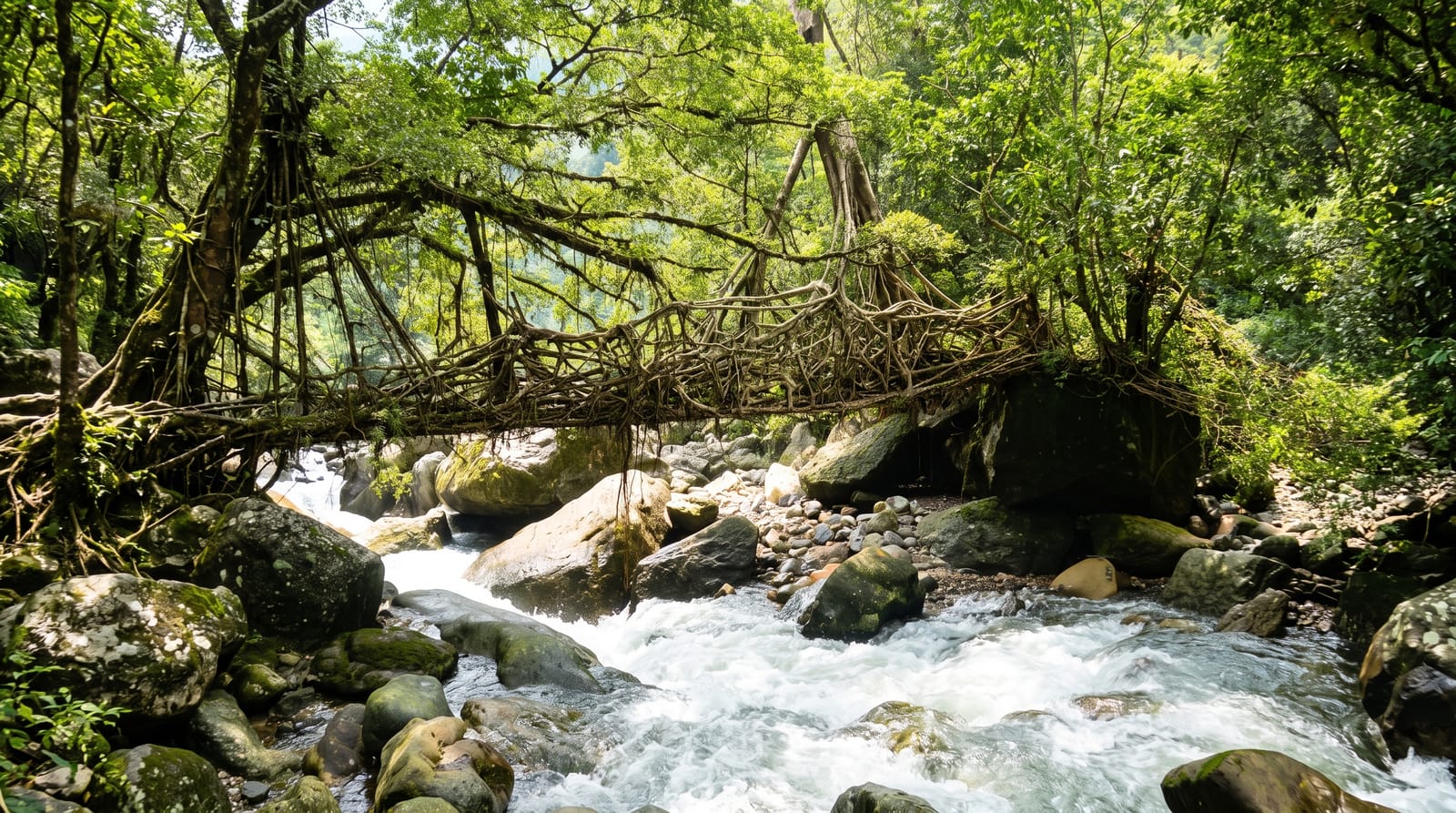
AI illustration
In the wet valleys below the Meghalaya plateau, Khasi villagers train the aerial roots of rubber fig trees across streams, guiding them along frames for years until they thicken into a bridge that keeps growing. Several are still in daily use, and the best known is the double-decker at Nongriat, two spans stacked one above the other over a river pool. Reaching it means a descent of several thousand steps from Tyrna and the same climb back, through forest, past smaller root bridges and steel wire footbridges swaying over the gorge. Quieter examples exist elsewhere in the region, including a long single span near Mawlynnong and bridges around Pynursla.
Highlights
- The double-decker bridge at Nongriat - two root spans stacked over the same river.
- The stairway from Tyrna - several thousand steps down through the forest and back up.
- Wire footbridges - swaying steel spans crossing the gorge on the way down.
- River pools - clear green pools below the bridges where walkers stop to swim.
When to go
October to April is drier and the steps are less slippery, with clearer air and fewer leeches. The monsoon makes the descent treacherous and the rivers unsafe, though the forest is at its greenest. Start early: the round trip takes most of a day, and doing the climb back in the afternoon heat is much harder. Staying overnight in Nongriat spreads the effort over two days.
What to expect
This is a hard walk, not a viewpoint. The return climb is thousands of uneven steps and leaves most people wrecked, and knees suffer more on the way down than up. Nongriat is small and its guesthouses are basic, with limited power. The main bridge gets busy in the middle of the day, and fees are collected at several points along the route.
Nearby
Nohkalikai Falls and the limestone caves around Sohra are within an hour by road.
What to pack for Living Root Bridges of Meghalaya
Chosen from what this place is for. Tap a kit for the full checklist.
- Broken-in walking shoes or boots - Grip and ankle support matter more than looks; never hike in brand-new boots. Find on Amazon
- Head torch + spare batteries - Hands-free light is essential; caves are truly dark. Find on Amazon
- Strong insect repellent - DEET or picaridin; the jungle is where bites and disease risk are highest. Find on Amazon
- Shelter suited to the place - Tent, tarp or hut booking - match it to the terrain and rules. Find on Amazon
Some links on this page are Amazon affiliate links - if you buy through them we may earn a small commission at no extra cost to you.
All packing kitsPlan your trip
Where to start if Living Root Bridges of Meghalaya is going on the list.
Booking links on this page are affiliate links - if you book through them we may earn a small commission at no extra cost to you. It never changes what we write about a place.
Opening times, ticket prices and seasonal closures change - check the official source before you go: official site.