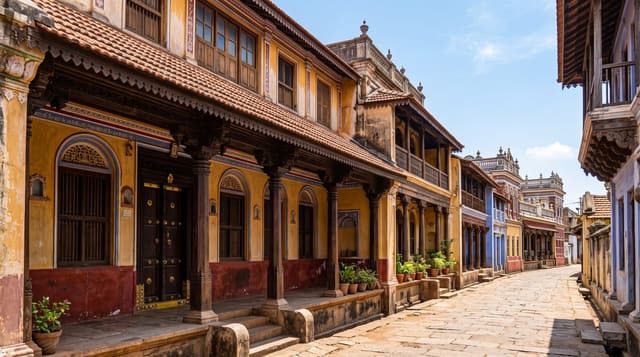
Kanchipuram
A temple city of Pallava and Chola shrines, and the source of a heavy silk saree woven with a separate border.
Updated 19 October 2026
AI illustration
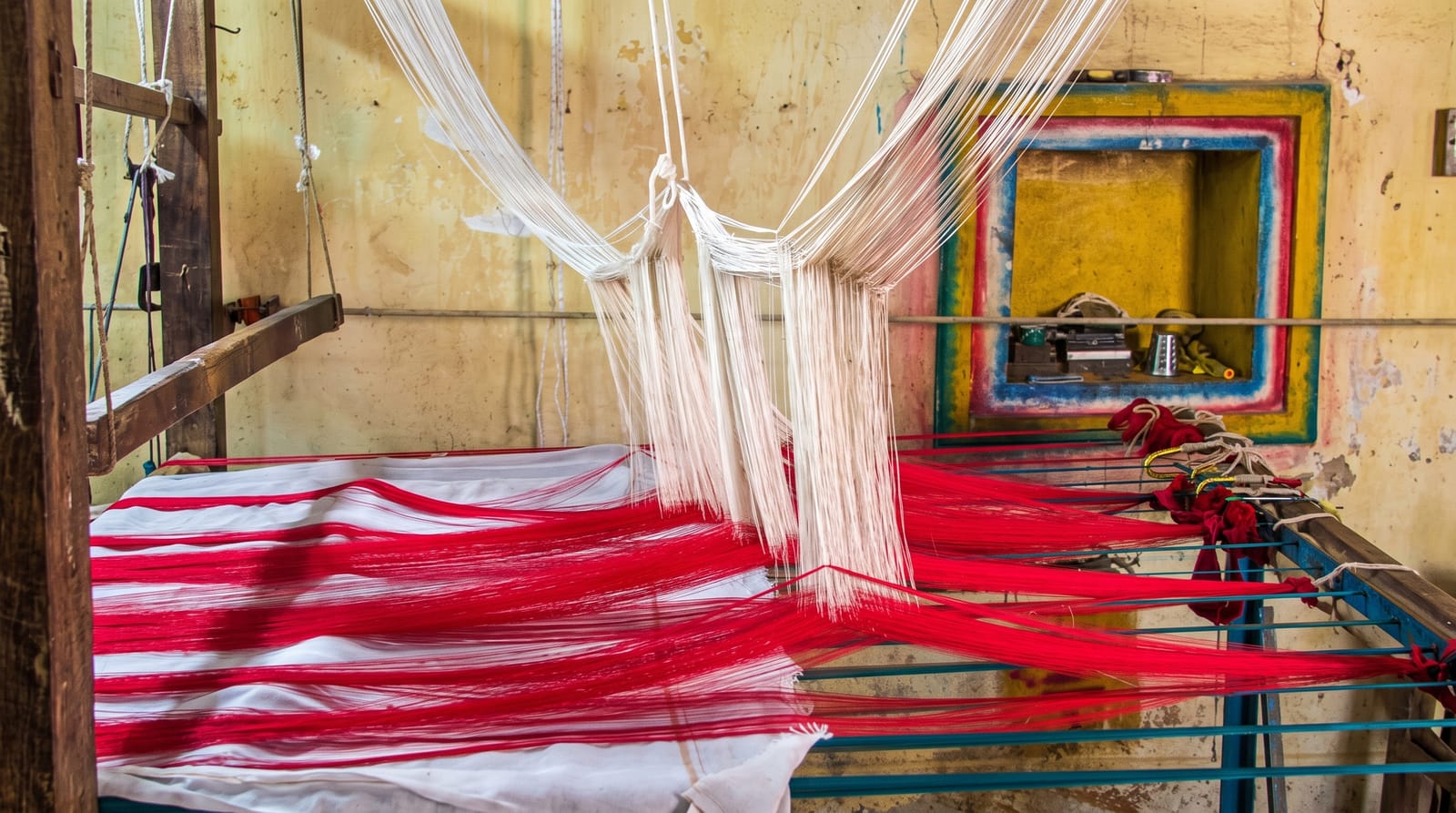
Kanchipuram was a capital of the Pallavas and one of the seven cities held to grant liberation, and it holds temples across several centuries: Kailasanathar, built around 700 in sandstone with a series of small shrines round the courtyard and traces of original painting, is the oldest and most restrained; Ekambareswarar, Kamakshi Amman and Varadaraja Perumal are large working temples with towering gopurams. The Kanchipuram saree is woven here on pit looms in heavy mulberry silk with zari, and its distinguishing technique is that body and border are woven separately and joined at a visible interlock strong enough that the saree tears before the join does.
History
The earliest references to Kanchipuram come in the works of the grammarian Patanjali, of the 3rd and 2nd centuries BCE, and the 4th-century poet Kalidasa called it "the best among cities". It grew in importance when the Pallavas moved their capital here in the 6th century and fortified it with ramparts, moats and planned roads, and it was later ruled by the Cholas, the Pandyas and the Vijayanagara Empire (Wikipedia, Kanchipuram).
What you'll find
- Kailasanathar - the Pallava sandstone temple of around 700 with early painting.
- The great gopurams - Ekambareswarar and Varadaraja Perumal towers.
- The pit looms - weavers making heavy silk with zari in town workshops.
- The interlocked border - body and border woven separately and joined.
When to go
October to March; the plains are severely hot from March. Temple festivals fall through the year. Weaving workshops run on weekdays.
Before you go
Power-loom and blended sarees are widely sold as pure Kanchipuram silk; a silk mark and weight test separate them. Temples charge for inner darshan and touts are persistent. The city is congested.
Nearby
Mamallapuram lies east; Chennai is northeast.
What to pack for Kanchipuram
Chosen from what this place is for. Tap a kit for the full checklist.
- Comfortable walking shoes - Sightseeing means kilometres of pavement and cobbles daily. Find on Amazon
- Modest clothing - Shoulders and knees covered - the single most common requirement. Find on Amazon
- A slim anti-theft daypack - Zips that close properly; keep it in front in crowds and on transit. Find on Amazon
- A scarf or shawl - To cover the head or shoulders on entry; women especially at mosques. Find on Amazon
Some links on this page are Amazon affiliate links - if you buy through them we may earn a small commission at no extra cost to you.
All packing kitsPlan your trip
Where to start if Kanchipuram is going on the list.
Booking links on this page are affiliate links - if you book through them we may earn a small commission at no extra cost to you. It never changes what we write about a place.
Opening times, ticket prices and seasonal closures change - check the official source before you go: official site.