Gingee Fort
Three fortified hills linked by walls across the valley between them, called the Troy of the East.
Updated 21 October 2026
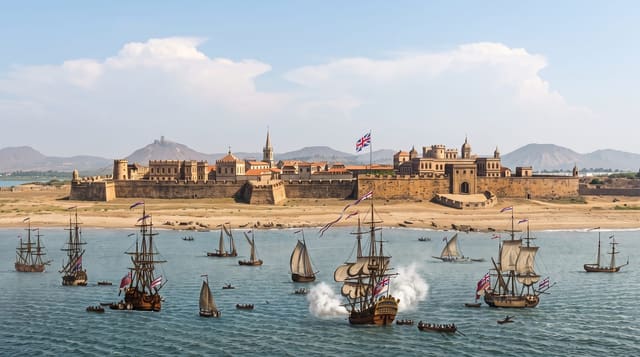
AI illustration
UNESCO World Heritage
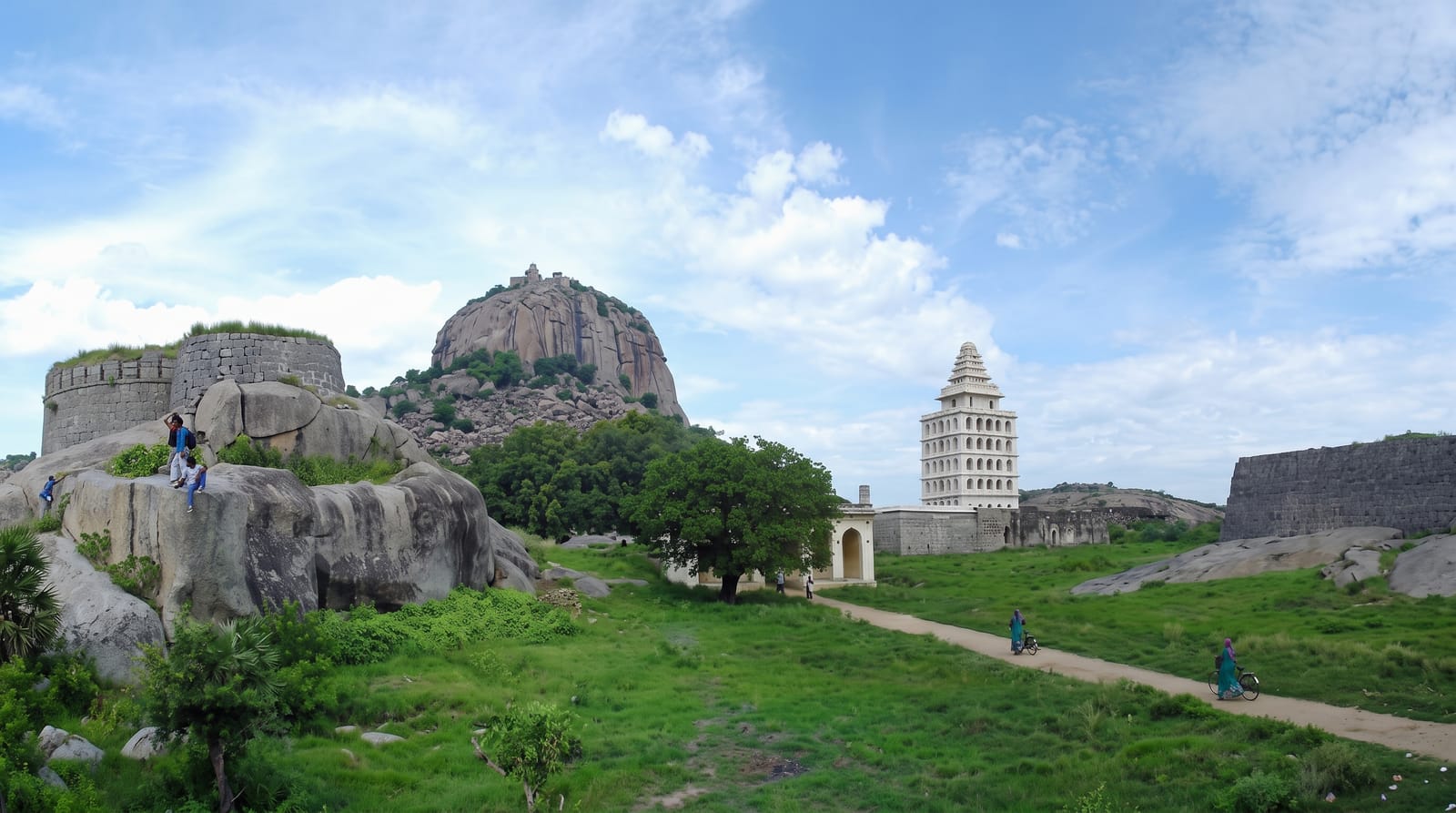
Gingee is not one fort but three, on the hills of Rajagiri, Krishnagiri and Chandrayandurg, with walls running down and across the valley to link them into a single circuit of some thirteen kilometres. Rajagiri, the main citadel, is a granite dome reached by steps and a drawbridge over a cleft, with a granary, temples and a Kalyana Mahal, a seven-storey pavilion with a pyramidal roof, in the lower enclosure. It was held in turn by the Vijayanagar rulers, Marathas, Mughals, French and British, and Shivaji is said to have called it the most impregnable fortress in India; the Troy of the East name is a British coinage.
History
Gingee is first named around 1123 as the land of a Kadava chieftain, and a small fort built here by the Cholas in the 9th century was developed by the Kadava kings in the 12th and by the Vijayanagara empire in the 14th. From the early 16th century the Gingee Nayaks governed it for Vijayanagara and later ruled it as kings, until the sultanates of Bijapur and Golconda took it in 1649. Shivaji captured it in July 1677, called it the most impregnable fortress in India and had its mud walls replaced with granite, and for a few months it was the seat of the Maratha state under Rajaram; the Mughals took it in 1698 after a seven-year siege, Aurangzeb granted it in 1700 to Raja Swarup Singh Bundela, and from 1714 it passed to the Nawabs of the Carnatic. The British called it the Troy of the East (Wikipedia, Gingee Fort).
What you'll find
- The three hills - Rajagiri, Krishnagiri and Chandrayandurg linked by walls.
- The drawbridge cleft - the gap crossed to reach the Rajagiri citadel.
- Kalyana Mahal - a seven-storey pavilion in the lower enclosure.
- The linking walls - thirteen kilometres of circuit across the valley.
When to go
October to March; the granite climb is punishing in Tamil heat and there is no shade. Mornings are essential. The site is quiet on weekdays.
Good to know
The Rajagiri climb is steep, long and exposed, taking well over an hour each way. Monkeys are aggressive. Facilities are minimal and water must be carried.
Nearby
Thiruvannamalai lies west; Puducherry is east.
Key facts
Source: Wikidata, item Q3536493, read on 18 October 2026.
What to pack for Gingee Fort
Chosen from what this place is for. Tap a kit for the full checklist.
- Comfortable walking shoes - Sightseeing means kilometres of pavement and cobbles daily. Find on Amazon
- Modest clothing - Shoulders and knees covered - the single most common requirement. Find on Amazon
- A slim anti-theft daypack - Zips that close properly; keep it in front in crowds and on transit. Find on Amazon
- A scarf or shawl - To cover the head or shoulders on entry; women especially at mosques. Find on Amazon
Some links on this page are Amazon affiliate links - if you buy through them we may earn a small commission at no extra cost to you.
All packing kitsPlan your trip
Where to start if Gingee Fort is going on the list.
Booking links on this page are affiliate links - if you book through them we may earn a small commission at no extra cost to you. It never changes what we write about a place.
Opening times, ticket prices and seasonal closures change - check the official source before you go: official site.