Alphonso Mangoes of Ratnagiri
The hapus mango, grown on a narrow coastal strip whose laterite soil and sea air the fruit cannot do without.
Updated 4 September 2026
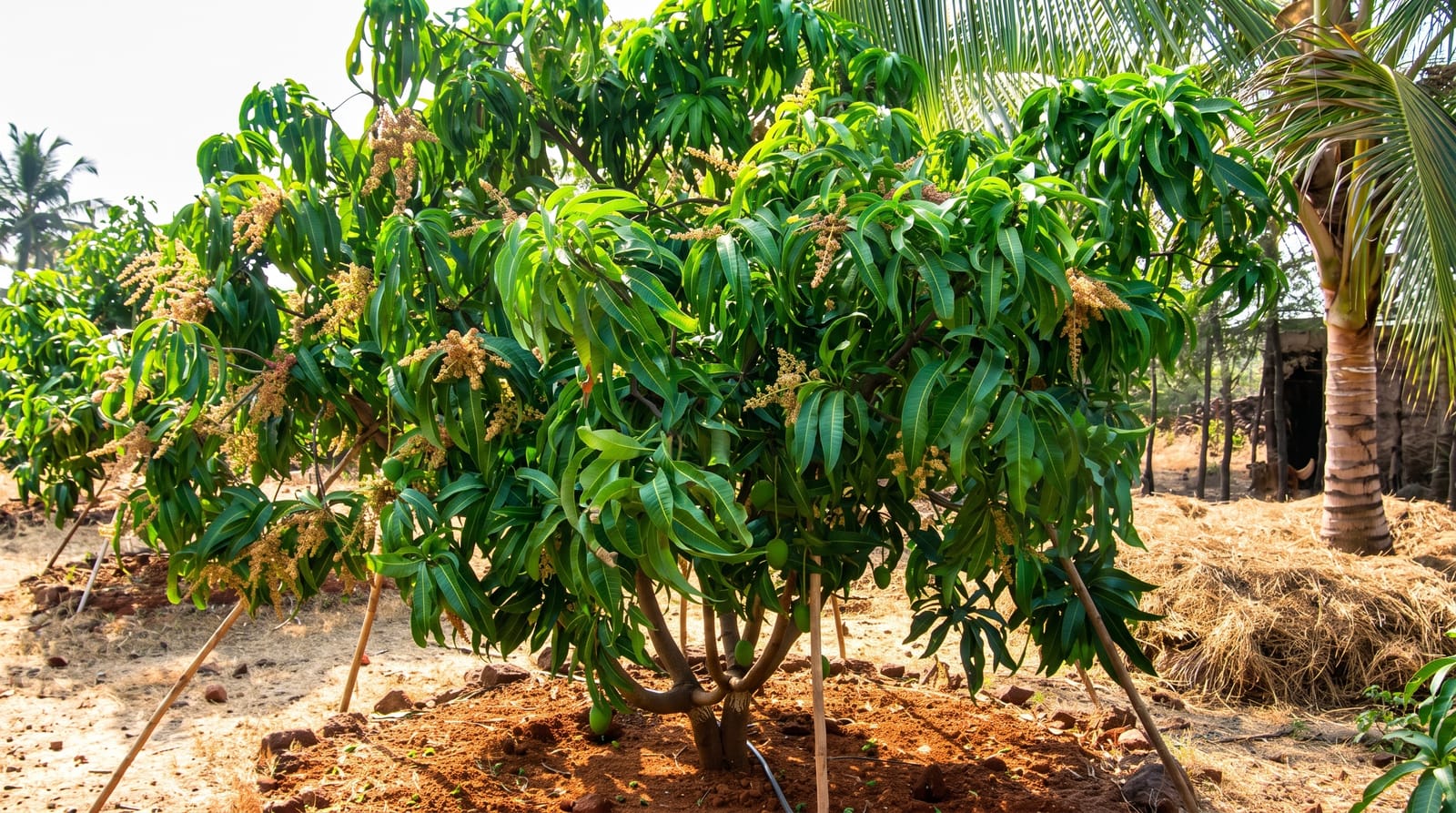
AI illustration
The Alphonso, called hapus in Marathi, is named after Afonso de Albuquerque, and it grows across India, but the fruit from the Konkan strip around Ratnagiri and Devgad is treated as a separate thing entirely and priced accordingly, with a geographical indication protecting the name. Growers attribute it to the laterite soil, the sea air and the sharp temperature swing between day and night on this coast. The season is short, roughly April to early June, and fruit is picked hard, packed in straw in wooden crates and ripened over days. Counterfeit labelling of ordinary mangoes as Ratnagiri hapus is widespread.
What you'll find
- The orchards - laterite hillsides of mango above the Konkan coast.
- The picking and packing - fruit cut with poles and layered in straw crates.
- The ripening - boxes held for days until the fruit softens and colours.
- The markets - graded fruit sold by count rather than weight.
When to go
April to June; the season peaks in May and ends quickly. Early-season fruit is expensive and often forced. Rain at the wrong moment can wreck a year's crop.
Good to know
Counterfeiting is rife and most fruit sold as Ratnagiri hapus is not. Prices at source are still high. Chemically ripened fruit is common and best avoided by buying from named growers.
Nearby
Ganpatipule lies north; Velas is up the coast.
What to pack for Alphonso Mangoes of Ratnagiri
Chosen from what this place is for. Tap a kit for the full checklist.
- A reusable bag or container - For market produce and cutting down on packaging. Find on Amazon
- Wet wipes + hand sanitiser - Street food and washbasins do not always go together. Find on Amazon
Some links on this page are Amazon affiliate links - if you buy through them we may earn a small commission at no extra cost to you.
All packing kitsPlan your trip
Where to start if Alphonso Mangoes of Ratnagiri is going on the list.
Booking links on this page are affiliate links - if you book through them we may earn a small commission at no extra cost to you. It never changes what we write about a place.
Opening times, ticket prices and seasonal closures change - check the official source before you go: official site.