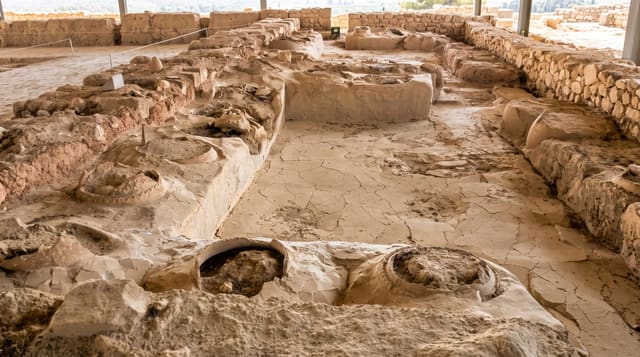
Cueva del Gigante
A rockshelter in the La Paz highlands whose deposits hold one of the longest records of early agriculture in the Americas.
Updated 1 September 2026
The Cueva del Gigante is a dry rockshelter in a canyon near Marcala where excavation has recovered an unusually long and well-preserved sequence of plant remains: maize cobs, squash, beans and other cultivars spanning many thousands of years, in conditions dry enough to keep organic material that normally rots. The site has become important to the study of how maize was domesticated and spread in Mesoamerica. It is a research site rather than an attraction, and there is nothing built for visitors.
What you'll find
- The rockshelter - a dry overhang in the canyon wall, the excavated deposit beneath it.
- The canyon - the Estanzuela valley cut into the highlands around it.
- The research context - one of the longest preserved agricultural sequences in the Americas.
- The setting - dry highland country quite unlike the wet forests further north.
When to go
November to April is the dry season and the practical window for the walk in. Access depends on arrangement rather than season. Excavation seasons vary.
Before you go
This is not a visitor site: there is no infrastructure, no interpretation and no guaranteed access, and the deposits are fragile. Visits are arranged through local authorities or the research project, and turning up unannounced is not appropriate. What you see is a rock overhang, and the significance is entirely in what was dug out of it.
Nearby
Marcala is the nearest town, and La Esperanza is north in the highlands.
What to pack for Cueva del Gigante
Chosen from what this place is for. Tap a kit for the full checklist.
- Comfortable walking shoes - Sightseeing means kilometres of pavement and cobbles daily. Find on Amazon
- A slim anti-theft daypack - Zips that close properly; keep it in front in crowds and on transit. Find on Amazon
- A refillable water bottle - Many cities have public fountains; save money and plastic. Find on Amazon
- A light layer + compact umbrella - For museum air-con and a sudden shower. Find on Amazon
Some links on this page are Amazon affiliate links - if you buy through them we may earn a small commission at no extra cost to you.
All packing kitsPlan your trip
Where to start if Cueva del Gigante is going on the list.
Booking links on this page are affiliate links - if you book through them we may earn a small commission at no extra cost to you. It never changes what we write about a place.
Opening times, ticket prices and seasonal closures change - check the official source before you go: official site.