Musee Ogier-Fombrun
A restored eighteenth-century sugar plantation on the Cote des Arcadins, run as a museum of colonial and revolutionary history.
Updated 19 October 2026
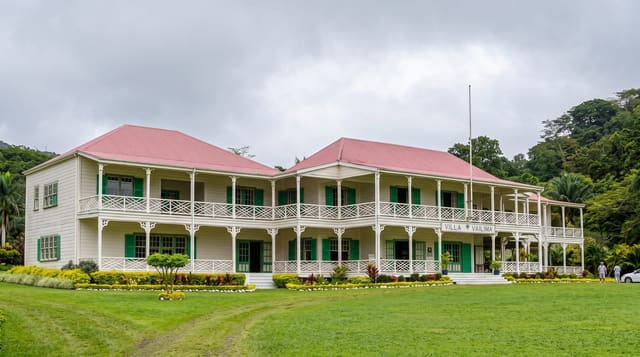
The Ogier-Fombrun museum occupies a sugar estate at Montrouis whose buildings were excavated and restored by the architect Gérard Fombrun from the 1970s. The aqueduct, the mill, the boiling house and the stone quarters are laid out as they worked, and the museum uses them to tell the story of the plantation economy and of the revolution that ended it. It sits on the beach coast, which means it is often visited as a morning out of a hotel on the same strip.
History
The Habitation Ogier sugar plantation was built in 1760 by Guillaume Ogier, a colonist from Bordeaux, and abandoned on his death in 1799, during the Haitian Revolution. The architect Gérard Fombrun bought it in March 1977 and restored it over 35 years, and the museum, opened to the public in 1993, tells Haiti's history from the Taíno to independence in 1804, with a 150 m aqueduct that still carries water to the great wooden waterwheel that once drove the cane mill (Wikipedia, Ogier-Fombrun Museum).
The main sights
- The mill and boiling house - the sugar works excavated and rebuilt on their foundations.
- The aqueduct - the water channel that drove the estate, restored across the grounds.
- The quarters - stone buildings from the enslaved workforce's part of the estate.
- The exhibition - objects and displays covering the colony and the revolution.
When to go
November to March is the dry season and the pleasantest. Mornings are cooler in the open grounds. It is closed on some weekdays, so checking ahead is sensible.
Before you go
The site is small and two hours is enough. Interpretation is largely in French. The subject matter is the slave economy, and the museum does not soften it, which is the right choice but not a light morning.
Nearby
The Cote des Arcadins hotels are on the same stretch of coast, and Saint-Marc is north.
Key facts
Source: Wikidata, item Q123591605, read on 18 October 2026.
What to pack for Musee Ogier-Fombrun
Chosen from what this place is for. Tap a kit for the full checklist.
- Comfortable walking shoes - Sightseeing means kilometres of pavement and cobbles daily. Find on Amazon
- A slim anti-theft daypack - Zips that close properly; keep it in front in crowds and on transit. Find on Amazon
- A refillable water bottle - Many cities have public fountains; save money and plastic. Find on Amazon
- A light layer + compact umbrella - For museum air-con and a sudden shower. Find on Amazon
Some links on this page are Amazon affiliate links - if you buy through them we may earn a small commission at no extra cost to you.
All packing kitsPlan your trip
Where to start if Musee Ogier-Fombrun is going on the list.
Booking links on this page are affiliate links - if you book through them we may earn a small commission at no extra cost to you. It never changes what we write about a place.
Opening times, ticket prices and seasonal closures change - check the official source before you go: official site.