Vathia
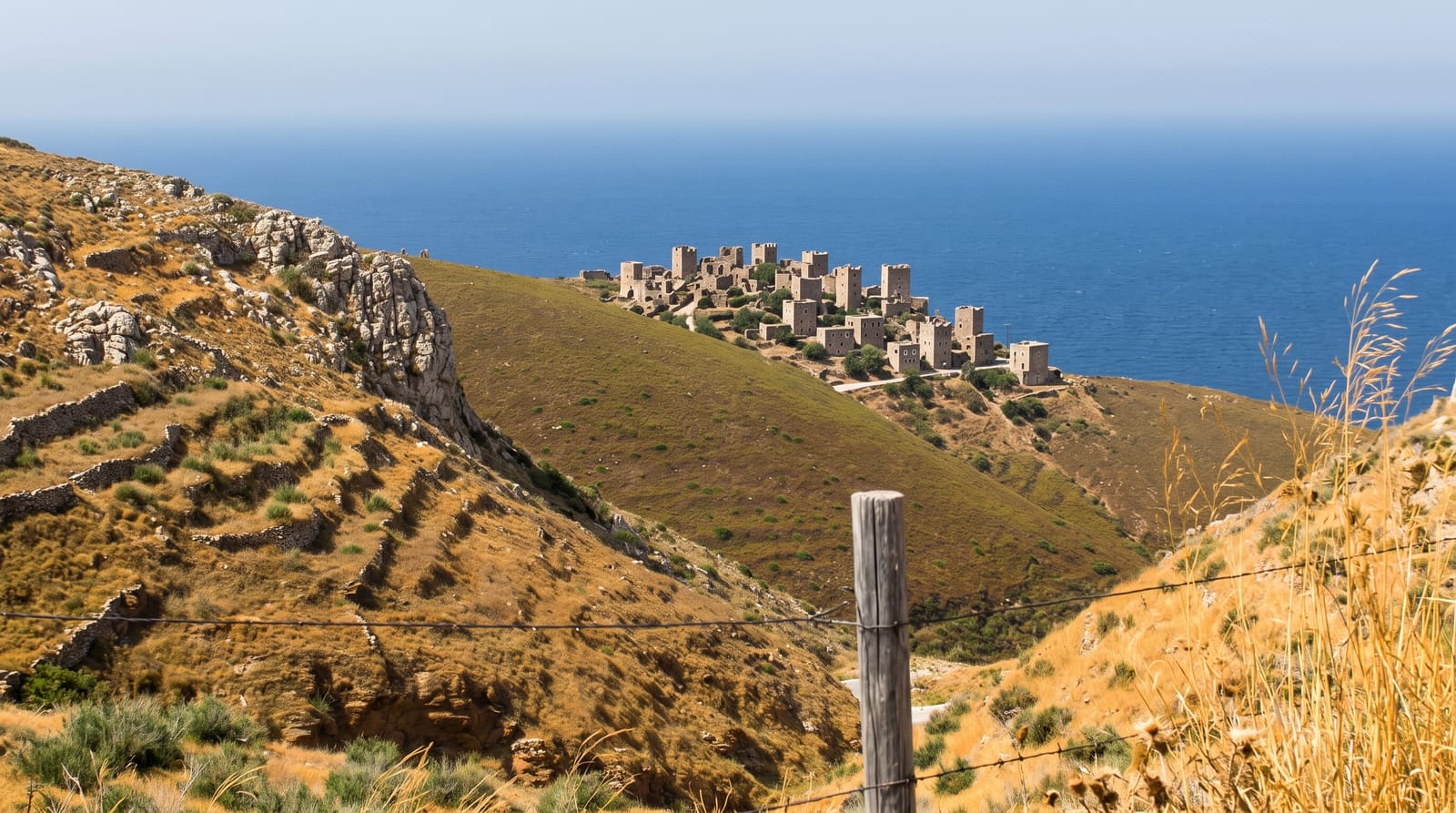
A hilltop cluster of stone tower houses in Inner Mani, mostly roofless and empty, the most photographed skyline in the peninsula.
Updated 19 October 2026
AI illustration
Vathia stands on a ridge above the sea in the driest, harshest part of the Mani, and its silhouette of some thirty tower houses packed together is the image most people carry of the peninsula. The towers, three and four storeys of unmortared stone with tiny windows, were built as fortified family homes; the higher your tower, the stronger your clan, and rivalries between families in these villages were legendary and long. Most of Vathia was abandoned during the twentieth century as the Mani emptied, and an attempt in the 1980s to convert it into a state-run hotel village was left unfinished. Today a handful of towers are restored and inhabited seasonally while the rest stand open to the sky, with prickly pear growing through the floors.
History
Vatheia is first mentioned in 1571 by a Venetian diplomatic mission as casale di Vathia; an unofficial census in 1618 recorded it with 20 hearths, and the Venetian Grimani census of 1700 counted 212 people in 54 families. On 13 April 1805 the traveller William Martin Leake passed through on his way to Cape Matapan, and his Maniot guides told him the village had been split into two feuding parties for the past 40 years (Wikipedia, Vatheia).
The main sights
- The tower skyline - some thirty stone towers packed on a ridge.
- The roofless interiors - open shells with staircases and fireplaces visible.
- The stone lanes - narrow passages between the tower bases.
- The sea view - the Mani coast and the Messenian Gulf below.
When to go
Spring and autumn for comfortable walking; the village has no shade at all. Late afternoon light on the stone is the reason photographers come. Winter storms make the Mani coast dramatic.
Things to know
Vathia is a ruin: floors are missing, walls are unstable and entering the towers is genuinely risky. There are no facilities, no ticket and no interpretation. The visit is short, half an hour to an hour, unless you walk the surrounding paths.
Nearby
Cape Tainaron lies at the end of the road south; Gerolimenas and Areopoli are north along the coast.
What to pack for Vathia
Chosen from what this place is for. Tap a kit for the full checklist.
- Comfortable walking shoes - Sightseeing means kilometres of pavement and cobbles daily. Find on Amazon
- A slim anti-theft daypack - Zips that close properly; keep it in front in crowds and on transit. Find on Amazon
- A refillable water bottle - Many cities have public fountains; save money and plastic. Find on Amazon
- A light layer + compact umbrella - For museum air-con and a sudden shower. Find on Amazon
Some links on this page are Amazon affiliate links - if you buy through them we may earn a small commission at no extra cost to you.
All packing kitsPlan your trip
Where to start if Vathia is going on the list.
Booking links on this page are affiliate links - if you book through them we may earn a small commission at no extra cost to you. It never changes what we write about a place.
Opening times, ticket prices and seasonal closures change - check the official source before you go: official site.


