Gialova Lagoon
A shallow lagoon behind Voidokilia beach, one of the first stops for birds flying north from Africa, with over two hundred bird species.
Updated 21 October 2026
AI illustration
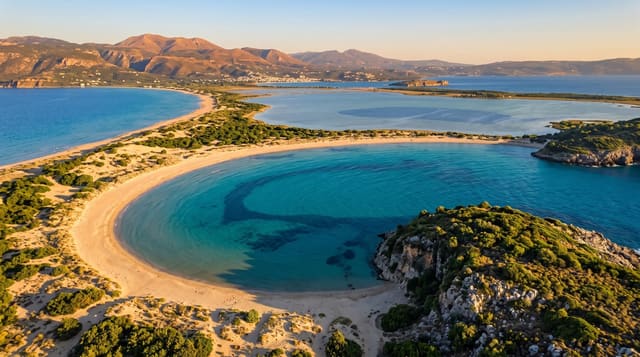
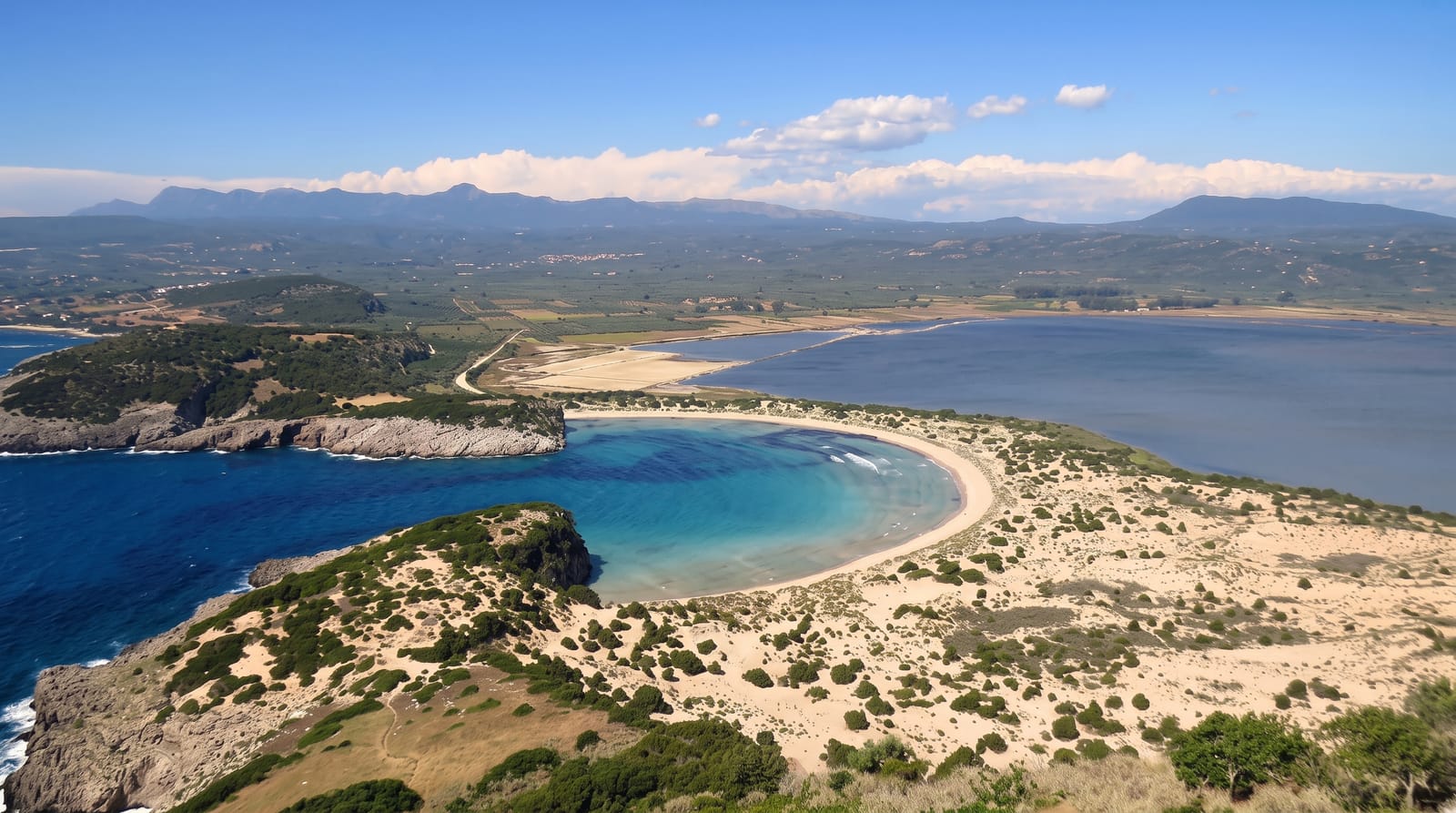
Divari, as the lagoon is locally known, covers about 600 hectares of shallow brackish water separated from Navarino Bay by a sandbar, and it is the first landfall for many birds crossing from Africa, which makes it one of the most important stopovers in Greece: well over two hundred species have been recorded, including flamingos, ospreys, glossy ibises and the rare African chameleon, whose only European population lives in the dunes here. A bird hide sits on the eastern shore and a track circles part of the water. The lagoon backs onto Voidokilia, the near-perfect omega of sand that appears in every photograph of Messenia, and the path between them climbs to Nestor's Cave and the ruined Palaiokastro on the ridge above.
The landscape
- The lagoon - shallow brackish water with waders, ducks and flamingos.
- The bird hide - a viewing shelter on the eastern shore.
- The African chameleons - Europe's only population, in the dunes and scrub.
- Voidokilia beach - the circular bay of sand beyond the sandbar.
When to go
March to May for spring migration, September to November for the return; winter holds large duck flocks. Summer is the least interesting for birds and the busiest for the beach.
What to expect
This is a wetland, not a scenic lake: the pleasure needs binoculars and patience. Mosquitoes are severe at dusk. The chameleons are nocturnal, well camouflaged and rarely seen by casual visitors. Parking near Voidokilia is limited and the dunes are fragile, so keep to the paths.
Nearby
Voidokilia and Nestor's Cave are minutes away; Pylos and Niokastro lie south along the bay.
Key facts
Source: Wikidata, item Q24910881, read on 18 October 2026.
What to pack for Gialova Lagoon
Chosen from what this place is for. Tap a kit for the full checklist.
- Broken-in walking shoes or boots - Grip and ankle support matter more than looks; never hike in brand-new boots. Find on Amazon
- Reef-safe sunscreen - High SPF that will not bleach the coral you are swimming over. Find on Amazon
- Head torch + spare batteries - Hands-free light is essential; caves are truly dark. Find on Amazon
- Loose, light, long clothing - Covering up beats bare skin in the desert - and locals dress this way for a reason. Find on Amazon
Some links on this page are Amazon affiliate links - if you buy through them we may earn a small commission at no extra cost to you.
All packing kitsPlan your trip
Where to start if Gialova Lagoon is going on the list.
Booking links on this page are affiliate links - if you book through them we may earn a small commission at no extra cost to you. It never changes what we write about a place.
Opening times, ticket prices and seasonal closures change - check the official source before you go: official site.