Gavdos
The southernmost point of Europe, a small island of cedar-backed beaches with a few dozen residents and no proper roads.
Updated 19 October 2026
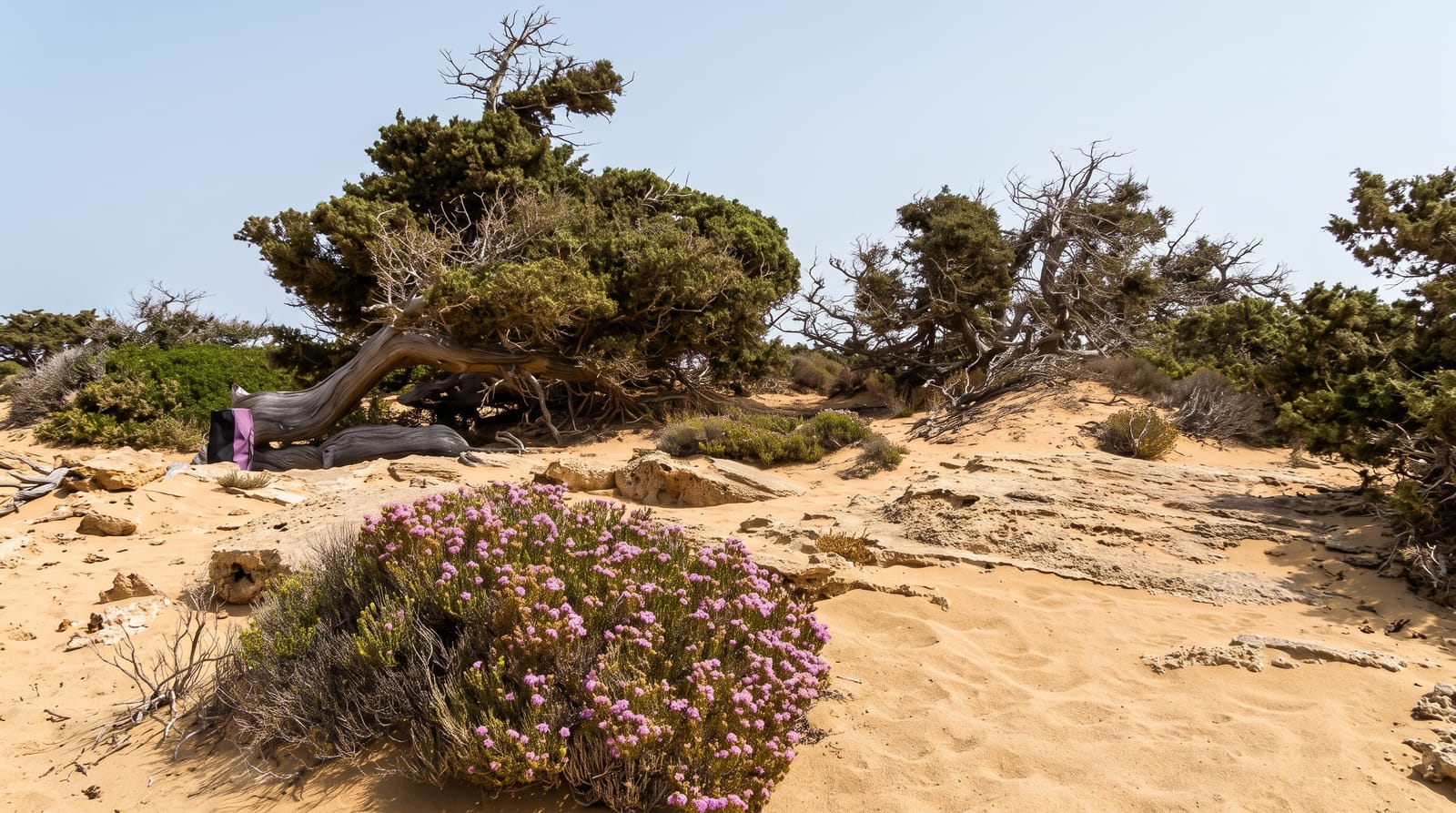
AI illustration
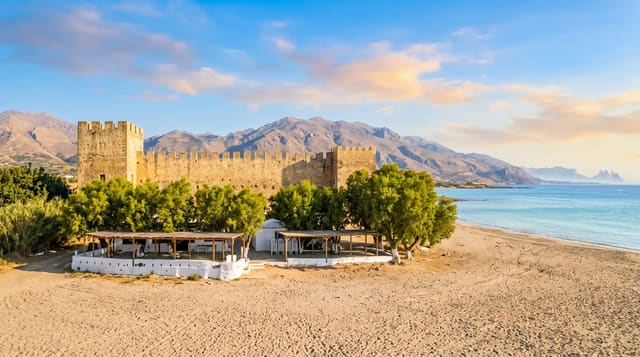
Gavdos lies about forty kilometres south of Crete and is the southernmost inhabited point of Europe, a low island of some thirty square kilometres with a permanent population in the dozens. Its beaches are the draw: Sarakiniko and Agios Ioannis, backed by junipers and cedars with campers under the trees, Potamos, and Tripiti in the south, where a rock arch and a large wooden chair mark the southern tip, with nothing but sea between there and Africa. Facilities are minimal, a handful of tavernas and rooms, intermittent electricity in places, and no bank; many visitors camp free under the trees, a tradition tolerated for decades. In myth this is Ogygia, where Calypso kept Odysseus for seven years.
History
Gavdos has had a permanent population since Neolithic times and the Bronze Age, and it has been proposed as the mythical Ogygia, where Calypso held Odysseus; in Roman times the island's vegetation was overexploited, starting an erosion that continues today. As Cauda it appears in the Acts of the Apostles, when the ship carrying Paul to Rome sheltered in its lee in a storm before being wrecked on Malta. By 900 AD it had about 8,000 inhabitants, but under Ottoman rule, from 1665 until 1895, when it was called Gondzo, the population fell to only 500 by 1882, and the beach of Sarakiniko recalls the Saracens (Wikipedia, Gavdos).
The landscape
- Tripiti - the rock arch and marker at Europe's southernmost point.
- Sarakiniko and Agios Ioannis - cedar-backed beaches with free camping.
- The junipers - old trees growing on the dunes behind the sand.
- The emptiness - an island with dozens of residents and almost no roads.
When to go
May, June and September; July and August bring a camping crowd and the ferries fill. Boats are cancelled in wind with little notice, so build in slack days at both ends.
Good to know
Getting stuck for a day or two is normal, so bring cash, medication and patience. Tracks are rough and a 4x4 or scooter is needed to move around. Water is scarce and facilities basic; this is closer to camping than to a holiday island.
Nearby
Paleochora and Chora Sfakion on Crete are the ferry ports; Africa is the next landfall south.
Key facts
Source: Wikidata, item Q213895, read on 18 October 2026.
What to pack for Gavdos
Chosen from what this place is for. Tap a kit for the full checklist.
- Reef-safe sunscreen - High SPF that will not bleach the coral you are swimming over. Find on Amazon
- Loose, light, long clothing - Covering up beats bare skin in the desert - and locals dress this way for a reason. Find on Amazon
- Shelter suited to the place - Tent, tarp or hut booking - match it to the terrain and rules. Find on Amazon
- Quick-dry towel - A microfibre towel packs small and dries in minutes. Find on Amazon
Some links on this page are Amazon affiliate links - if you buy through them we may earn a small commission at no extra cost to you.
All packing kitsPlan your trip
Where to start if Gavdos is going on the list.
Booking links on this page are affiliate links - if you book through them we may earn a small commission at no extra cost to you. It never changes what we write about a place.
Opening times, ticket prices and seasonal closures change - check the official source before you go: official site.