Ancient Theatre of Larissa
A marble theatre for ten thousand spectators, excavated out from under a modern city centre over four decades.
Updated 19 October 2026
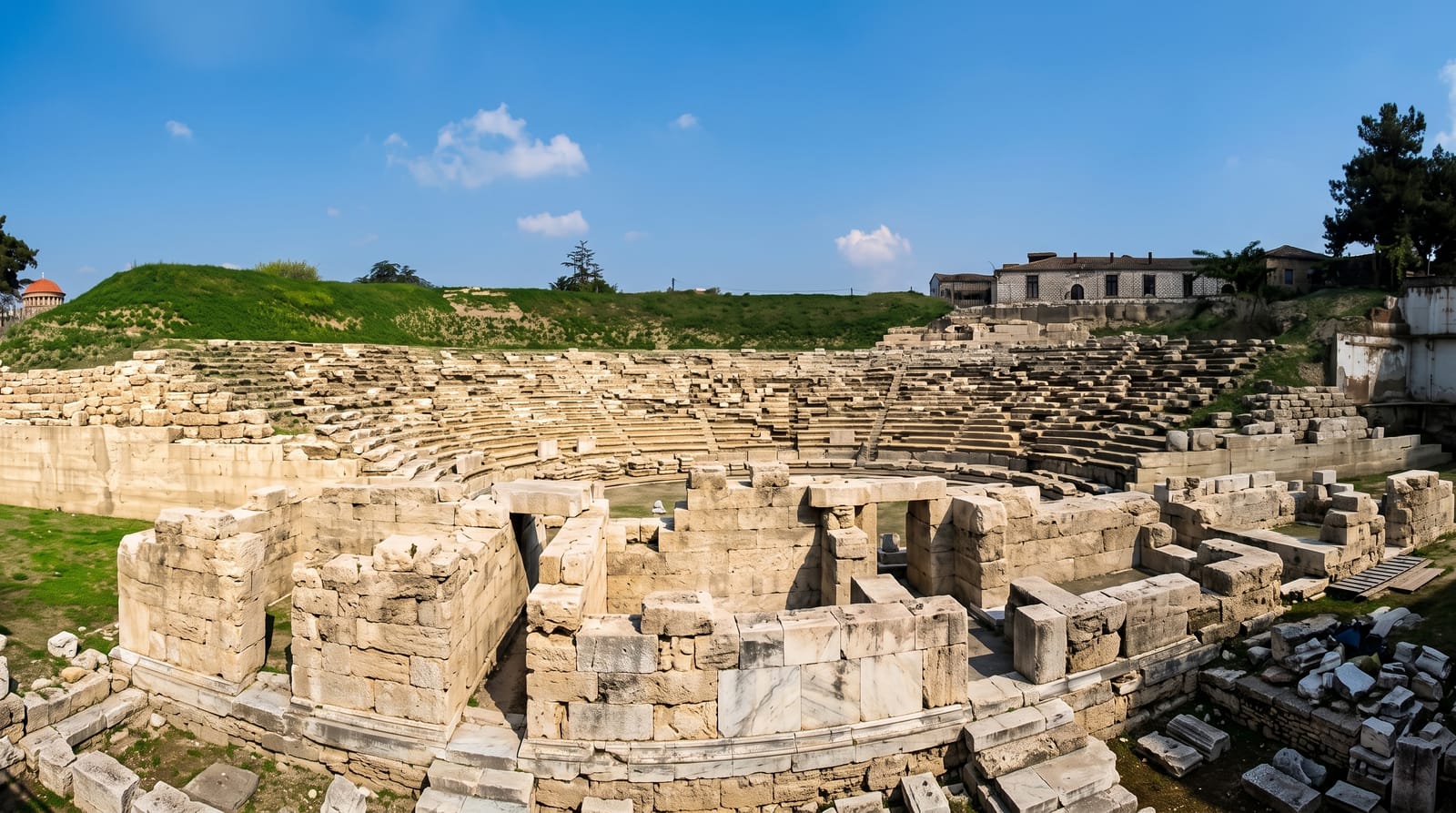
AI illustration
The first ancient theatre of Larissa was built in the third century BC on the southern slope of the city's acropolis hill, and it seated perhaps ten thousand people on twenty-five rows of white marble from Mount Ossa. For centuries it lay buried under the modern town, and its recovery required the expropriation and demolition of dozens of buildings from the 1980s onward, a long and expensive municipal project that has now opened most of the auditorium, the orchestra and part of the stage building to view in the middle of the city. Inscriptions cut into the seats record the names of city officials and, from the Roman period, the conversion of the orchestra into an arena. A second, smaller theatre lies nearby, and the whole site is used again for summer performances.
History
The theatre was built in the centre of ancient Larissa under King Philip V of Macedon towards the end of the 3rd century BC and was used for six centuries, until its operation stopped abruptly at the end of the 3rd century AD or the beginning of the 4th. Besides plays it hosted the meetings of the Koinon of Thessaly, the region's highest authority; first linked with the worship of Dionysus, as a small altar to him found nearby shows, it has the classic Hellenistic plan of seating built into terraces on the slope of Frourio hill, an orchestra and a stage building, and under Augustus and Tiberius inscriptions were cut into its seats (Wikipedia, First Ancient Theatre, Larissa).
What to look for
- The marble auditorium - rows of white seating on the acropolis slope.
- The orchestra - the circular floor, later adapted as a Roman arena.
- The seat inscriptions - names and civic records cut into the marble.
- The city setting - excavated ruins surrounded by modern Larissa.
When to go
Year-round; the site is open and central, and evening light suits the marble. Summer performances occasionally close it to casual visitors.
Before you go
Excavation and restoration are ongoing, so parts are fenced and scaffolded at times. Larissa is a large working city rather than a tourist destination, and the theatre is the main reason to stop.
Nearby
The Vale of Tempe and Ambelakia lie northeast; Meteora is an hour and a half west.
Key facts
Source: Wikidata, item Q5452301, read on 18 October 2026.
What to pack for Ancient Theatre of Larissa
Chosen from what this place is for. Tap a kit for the full checklist.
- Comfortable walking shoes - Sightseeing means kilometres of pavement and cobbles daily. Find on Amazon
- A slim anti-theft daypack - Zips that close properly; keep it in front in crowds and on transit. Find on Amazon
- A refillable water bottle - Many cities have public fountains; save money and plastic. Find on Amazon
- A light layer + compact umbrella - For museum air-con and a sudden shower. Find on Amazon
Some links on this page are Amazon affiliate links - if you buy through them we may earn a small commission at no extra cost to you.
All packing kitsPlan your trip
Where to start if Ancient Theatre of Larissa is going on the list.
Booking links on this page are affiliate links - if you book through them we may earn a small commission at no extra cost to you. It never changes what we write about a place.
Opening times, ticket prices and seasonal closures change - check the official source before you go: official site.


