Bonwire
The Asante village most associated with kente, where strip cloth is woven on narrow looms and sold at source.
Updated 19 October 2026
UNESCO Intangible Cultural Heritage
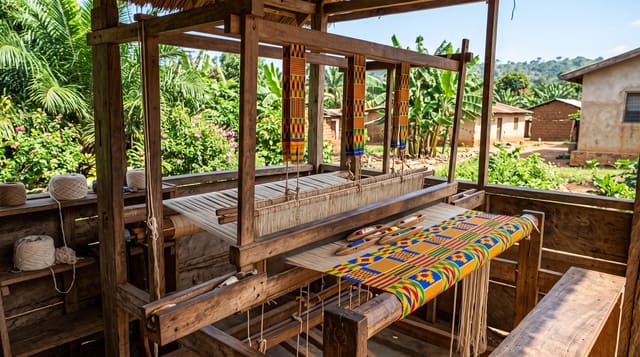
Bonwire is the village Asante tradition names as the origin of kente, with the story of two weavers learning the technique from watching a spider's web, and it remains the best-known weaving centre in Ashanti. Cloth is made on narrow horizontal looms, each strip about ten centimetres wide, woven with warp and weft patterns that carry names and meanings, then cut and sewn edge to edge into full cloths. Historically the more elaborate patterns were reserved for the Asantehene and the court. Looms stand in sheds and under trees through the village and weavers work in view, so visitors can watch the process, try a loom and buy strips or complete cloths directly.
History
By local history, two hunters of the town, the brothers Kuragu and Ameyaw, learned to weave around the middle of the 17th century by studying how a spider spun its web in the forest, and after experiments produced a woven cloth called nwin-ntom, the beginning of the kente for which Bonwire is famous (Wikipedia, Bonwire).
The main sights
- Narrow strip looms - the horizontal looms worked through the village.
- Named patterns - the designs and the meanings attached to them.
- Assembly of cloth - the strips sewn together into full pieces.
- Direct sales - strips and finished cloth bought at the source.
When to go
November to March in the dry season. Weekdays are when weavers are working; Sundays and festival days see few looms in use. Mornings are cooler and more productive.
Before you go
Selling pressure is strong and prices are heavily negotiated. Machine-printed imitation cloth is sold alongside genuine woven kente and needs distinguishing. Photography charges are levied. The village is used to visitors and the experience is commercial.
Nearby
Kumasi lies southwest; Ntonso and its adinkra workshops are north.
What to pack for Bonwire
Chosen from what this place is for. Tap a kit for the full checklist.
- Comfortable walking shoes - Sightseeing means kilometres of pavement and cobbles daily. Find on Amazon
- A slim anti-theft daypack - Zips that close properly; keep it in front in crowds and on transit. Find on Amazon
- A refillable water bottle - Many cities have public fountains; save money and plastic. Find on Amazon
- A light layer + compact umbrella - For museum air-con and a sudden shower. Find on Amazon
Some links on this page are Amazon affiliate links - if you buy through them we may earn a small commission at no extra cost to you.
All packing kitsPlan your trip
Where to start if Bonwire is going on the list.
Booking links on this page are affiliate links - if you book through them we may earn a small commission at no extra cost to you. It never changes what we write about a place.
Opening times, ticket prices and seasonal closures change - check the official source before you go: official site.