Speicherstadt
The world's largest warehouse complex on timber piles, built from 1883 as a duty-free zone in the port.
Updated 19 October 2026

AI illustration
UNESCO World Heritage
When Hamburg joined the German customs union in 1888 it kept a free port where goods could be stored and processed without duty, and the Speicherstadt was built from 1883 to serve it, a district of red brick neo-Gothic warehouses standing on oak piles driven into the marsh, separated by canals so barges could unload on the water side and carts on the land side. It covers about twenty-six hectares and is the largest such complex in the world. Coffee, tea, spices and carpets were stored and graded here. UNESCO listed it with the neighbouring Kontorhaus district in 2015. The district was taken out of the free port from 2003, and the free port itself was abolished in 2013.
History
Hamburg kept its status as a free port outside the German customs union until pressure from Berlin grew after 1879, and an agreement of 1881 let the city join the union with all its territory except a permanent free port district. In 1883 the Kehrwieder and Wandrahm quarters were cleared for it, forcing more than 20,000 people to move, and the warehouse district, built on oak piles from 1883 to 1927, is the largest of its kind in the world. About half of the buildings were destroyed in the Second World War, a careful rebuilding was finished in 1967, the district became a protected Hamburg monument in 1991 and part of HafenCity in 2008, and on 5 July 2015 it was made a World Heritage Site together with the Kontorhaus District (Wikipedia, Speicherstadt).
Highlights
- The brick warehouses - neo-Gothic storehouses on oak piles over water.
- The canals - working waterways between the blocks, crossed by bridges.
- The two-sided loading - water on one side, street on the other.
- The night lighting - the district floodlit from the bridges after dark.
When to go
April to October; the district is atmospheric at night year-round when floodlit. Boat trips through the canals run in season. Museums inside open normal hours.
Before you go
Most warehouses are now offices and museums rather than working stores. Canal boats are seasonal. The streets are busy with tour groups.
Nearby
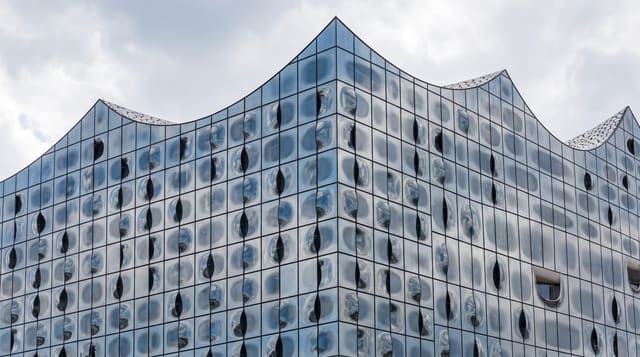
The Elbphilharmonie stands west; Miniatur Wunderland is inside the district.
Key facts
Source: Wikidata, item Q661881, read on 18 October 2026.
What to pack for Speicherstadt
Chosen from what this place is for. Tap a kit for the full checklist.
- Comfortable walking shoes - Sightseeing means kilometres of pavement and cobbles daily. Find on Amazon
- A slim anti-theft daypack - Zips that close properly; keep it in front in crowds and on transit. Find on Amazon
- A refillable water bottle - Many cities have public fountains; save money and plastic. Find on Amazon
- A light layer + compact umbrella - For museum air-con and a sudden shower. Find on Amazon
Some links on this page are Amazon affiliate links - if you buy through them we may earn a small commission at no extra cost to you.
All packing kitsPlan your trip
Where to start if Speicherstadt is going on the list.
Booking links on this page are affiliate links - if you book through them we may earn a small commission at no extra cost to you. It never changes what we write about a place.
Opening times, ticket prices and seasonal closures change - check the official source before you go: official site.