Messel Pit
An oil shale pit saved from becoming a landfill, whose fossils preserve fur, feathers and stomach contents.
Updated 14 October 2026
AI illustration
UNESCO World Heritage
Forty-eight million years ago a maar lake here was stratified, with no oxygen at the bottom and no scavengers, and animals that fell in were buried in fine mud that became oil shale. The preservation is exceptional: outlines of fur and feathers survive as bacterial films, along with gut contents, and in one case a mare with an unborn foal. The pit was quarried for shale, then designated as a landfill site in the 1970s; a long public campaign stopped the plan, and in 1995 it became Germany's first natural UNESCO World Heritage site. A visitor centre stands on the rim and the floor is entered on guided tours.
What's there
- The preservation - fossils with fur, feather outlines and stomach contents.
- The maar pit - a former oil shale quarry in a volcanic crater.
- The rescue story - a landfill plan stopped by public campaign.
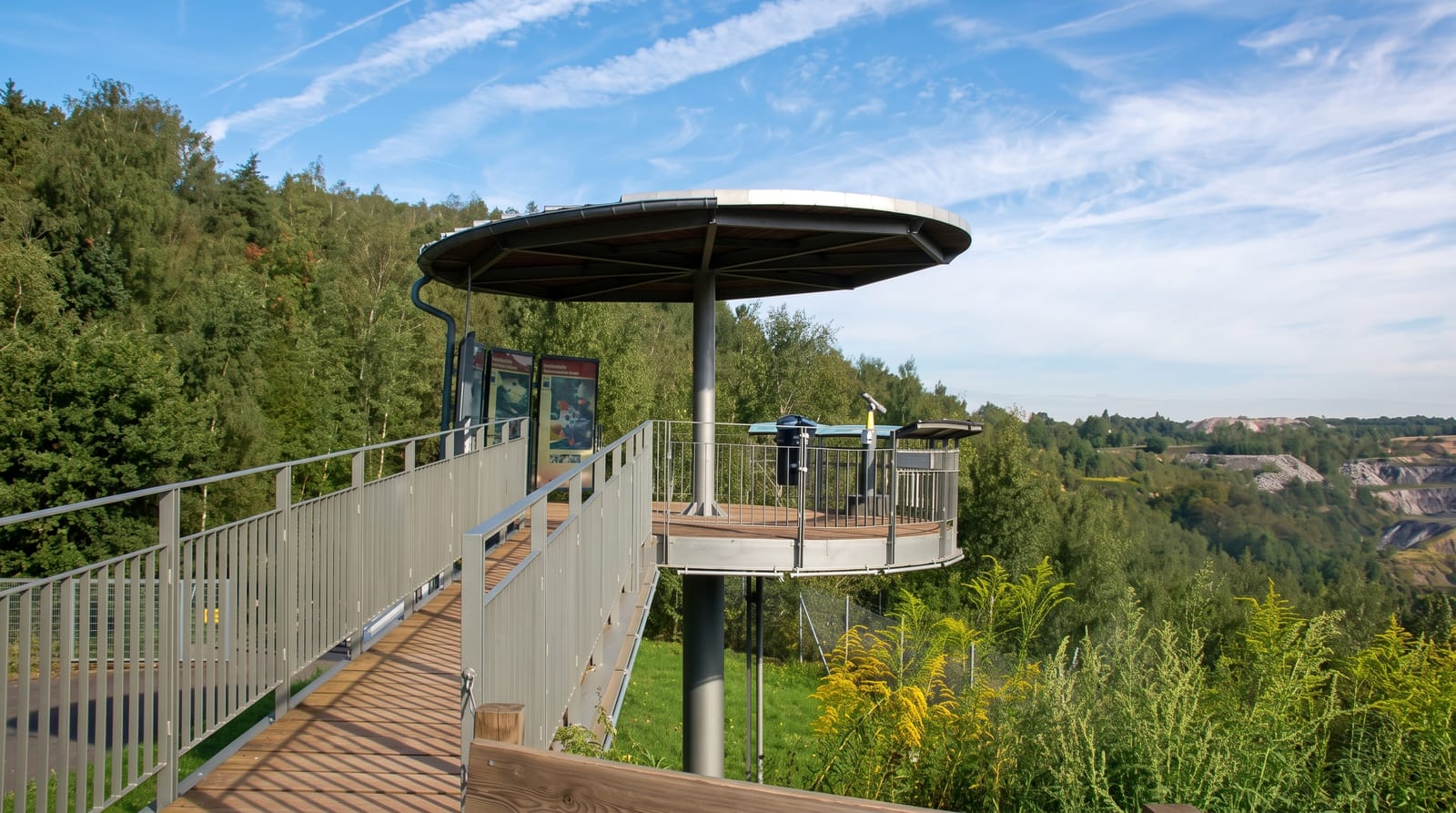
- The visitor centre - displays on the rim above the excavation.
When to go
April to October; the pit floor is reached only on booked guided tours, which do not run daily. The visitor centre is open more widely.
Before you go
The best fossils are in the Senckenberg and other museums, not on site. The pit itself is a quarry hole. Floor access requires booking a tour.
Nearby
Darmstadt lies southwest; Frankfurt is north.
Key facts
Source: Wikidata, item Q639217, read on 18 October 2026.
What to pack for Messel Pit
Chosen from what this place is for. Tap a kit for the full checklist.
- Broken-in walking shoes or boots - Grip and ankle support matter more than looks; never hike in brand-new boots. Find on Amazon
- Layers + a waterproof shell - Mountain weather turns fast; a packable rain jacket saves the day. Find on Amazon
- Daypack with rain cover - 20-30 litres holds water, snacks, layers and a first-aid kit. Find on Amazon
- Offline maps + a power bank - Download the trail before you lose signal; carry backup charge. Find on Amazon
Some links on this page are Amazon affiliate links - if you buy through them we may earn a small commission at no extra cost to you.
All packing kitsPlan your trip
Where to start if Messel Pit is going on the list.
Booking links on this page are affiliate links - if you book through them we may earn a small commission at no extra cost to you. It never changes what we write about a place.
Opening times, ticket prices and seasonal closures change - check the official source before you go: official site.