Lorsch Abbey
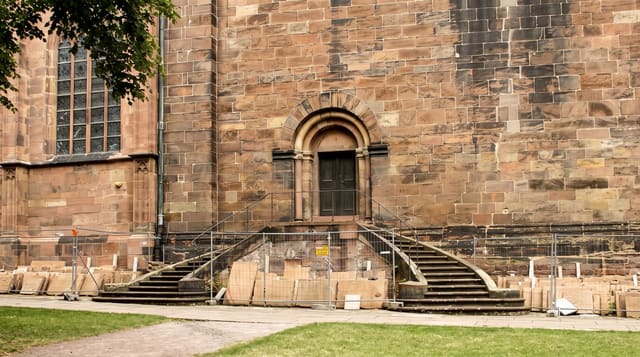
A Carolingian gatehouse standing alone in a field, one of very few buildings of its period still upright.
Updated 16 October 2026

AI illustration
UNESCO World Heritage
Lorsch was founded in 764 and became one of the most important abbeys of the Carolingian empire, with a library whose manuscripts, including the Lorsch Pharmacopoeia, are now scattered across European collections and reunited digitally. The buildings were destroyed over the centuries, and what survives on the site is the Torhalle, a small gatehouse of the late eighth or early ninth century, faced in a chequerwork of red and white stone with fluted pilasters above; it is one of the few substantially intact Carolingian buildings in Europe. UNESCO listed the site in 1991. The rest of the abbey is marked out on the ground.
Background
Lorsch Abbey, the Imperial Abbey of Lorsch, lies about 10 km east of Worms, and few monasteries of the Carolingian Empire mattered more; even ruined, its remains count among the key pre-Romanesque buildings in Germany. Its chronicle, set down in the Lorsch Codex in the 1170s and now kept in the state archive at Würzburg, is a basic source for early medieval German history, and the Codex Aureus of Lorsch also came from its library. The abbey became a World Heritage Site in 1991, on a core area of 3.11 hectares. Besides the gatehouse, part of the abbey church and stretches of the enclosing wall survive.
Source: Wikipedia, "Lorsch Abbey"
The main sights
- The Torhalle - a Carolingian gatehouse in red and white chequerwork.
- The marked outlines - the lost abbey buildings traced on the ground.
- The museum - finds, manuscript facsimiles and the herb garden.
- The scale contrast - one small building where a great abbey stood.
When to go
April to October; the museum closes Mondays. The Torhalle interior is shown on limited tours to protect its wall paintings. The grounds are freely open.
Good to know
Only the gatehouse survives; everything else is outlines in grass. Interior access to the Torhalle is restricted. The site is small.
Nearby
Worms lies west across the Rhine; Heidelberg is south.
Key facts
Source: Wikidata, item Q157550, read on 18 October 2026.
What to pack for Lorsch Abbey
Chosen from what this place is for. Tap a kit for the full checklist.
- Comfortable walking shoes - Sightseeing means kilometres of pavement and cobbles daily. Find on Amazon
- Modest clothing - Shoulders and knees covered - the single most common requirement. Find on Amazon
- A slim anti-theft daypack - Zips that close properly; keep it in front in crowds and on transit. Find on Amazon
- A scarf or shawl - To cover the head or shoulders on entry; women especially at mosques. Find on Amazon
Some links on this page are Amazon affiliate links - if you buy through them we may earn a small commission at no extra cost to you.
All packing kitsPlan your trip
Where to start if Lorsch Abbey is going on the list.
Booking links on this page are affiliate links - if you book through them we may earn a small commission at no extra cost to you. It never changes what we write about a place.
Opening times, ticket prices and seasonal closures change - check the official source before you go: official site.