Blankenese
A former fishing village on a sandy hill above the Elbe, whose 5,000 steps replace most of its streets.
Updated 4 September 2026
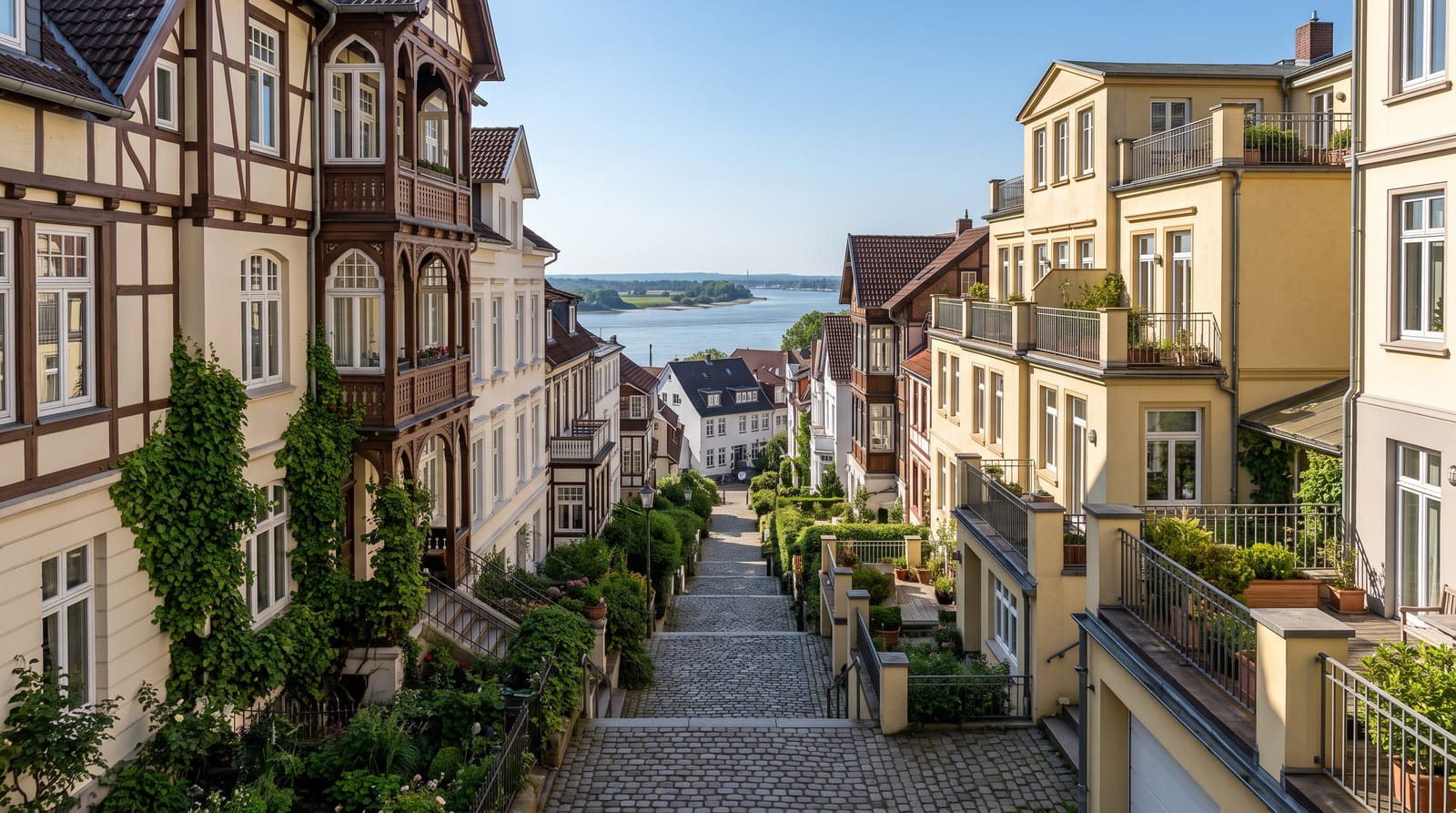
AI illustration
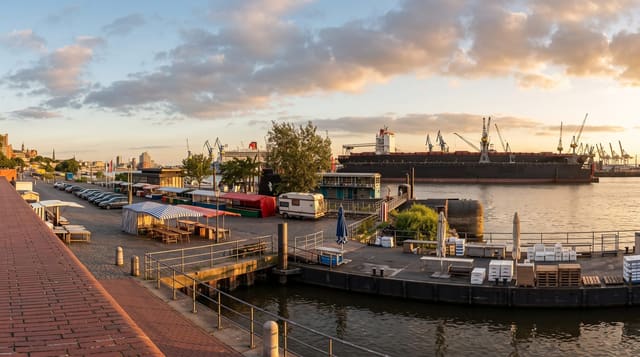
Blankenese grew as a fishing and pilot village on the Süllberg, a glacial sand hill rising about seventy-five metres directly from the Elbe, and because the slope is steep the settlement developed as a network of narrow stepped lanes, the Treppenviertel, with several thousand steps and almost no roads; deliveries and refuse collection are done on foot or by small vehicle on the few passable lanes. From the nineteenth century Hamburg merchants built villas on the hill, and it became one of the city's most expensive districts. A beach runs along the Elbe below, with large container ships passing close to shore.
What you'll find
- The Treppenviertel - a quarter of stepped lanes with few roads.
- The Elbe beach - a sand shore with ships passing close inshore.
- The Süllberg - a glacial hill with a restaurant and viewpoint on top.
- The merchant villas - nineteenth-century houses among the old cottages.
When to go
April to October; the beach and river path are the main draw in warm weather. The stepped lanes are slippery in ice and hard going in any season.
Practical notes
The steps are steep and numerous, with several hundred between the station and the river. Houses are private. Parking is effectively impossible.
Nearby
Central Hamburg lies east; the Altes Land is across the river.
What to pack for Blankenese
Chosen from what this place is for. Tap a kit for the full checklist.
- Travel rod + reel - A packable multi-piece rod fits in a case and covers most holiday fishing. Find on Amazon
- Comfortable walking shoes - Sightseeing means kilometres of pavement and cobbles daily. Find on Amazon
- A small tackle selection - Hooks, weights, line and a few lures or flies suited to local waters. Find on Amazon
- A slim anti-theft daypack - Zips that close properly; keep it in front in crowds and on transit. Find on Amazon
Some links on this page are Amazon affiliate links - if you buy through them we may earn a small commission at no extra cost to you.
All packing kitsPlan your trip
Where to start if Blankenese is going on the list.
Booking links on this page are affiliate links - if you book through them we may earn a small commission at no extra cost to you. It never changes what we write about a place.
Opening times, ticket prices and seasonal closures change - check the official source before you go: official site.