Duchess Anna Amalia Library
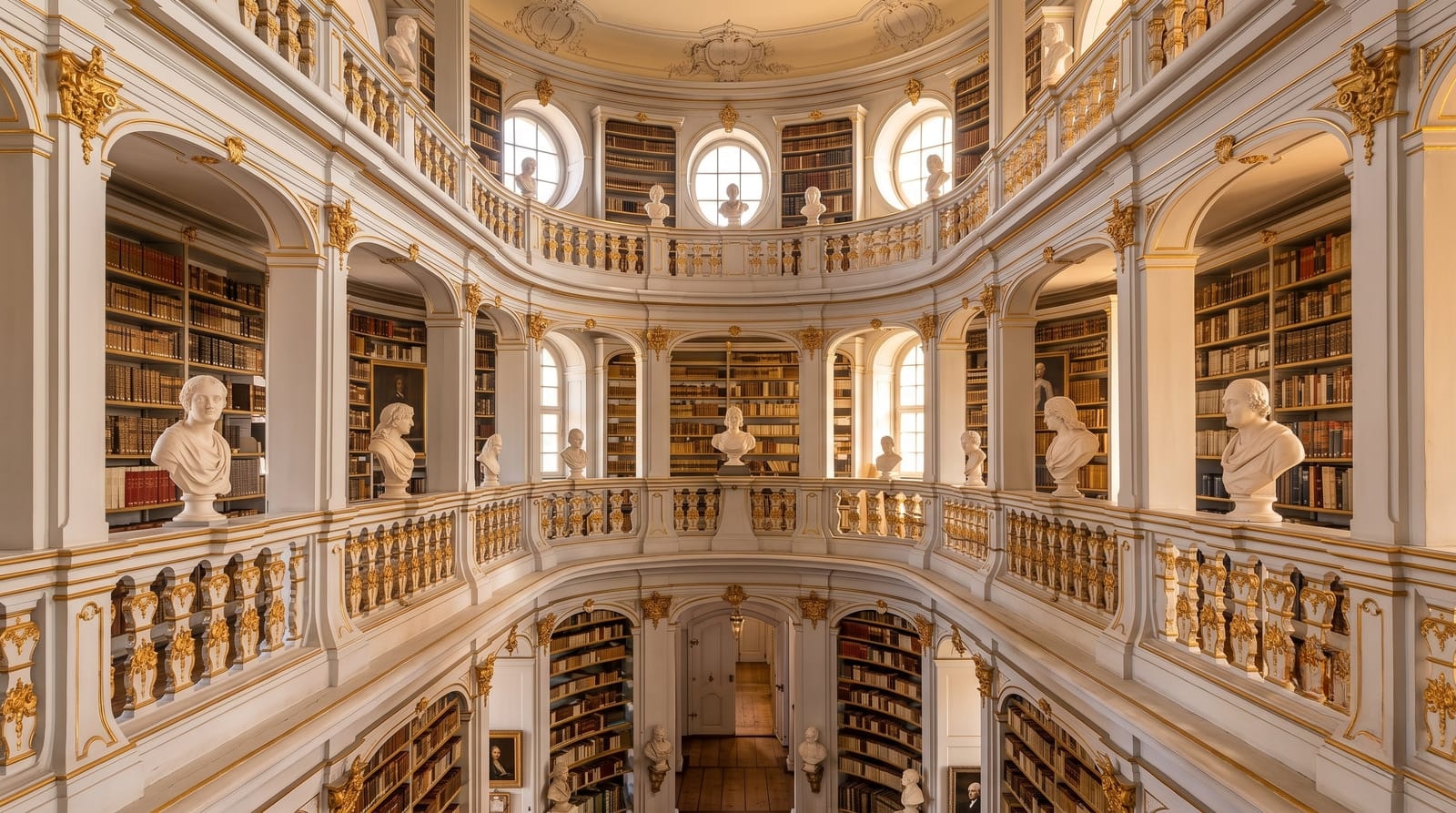
Weimar's oval rococo library hall, lined with white and gold galleries of books, entered in small timed groups after a long restoration.
Updated 18 October 2026
AI illustration
UNESCO World Heritage
The library takes its name from the duchess who moved the ducal book collection into the Green Castle in 1766 and had its hall rebuilt in rococo: an oval room in white and gold, three storeys of galleries, portraits and busts crowding the shelves. Goethe directed it for thirty-five years and shaped much of what it bought. A fire in 2004 destroyed or damaged tens of thousands of volumes, and the restored hall reopened in 2007 with strict limits on how many people may stand in it at one time. It holds a large Faust collection and an important run of early Bibles, and it counts as part of the Classical Weimar world heritage listing.
History
Duchess Anna Amalia of Saxe-Weimar-Eisenach had the building converted into a library in 1761 and in 1766 moved the court's book collection into it; the poet Christoph Martin Wieland, hired as tutor to her son, gave it the Shakespeare volumes at the core of the collection, and Goethe worked at the library from 1797 to 1832. It was renamed after the duchess in 1991, the tercentenary of its opening to the public, and it holds the world's largest Faust collection. On 2 September 2004 a fire caused by a corroded cable connection in the attic destroyed 50,000 volumes, 12,500 of them irreplaceable, and badly damaged 62,000 more, while helpers passed some 6,000 historic works, among them a 1534 Luther Bible, out of the building by hand; the restored library reopened at the end of October 2007 (Wikipedia, Duchess Anna Amalia Library).
What you'll find
- The Rococo Hall - the oval white and gold room rising through three gallery levels.
- The busts and portraits - Weimar's writers and dukes wedged in between the bookcases.
- The Faust collection - one of the largest gatherings of editions and translations anywhere.
- The study centre - the underground reading rooms and book stack added after the fire.
When to go
Open year round, but the Rococo Hall admits only a small number of visitors per day in timed slots, and those slots go days ahead in summer. Book online before you travel rather than on arrival. Weimar itself is best walked in spring or early autumn, when the Ilm park is at its best and the coach parties are thinner on the ground.
Good to know
The famous hall is a short visit for the price, and you cannot linger or sit down; staff move groups through on schedule. Photography is restricted, bags must be left, and the upper galleries are closed to visitors. Weimar's Goethe and Schiller houses charge separately and add up fast. Much of what burned was replaced with substitute copies rather than originals.
Nearby
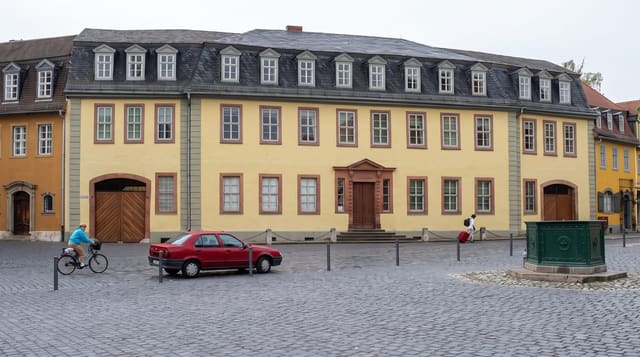
The Goethe and Schiller houses, the Ilm park with Goethe's garden house and the Weimar city palace.
Key facts
Source: Wikidata, item Q50711, read on 18 October 2026.
What to pack for Duchess Anna Amalia Library
Chosen from what this place is for. Tap a kit for the full checklist.
- Head torch + spare batteries - Hands-free light is essential; caves are truly dark. Find on Amazon
- Comfortable walking shoes - Sightseeing means kilometres of pavement and cobbles daily. Find on Amazon
- Grippy closed shoes - Cave floors are wet, muddy and slick with formations. Find on Amazon
- A slim anti-theft daypack - Zips that close properly; keep it in front in crowds and on transit. Find on Amazon
Some links on this page are Amazon affiliate links - if you buy through them we may earn a small commission at no extra cost to you.
All packing kitsPlan your trip
Where to start if Duchess Anna Amalia Library is going on the list.
Booking links on this page are affiliate links - if you book through them we may earn a small commission at no extra cost to you. It never changes what we write about a place.
Opening times, ticket prices and seasonal closures change - check the official source before you go: official site.