Altes Land
Northern Europe's largest contiguous fruit-growing area, drained by Dutch settlers eight hundred years ago.
Updated 19 October 2026
AI illustration
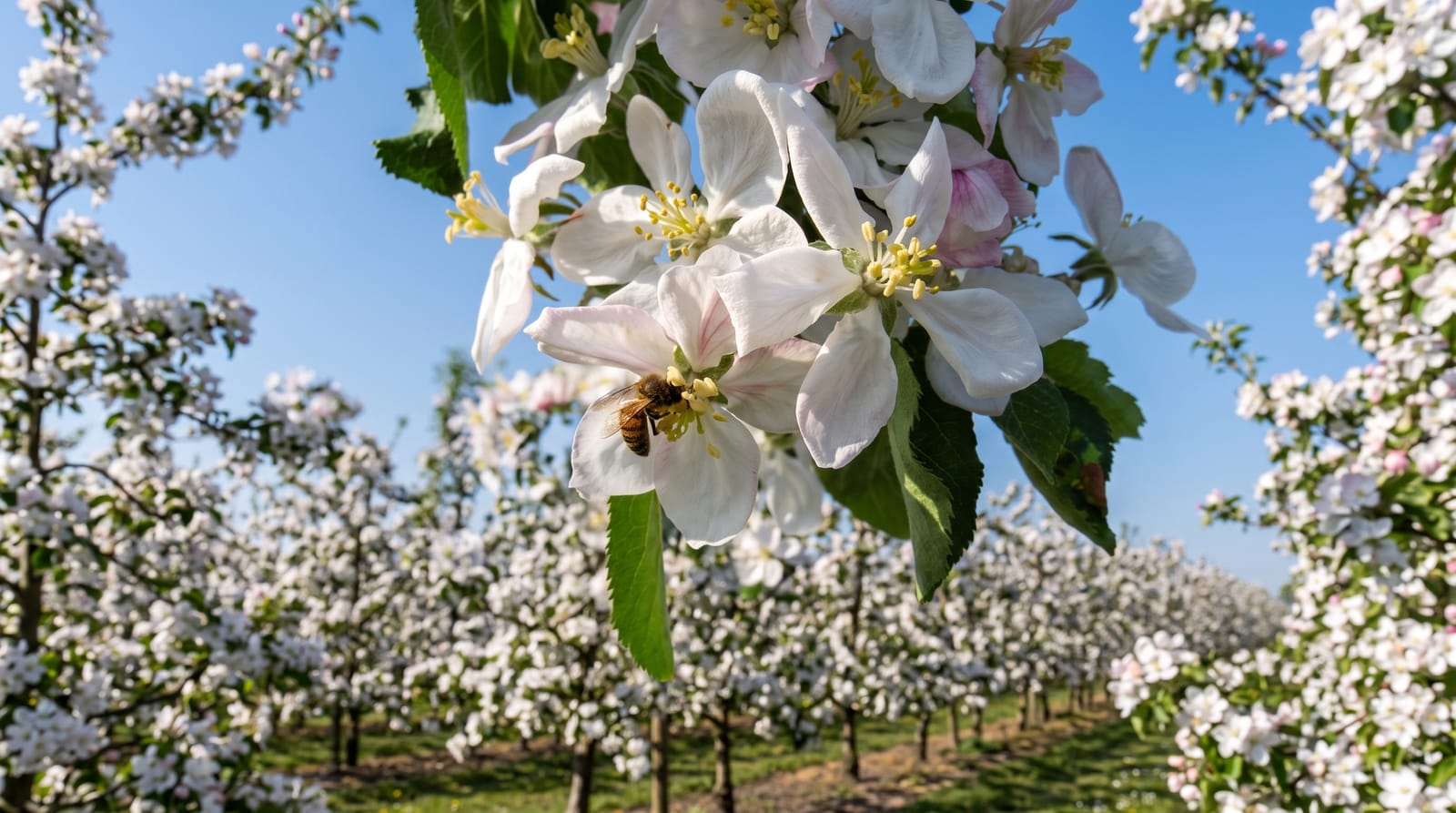
In the twelfth century the archbishop of Bremen brought in Dutch settlers who knew how to drain marsh, and they diked and ditched this stretch of Elbe marsh into farmland, leaving a landscape of long strip fields, ditches and dikes still in use. It is now the largest contiguous fruit-growing region in northern Europe, mostly apples and cherries on some ten thousand hectares. The farmhouses are Fachwerk with elaborately carved and painted gateway arches called Prunkpforten, showing the owner's wealth. Blossom in late April and early May draws visitors, and farm shops sell direct at harvest.
History
The name is a mistranslation of the Low Saxon Olland, from Holland, recalling the Dutch settlers who drained and colonised the marsh; the first colonisation agreement dates from 1113, under Archbishop Friedrich I of Bremen, and the municipality of Hollern takes its name from the Dutch. The settlers laid out Marschhufendörfer, villages with farmyards along a street and their land stretching behind, and the region, 143 km2 in all, is now the largest continuous fruit-growing area in northern Europe, 76.8% of its trees apples and 12.7% cherries (Wikipedia, Altes Land).
What you'll find
- The Prunkpforten - carved and painted farm gateways on the old houses.
- The blossom - apple and cherry flowering in late April and early May.
- The dike landscape - strip fields and ditches from medieval Dutch drainage.
- The farm shops - direct sales at harvest through late summer and autumn.
When to go
Late April and early May for the blossom, September for harvest. Blossom timing shifts by a week or two with the season. Cycling the dikes is the usual way round.
Practical notes
Blossom is short and weather dependent. It is working farmland with limited formal attractions. Cycling is the practical way to see it.
Nearby
Hamburg lies east; Stade is west.
Key facts
Source: Wikidata, item Q375953, read on 18 October 2026.
What to pack for Altes Land
Chosen from what this place is for. Tap a kit for the full checklist.
- Padded shorts - The one thing that makes a full day in the saddle bearable. Find on Amazon
- Comfortable walking shoes - Sightseeing means kilometres of pavement and cobbles daily. Find on Amazon
- Helmet - Bring your own if you have a good one; rentals vary wildly. Find on Amazon
- A slim anti-theft daypack - Zips that close properly; keep it in front in crowds and on transit. Find on Amazon
Some links on this page are Amazon affiliate links - if you buy through them we may earn a small commission at no extra cost to you.
All packing kitsPlan your trip
Where to start if Altes Land is going on the list.
Booking links on this page are affiliate links - if you book through them we may earn a small commission at no extra cost to you. It never changes what we write about a place.
Opening times, ticket prices and seasonal closures change - check the official source before you go: official site.