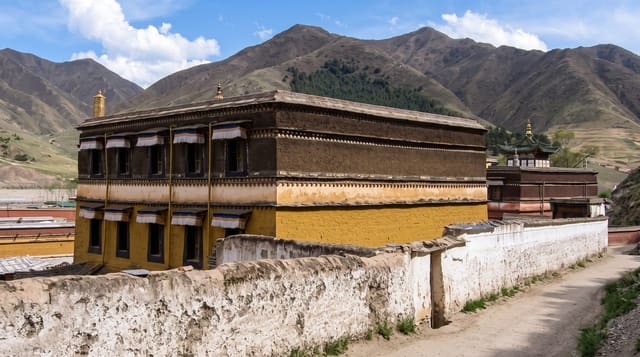
Sapara Monastery
A working monastery on a wooded ledge above a gorge, with thirteenth-century frescoes.
Updated 19 October 2026
Sapara sits on a narrow ledge in a wooded gorge east of Akhaltsikhe, a compact group of stone churches and monastic buildings with a bell tower, established early and greatly expanded when the Jaqeli family, rulers of this region, made it their monastery in the thirteenth century. The main church of Saint Saba was built around 1300 and retains a substantial cycle of wall painting from that period, including portraits of the family who paid for it, in an unusually good state for the region. Monks live there and the buildings are in use. The road out is rough and climbs steeply, and the setting, cliffs above and forest below, is a large part of the visit.
History
Sapara has existed since at least the 9th century and counted many important figures of the Georgian church among its monks. At the end of the 13th century it passed to the Jaqeli family, whose leader Sargis Jaqeli kept on good terms with the Mongols and so gave Samtskhe an unusual peace; in old age he became a monk under the name Saba, and his son Beka built the largest of the monastery's 12 churches, St Saba's, named after the saint whose name his father took, with fine 14th-century frescoes. From the end of the 16th century into the 17th the monastery stood empty as Ottoman rule spread into Samtskhe, and its icons and treasures were taken to safer parts of Georgia (Wikipedia, Sapara Monastery).
Highlights
- Frescoes in the church of Saint Saba - a cycle from around 1300.
- Donor portraits - the Jaqeli family painted in the church.
- Buildings on a gorge ledge - the compound stacked on its shelf.
- A working monastery - monks in residence and the churches in use.
When to go
April to October; the road is difficult in wet or icy weather. Two to three hours from Akhaltsikhe. Modest dress is required and women should cover their heads.
Good to know
The access road is rough and taxi drivers charge accordingly. It is a working monastery with rules on dress and photography that are enforced. Interiors are dim and the frescoes need patience to see. Facilities are minimal.
Nearby
Akhaltsikhe is west; Vardzia lies south.
Key facts
Source: Wikidata, item Q7420914, read on 18 October 2026.
What to pack for Sapara Monastery
Chosen from what this place is for. Tap a kit for the full checklist.
- Comfortable walking shoes - Sightseeing means kilometres of pavement and cobbles daily. Find on Amazon
- Modest clothing - Shoulders and knees covered - the single most common requirement. Find on Amazon
- A slim anti-theft daypack - Zips that close properly; keep it in front in crowds and on transit. Find on Amazon
- A scarf or shawl - To cover the head or shoulders on entry; women especially at mosques. Find on Amazon
Some links on this page are Amazon affiliate links - if you buy through them we may earn a small commission at no extra cost to you.
All packing kitsPlan your trip
Where to start if Sapara Monastery is going on the list.
Booking links on this page are affiliate links - if you book through them we may earn a small commission at no extra cost to you. It never changes what we write about a place.
Opening times, ticket prices and seasonal closures change - check the official source before you go: official site.