Kutaisi
Georgia's second city and one of its oldest, on the Rioni river, with a hilltop cathedral, a covered market and cave country nearby.
Updated 19 October 2026
AI illustration
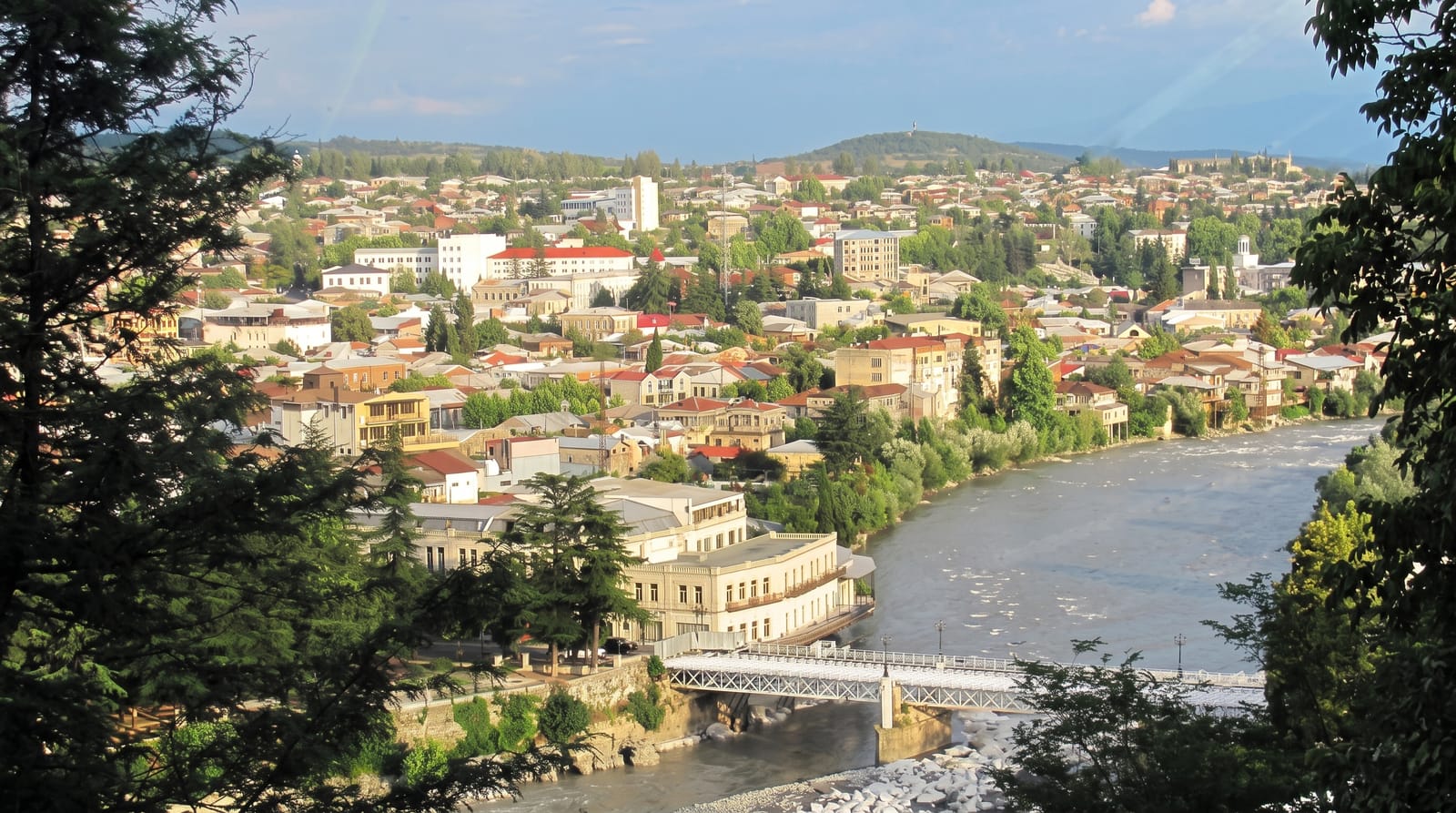
Kutaisi has been a capital more than once and claims a history going back to the kingdom of Colchis, where the Greek myth put the Golden Fleece, and it wears that antiquity lightly: it is now a relaxed provincial city of leafy streets, Soviet-era apartment blocks, an ornate covered market piled with cheese, spices and churchkhela, and the Bagrati cathedral rebuilt on the hill above. Its practical importance to travellers is the budget airport, which has made it a common entry point to the country. The real draw is what surrounds it: the Gelati and Motsameta monasteries in the hills, the Prometheus cave with its lit chambers and underground boat ride, the Sataplia reserve with dinosaur footprints, and the canyons at Martvili and Okatse within easy reach.
History
Archaeology shows Kutaisi was the capital of Colchis in the sixth to fifth centuries BC, and Apollonius Rhodius seems to have made it the end of the Argonauts' voyage and the seat of King Aeëtes. It was later the capital of Lazica, and around 786 Leon II, independent of Byzantium, moved his capital here, uniting Lazica and Abasgia, the union that led to the unification of Georgia in the 11th century. From 1008 to 1122 Kutaisi was the capital of the Kingdom of Georgia and from the 15th century until 1810 of the Kingdom of Imereti; Selim I took it in 1508, King Solomon I recovered it on August 6, 1770 with the help of the Russian general Totleben, and after the annexation of Imereti in 1810 it became the capital of the Kutaisi Governorate, covering much of western Georgia (Wikipedia, Kutaisi).
What's there
- The covered market - cheese, spices, churchkhela and produce under one roof.
- Bagrati cathedral - the rebuilt cathedral on the hill above the river.
- Prometheus cave - lit chambers and an underground boat ride nearby.
- The Rioni riverfront - the leafy central streets and the White Bridge.
When to go
April to October is warm and green; western Georgia is wet, so rain is possible in any month. Summer is hot and humid. The city is a practical base for the region rather than a destination in itself, so two or three nights with day trips works well.
What to expect
Bagrati cathedral was removed from the UNESCO list in 2017 after a reconstruction that many specialists judged to have destroyed its authenticity, which is worth knowing before comparing it with Gelati. Kutaisi itself is pleasant but scruffy in places, with little in the way of sights. It rains a great deal in this part of the country.
Nearby
Gelati and Motsameta are ten minutes away; Martvili canyon and Svaneti lie north.
Key facts
Source: Wikidata, item Q172415, read on 18 October 2026.
What to pack for Kutaisi
Chosen from what this place is for. Tap a kit for the full checklist.
- Head torch + spare batteries - Hands-free light is essential; caves are truly dark. Find on Amazon
- Strong insect repellent - DEET or picaridin; the jungle is where bites and disease risk are highest. Find on Amazon
- Comfortable walking shoes - Sightseeing means kilometres of pavement and cobbles daily. Find on Amazon
- Modest clothing - Shoulders and knees covered - the single most common requirement. Find on Amazon
Some links on this page are Amazon affiliate links - if you buy through them we may earn a small commission at no extra cost to you.
All packing kitsPlan your trip
Where to start if Kutaisi is going on the list.
Booking links on this page are affiliate links - if you book through them we may earn a small commission at no extra cost to you. It never changes what we write about a place.
Opening times, ticket prices and seasonal closures change - check the official source before you go: official site.