Awala-Yalimapo
The leatherback capital - Les Hattes beach, where the world's largest turtles nest by the hundred on Kali'na ancestral shore.
Updated 19 October 2026
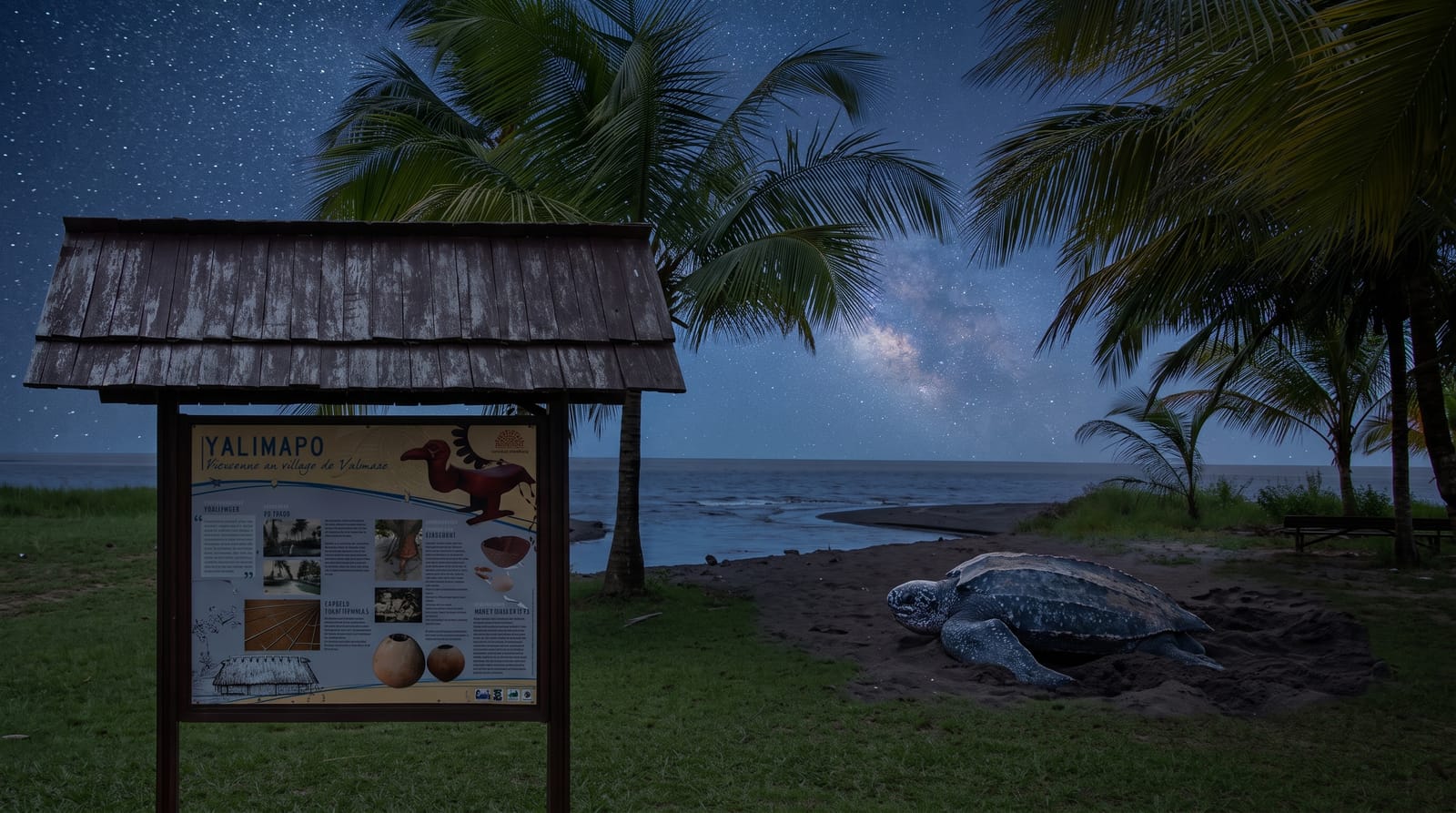
AI illustration
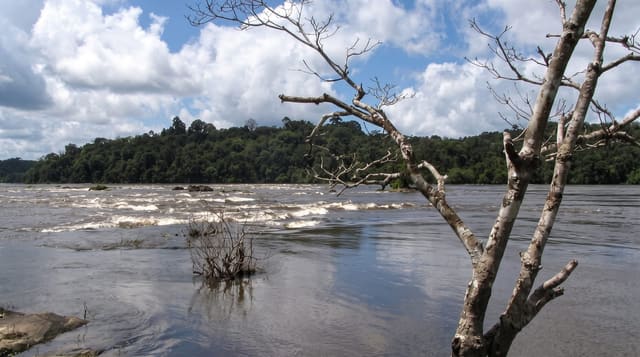
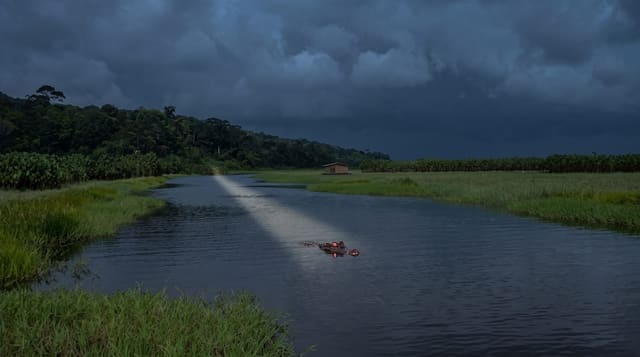
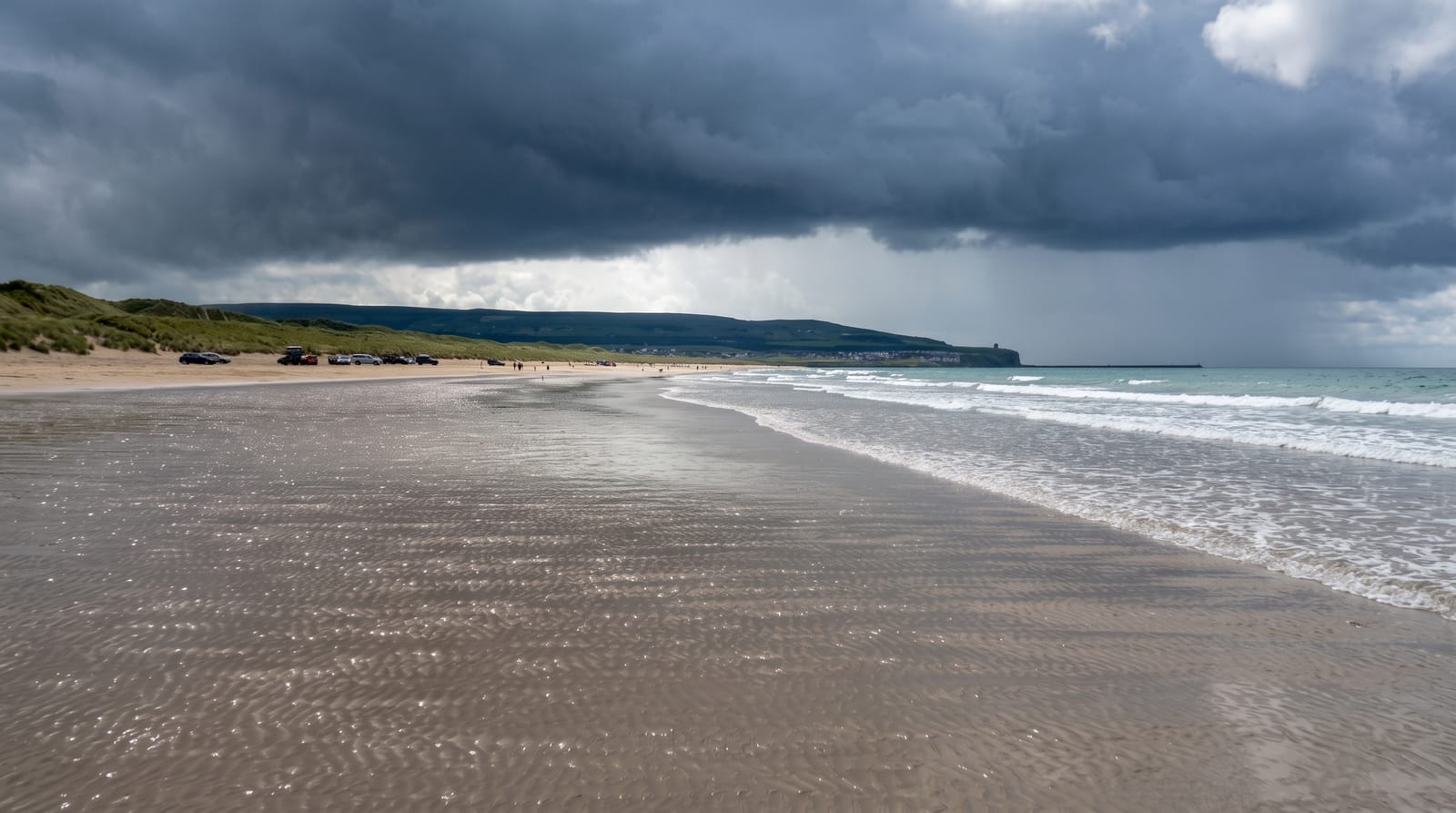
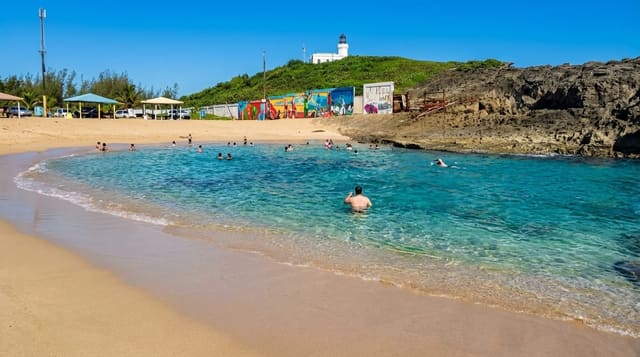
Where the Maroni meets the Atlantic, the beach at Awala-Yalimapo - Les Hattes - hosts one of earth's great reptile gatherings: leatherback turtles, the species' giants at up to half a tonne, hauling out by the hundreds in peak season to dig and lay under cover of dark, with green and olive ridley turtles adding their own numbers. The shore is Kali'na ancestral land, and the Amerindian commune manages the spectacle with reserve rules and guided observation; nesting nights run April into July, hatchling eruptions sparkle the sand toward September, and the village adds carbet hammock stays, cassava traditions and Maroni-mouth fishing life.
History
The Kalina have lived along the Maroni since before European colonisation, and in 1596 Lawrence Kemys noted a large village called Iaremappo near the river mouth; European diseases had reduced the Kalina here to a few hundred by the mid 19th century. The Hattes penal colony was set up in the area in 1858 and ran until 1950. In the late 1940s Amerindians from Pointe Isère founded the village of Awala, and in 1950 families from Ayawande and Galibi in Suriname founded Yalimapo; the commune was created on 31 December 1988 from part of Mana (Wikipedia, Awala-Yalimapo).
What's there
- Nesting leatherbacks - half-tonne giants digging under starlight.
- The hatchling runs - sand boiling with newborns racing the terns.
- The Kali'na commune - ancestral shore, managed on its own terms.
- The Maroni mouth - river meeting ocean at the beach's end.
When to go
April to July for peak nesting nights (moonless dark is best), July to September for hatchlings; confirm the season's pattern locally. Nights are the event - overnight in village carbets rather than day-tripping.
What to expect
Turtle rules are absolute: no white lights, no flash, no touching, distance as guides direct - the commune's management is why the beach still works. Facilities are simple hammock camps and small guesthouses. Mosquitoes and sandflies attend; so does awe.
Nearby
Mana's old town, Saint-Laurent-du-Maroni and the rice-field birdlands.
What to pack for Awala-Yalimapo
Chosen from what this place is for. Tap a kit for the full checklist.
- Travel rod + reel - A packable multi-piece rod fits in a case and covers most holiday fishing. Find on Amazon
- Reef-safe sunscreen - High SPF that will not bleach the coral you are swimming over. Find on Amazon
- Binoculars - The single best wildlife tool - even a compact pair transforms a sighting. Find on Amazon
- Shelter suited to the place - Tent, tarp or hut booking - match it to the terrain and rules. Find on Amazon
Some links on this page are Amazon affiliate links - if you buy through them we may earn a small commission at no extra cost to you.
All packing kitsPlan your trip
Where to start if Awala-Yalimapo is going on the list.
Booking links on this page are affiliate links - if you book through them we may earn a small commission at no extra cost to you. It never changes what we write about a place.
Opening times, ticket prices and seasonal closures change - check the official source before you go: official site.