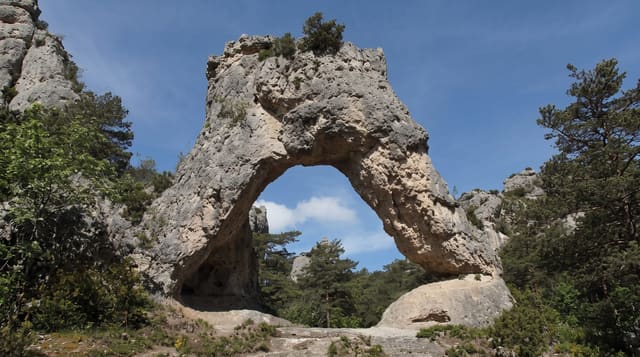
Sidobre
A granite plateau scattered with boulders the size of houses, some balanced so finely they can be rocked.
Updated 4 September 2026
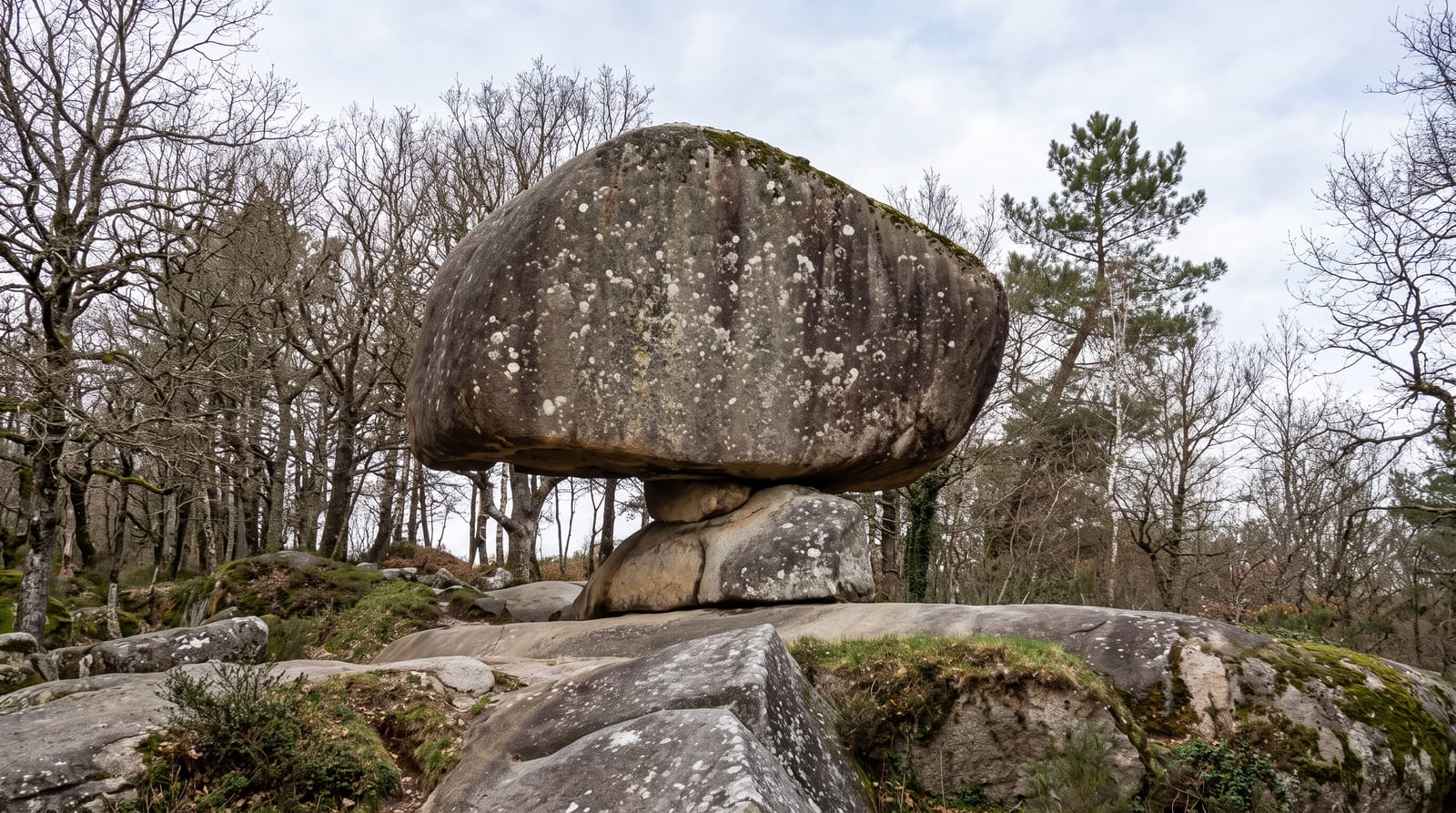
AI illustration
The Sidobre is a granite massif of about a hundred square kilometres where weathering along joints has rounded the rock into huge separate blocks, left piled and balanced across woodland and heath. Several are named: the Peyro Clabado is estimated at around seven hundred and eighty tonnes and rests on a base of a few square metres; the Roc de l'Oie is shaped like a goose; the Trois Fromages sit stacked. Some balanced blocks, called rochers tremblants, can be made to move by hand despite their weight. It is also one of the largest granite quarrying areas in Europe, and working quarries sit among the walking trails.
The landscape
- Peyro Clabado - a block of around 780 tonnes on a tiny base.
- The rocking stones - balanced blocks that move under hand pressure.
- The named rocks - the Goose, the Three Cheeses and others on the trails.
- The working quarries - active granite extraction across the massif.
When to go
April to October; the woodland trails are muddy in winter. Autumn colour among the boulders is good. Summer is comfortable here because most routes are shaded.
Practical notes
The sites are spread out and a car is needed between trailheads. Some rocking stones no longer move because of past damage. Quarry traffic uses some of the same roads.
Nearby
Castres lies west; the Montagne Noire is south.
Key facts
Source: Wikidata, item Q3483355, read on 18 October 2026.
What to pack for Sidobre
Chosen from what this place is for. Tap a kit for the full checklist.
- Broken-in walking shoes or boots - Grip and ankle support matter more than looks; never hike in brand-new boots. Find on Amazon
- Layers + a waterproof shell - Mountain weather turns fast; a packable rain jacket saves the day. Find on Amazon
- Daypack with rain cover - 20-30 litres holds water, snacks, layers and a first-aid kit. Find on Amazon
- Offline maps + a power bank - Download the trail before you lose signal; carry backup charge. Find on Amazon
Some links on this page are Amazon affiliate links - if you buy through them we may earn a small commission at no extra cost to you.
All packing kitsPlan your trip
Where to start if Sidobre is going on the list.
Booking links on this page are affiliate links - if you book through them we may earn a small commission at no extra cost to you. It never changes what we write about a place.
Opening times, ticket prices and seasonal closures change - check the official source before you go: official site.