Saint-Tropez
A fishing port that became shorthand for Riviera glamour, with a citadel and a Signac-founded art collection.
Updated 19 October 2026

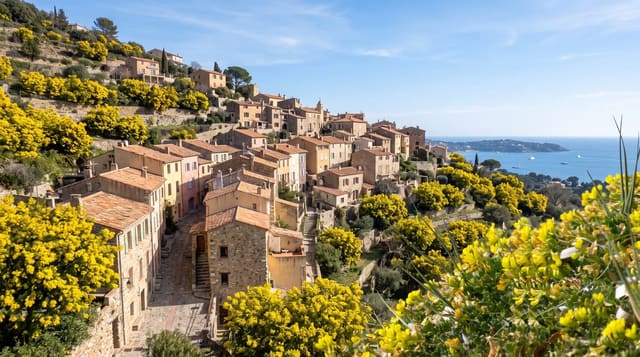
AI illustration
Paul Signac sailed into Saint-Tropez in 1892, bought a house and brought painters after him: Matisse, Bonnard, Derain and others worked here, and the Musee de l'Annonciade in a deconsecrated chapel holds an unusually good collection of the results. The village stayed a fishing port until the 1950s, when And God Created Woman and Brigitte Bardot turned it into an international name. The old quarter of La Ponche behind the port keeps the earlier character in narrow lanes. The citadel above holds a maritime museum. Sailing regattas, notably Les Voiles in late September, bring large classic yachts.
History
Pliny the Elder records the place in antiquity as Athenopolis, belonging to the Greek city of Massilia, founded by the Phocaeans in 599 BC; the Romans arrived in 31 BC and built opulent villas around the gulf. The town takes its name from the early Christian martyr Saint Torpes, whose headless body, by legend, was set adrift from Pisa under Nero in a rotten boat with a rooster and a dog and landed here. From 890 to 972 Saint-Tropez and its surroundings were a Muslim colony tied to the Saracen settlement of Fraxinet, whose people held the abbot of Cluny for ransom in 972, until William I, Count of Provence, began attacking them in 976 and built a tower in 980 where the Suffren tower now stands. From 1436 King René repopulated the area, bringing 60 Genoese families, and on 14 February 1470 they were allowed to build the walls and two large towers that still stand, at the end of the Grand Môle and the entrance to the Ponche; the town became a small republic with its own fleet and army, run by two consuls and 12 councillors, and from 1558 its captain Honorat Coste led a militia that held off Turkish and Spanish attacks (Wikipedia, Saint-Tropez).
What's there
- The Annonciade museum - Signac, Matisse and the painters who worked here.
- La Ponche - the old fishermen's quarter behind the port.
- The citadel - a hexagonal fort with a maritime museum and view.
- Les Voiles - classic yacht racing in the gulf each September.
When to go
May to June and September to October; July and August are crowded, expensive and gridlocked on the single approach road. Les Voiles in late September is a spectacle but fills the town.
Good to know
Summer traffic on the one road in can mean hours, and the boat from Sainte-Maxime is far quicker. Prices are among the highest on the coast. The fishing village character survives only in patches.
Nearby
Bormes-les-Mimosas lies west; the Massif des Maures is inland.
Key facts
Source: Wikidata, item Q1813, read on 18 October 2026.
What to pack for Saint-Tropez
Chosen from what this place is for. Tap a kit for the full checklist.
- Travel rod + reel - A packable multi-piece rod fits in a case and covers most holiday fishing. Find on Amazon
- Comfortable walking shoes - Sightseeing means kilometres of pavement and cobbles daily. Find on Amazon
- A small tackle selection - Hooks, weights, line and a few lures or flies suited to local waters. Find on Amazon
- A slim anti-theft daypack - Zips that close properly; keep it in front in crowds and on transit. Find on Amazon
Some links on this page are Amazon affiliate links - if you buy through them we may earn a small commission at no extra cost to you.
All packing kitsPlan your trip
Where to start if Saint-Tropez is going on the list.
Booking links on this page are affiliate links - if you book through them we may earn a small commission at no extra cost to you. It never changes what we write about a place.
Opening times, ticket prices and seasonal closures change - check the official source before you go: official site.