Saint-Germain-en-Laye
The royal residence before Versailles, where Louis XIV was born, holding France's national archaeology museum.
Updated 19 October 2026
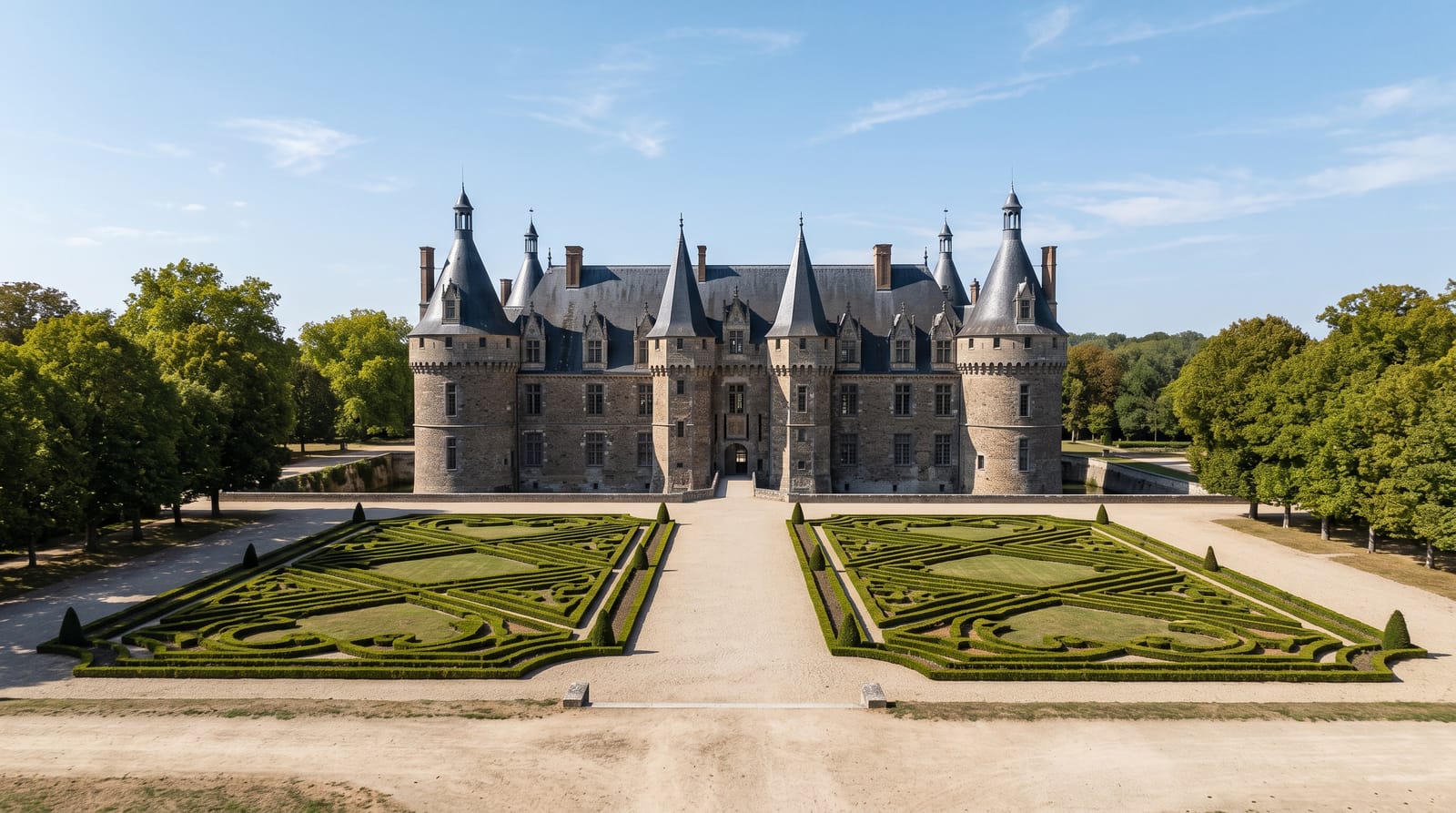
AI illustration
Saint-Germain was the principal royal residence for two centuries before the court moved to Versailles in 1682, and Louis XIV was born here in 1638. The chateau was rebuilt by Francois I in brick and stone and given a Sainte-Chapelle by Louis IX in the 1230s, a chapel that predates and prefigures the one in Paris. Le Notre laid out the Grande Terrasse in the 1670s, two and a half kilometres of straight raised walk along the escarpment with the Seine valley and Paris in view. The chateau now holds the Musee d'Archeologie Nationale, covering France from the Palaeolithic to the early medieval period.
History
Saint-Germain-en-Laye was founded in 1020, when King Robert the Pious founded a convent where the church of Saint-Germain now stands. A castle stood here by 1238, in the time of Saint Louis, and Charles V built the old château on its foundations in 1348, later restored by Francis I; the town was a royal residence until the Revolution, Louis XIV was born in the château and made it his principal residence from 1661 to 1681, and André Le Nôtre built the 2.4-kilometre stone terrace over the Seine valley from 1669 to 1673. After the Glorious Revolution of 1688 Louis XIV gave the château to the exiled James II of England, who lived here for 13 years and died on 16 September 1701. During the Revolution the town was briefly renamed Montagne-du-Bon-Air, Napoleon set up a cavalry officers' school in the château, and in 1862 Napoleon III installed in it the museum of national antiquities, whose most famous piece is the Dame de Brassempouy, carved in mammoth ivory some 23,000 years ago (Wikipedia, Saint-Germain-en-Laye).
What to look for
- The archaeology museum - French prehistory to the early medieval period.
- The Sainte-Chapelle - the 1230s royal chapel predating the Paris one.
- The Grande Terrasse - Le Notre's two and a half kilometre raised walk.
- The Saint-Germain forest - old royal hunting woodland behind the town.
When to go
April to October for the terrace and forest; the museum closes on Tuesdays. The RER makes it an easy half day from central Paris. Autumn colour on the terrace is good.
Things to know
The chateau interior is a museum rather than furnished royal apartments. The archaeology displays are extensive and can be dry without interest in the period. The terrace view is often hazy.
Nearby
Malmaison lies east; Versailles is south.
What to pack for Saint-Germain-en-Laye
Chosen from what this place is for. Tap a kit for the full checklist.
- Comfortable walking shoes - Sightseeing means kilometres of pavement and cobbles daily. Find on Amazon
- A slim anti-theft daypack - Zips that close properly; keep it in front in crowds and on transit. Find on Amazon
- A refillable water bottle - Many cities have public fountains; save money and plastic. Find on Amazon
- A light layer + compact umbrella - For museum air-con and a sudden shower. Find on Amazon
Some links on this page are Amazon affiliate links - if you buy through them we may earn a small commission at no extra cost to you.
All packing kitsPlan your trip
Where to start if Saint-Germain-en-Laye is going on the list.
Booking links on this page are affiliate links - if you book through them we may earn a small commission at no extra cost to you. It never changes what we write about a place.
Opening times, ticket prices and seasonal closures change - check the official source before you go: official site.


