Roquefort-sur-Soulzon
Cellars in a collapsed cliff where natural draughts hold the conditions that make one blue cheese.
Updated 19 October 2026
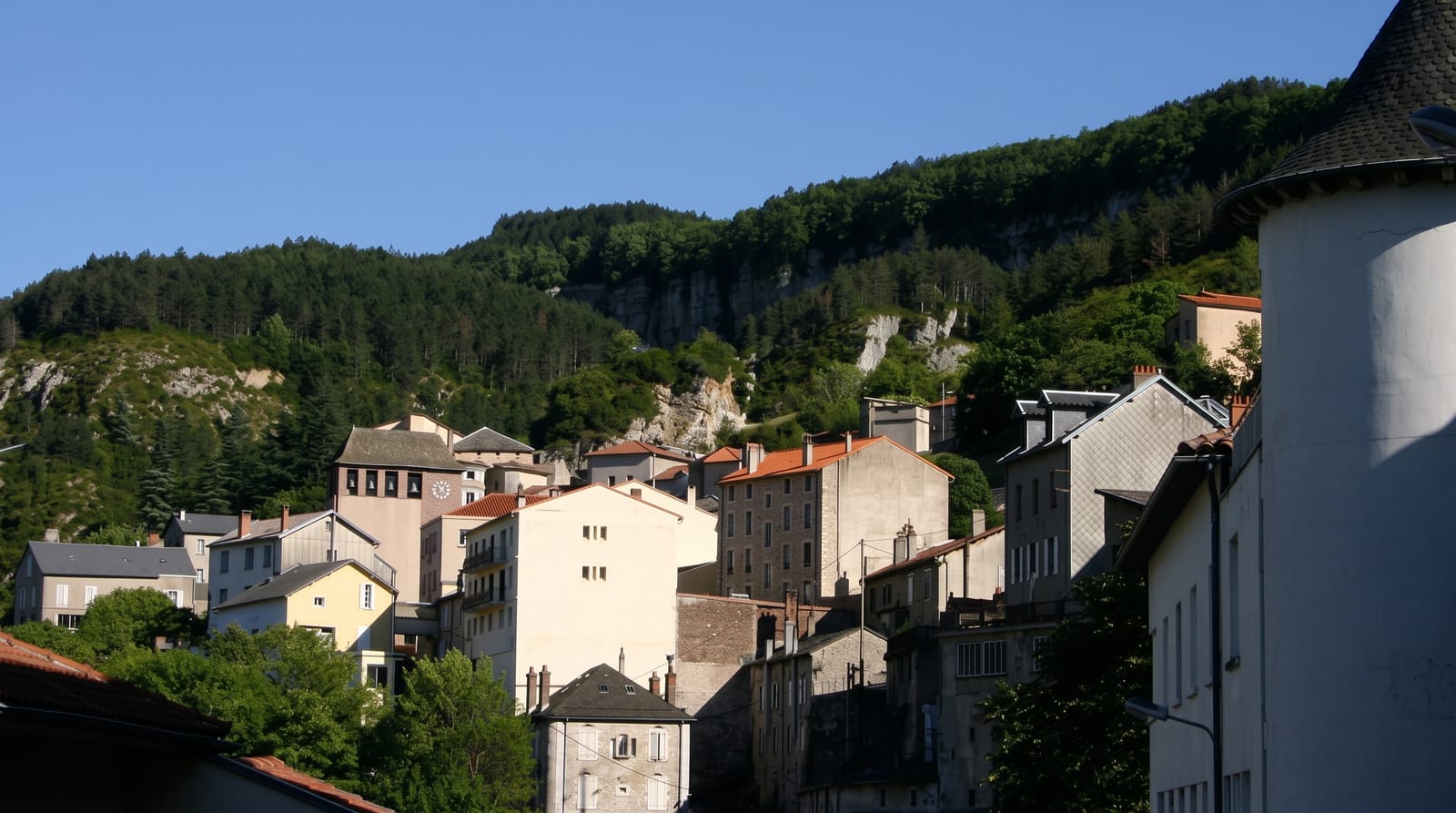
AI illustration
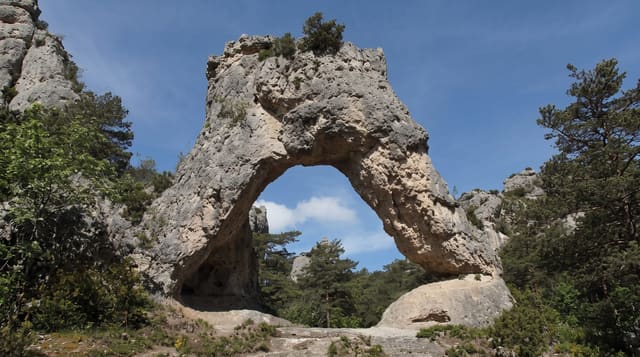
The Combalou plateau collapsed in a prehistoric landslide, leaving a mass of broken rock riddled with fissures called fleurines through which air moves constantly, keeping the caves beneath at a steady low temperature and high humidity. Roquefort is made from raw ewe's milk, mostly from Lacaune sheep, inoculated with Penicillium roqueforti, and by law it can only be ripened in these cellars, which is why every wheel in the world comes from one village. A charter of 1411 from Charles VI gave the villagers the monopoly on the name, making it one of the oldest protected foods anywhere. Several producers run cellar visits with tasting.
History
Prehistoric remains have been found within the commune, notably in the Taulan cave, where a sandstone millstone of the Middle Neolithic, between 4500 and 3300 BC, now in the Musée Fenaille in Rodez, was found. The village's history is bound up with its cheese: in 1411 letters patent of Charles VI protected local production, a charter of Charles VII strengthened it in 1457, and on 31 August 1666 the Parlement of Toulouse recognised the sole right of the people of Roquefort to ripen cheese in the village caves and set penalties for counterfeits. A law of 26 July 1925 made Roquefort the first cheese with an appellation d'origine contrôlée, reserving the name for cheese made from sheep's milk and matured here by local custom (Wikipedia, Roquefort-sur-Soulzon).
What's there
- The fleurines - natural fissures ventilating the cellars year-round.
- The ripening cellars - wheels racked on oak in the cold and damp.
- The cave visits - producers explaining the mould and the ageing.
- The Combalou cliff - the collapsed plateau the village sits under.
When to go
Year-round; the cellars stay cold whatever the season, so this works well on a hot day. Visits run more frequently in summer. Take a warm layer.
Before you go
Cellars are around eight to ten degrees and damp. Tours are guided, timed and end in a shop. The village itself is a single street with little else to see.
Nearby
Millau lies north; La Couvertoirade is southeast on the Larzac.
What to pack for Roquefort-sur-Soulzon
Chosen from what this place is for. Tap a kit for the full checklist.
- Head torch + spare batteries - Hands-free light is essential; caves are truly dark. Find on Amazon
- A reusable bag or container - For market produce and cutting down on packaging. Find on Amazon
- Strong insect repellent - DEET or picaridin; the jungle is where bites and disease risk are highest. Find on Amazon
- Grippy closed shoes - Cave floors are wet, muddy and slick with formations. Find on Amazon
Some links on this page are Amazon affiliate links - if you buy through them we may earn a small commission at no extra cost to you.
All packing kitsPlan your trip
Where to start if Roquefort-sur-Soulzon is going on the list.
Booking links on this page are affiliate links - if you book through them we may earn a small commission at no extra cost to you. It never changes what we write about a place.
Opening times, ticket prices and seasonal closures change - check the official source before you go: official site.