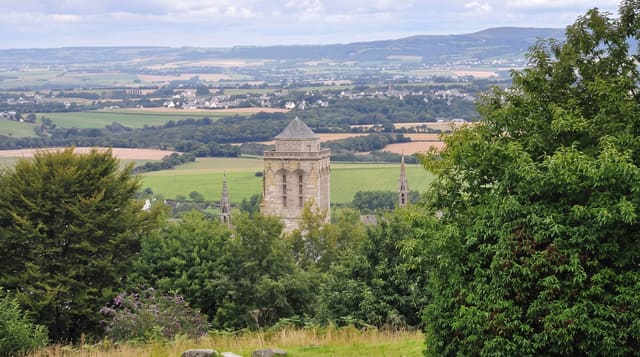
Pont-Aven
The village where Gauguin and others abandoned Impressionism for flat colour bounded by heavy outlines.
Updated 4 September 2026
AI illustration
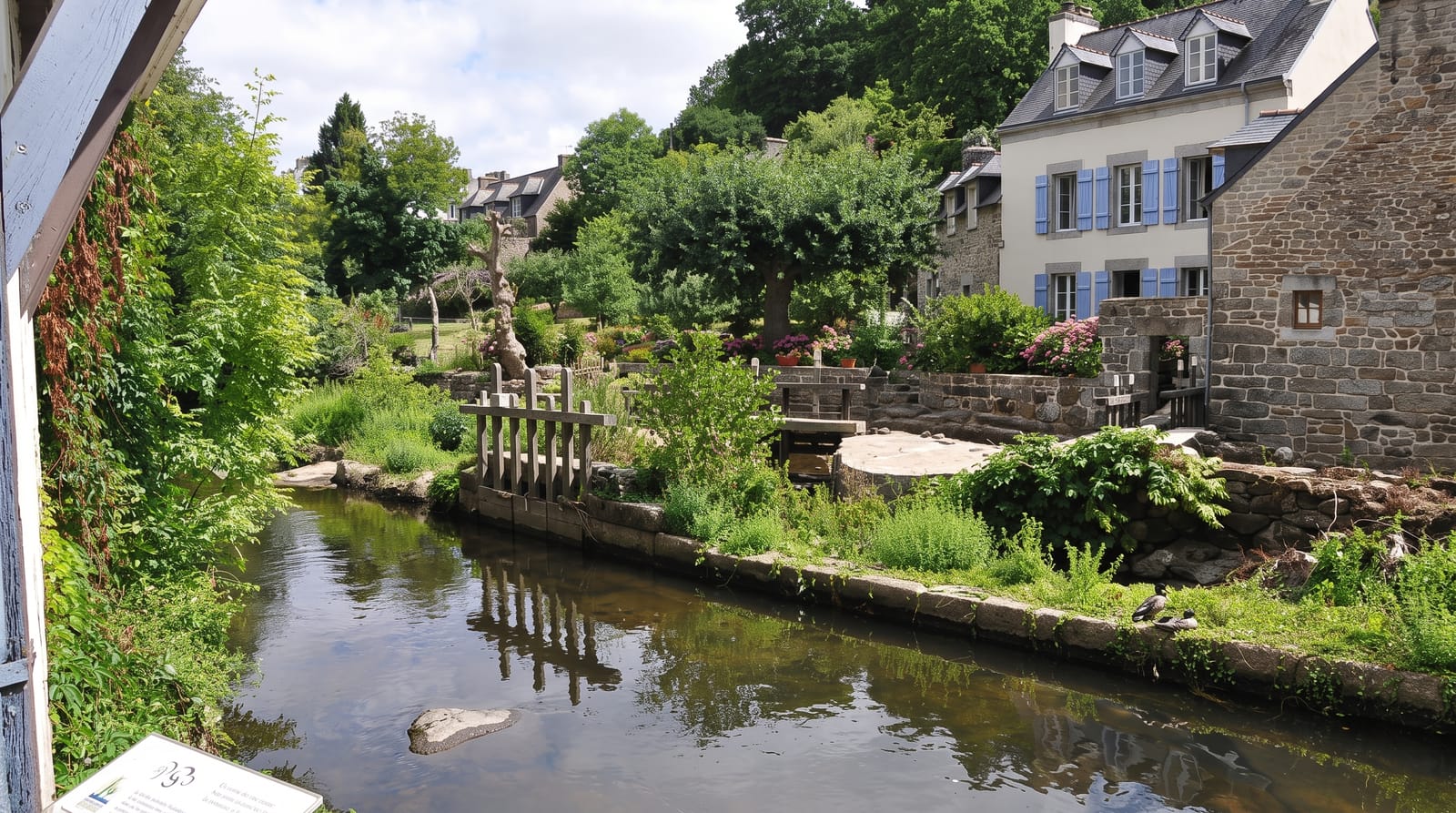
Painters came to Pont-Aven from the 1860s for cheap lodging and a landscape that felt unspoiled, and by 1888 Gauguin, Emile Bernard and others were working here on something new: flat areas of unmodelled colour enclosed by dark outlines, called cloisonnism, and a willingness to paint what was imagined rather than observed. Gauguin's Vision After the Sermon was made here. The chapel of Tremalo above the village holds the wooden crucifix he painted as The Yellow Christ. The Aven runs through the village past a string of watermills, and the local butter biscuit, the galette de Pont-Aven, is made in the town.
What's there
- The Pont-Aven museum - work by Gauguin's circle and the school that followed.
- Tremalo chapel - the wooden Christ that became The Yellow Christ.
- The watermills - mills along the Aven through the village.
- The Bois d'Amour - the riverside wood the painters worked in.
When to go
April to October; the museum closes on Mondays in low season and in January. The village is crowded in July and August. Autumn light suits the wood.
What to expect
Most of the famous canvases are in Paris and abroad, not here. The village is small and heavily commercialised with galleries and biscuit shops. Parking is difficult in season.
Nearby
Concarneau lies west; Quimperle is east.
Key facts
Source: Wikidata, item Q238377, read on 18 October 2026.
What to pack for Pont-Aven
Chosen from what this place is for. Tap a kit for the full checklist.
- Comfortable walking shoes - Sightseeing means kilometres of pavement and cobbles daily. Find on Amazon
- A slim anti-theft daypack - Zips that close properly; keep it in front in crowds and on transit. Find on Amazon
- A refillable water bottle - Many cities have public fountains; save money and plastic. Find on Amazon
- A light layer + compact umbrella - For museum air-con and a sudden shower. Find on Amazon
Some links on this page are Amazon affiliate links - if you buy through them we may earn a small commission at no extra cost to you.
All packing kitsPlan your trip
Where to start if Pont-Aven is going on the list.
Booking links on this page are affiliate links - if you book through them we may earn a small commission at no extra cost to you. It never changes what we write about a place.
Opening times, ticket prices and seasonal closures change - check the official source before you go: official site.