Limoges
A porcelain city built on a kaolin deposit found nearby in 1768, with a station like a cathedral.
Updated 21 October 2026
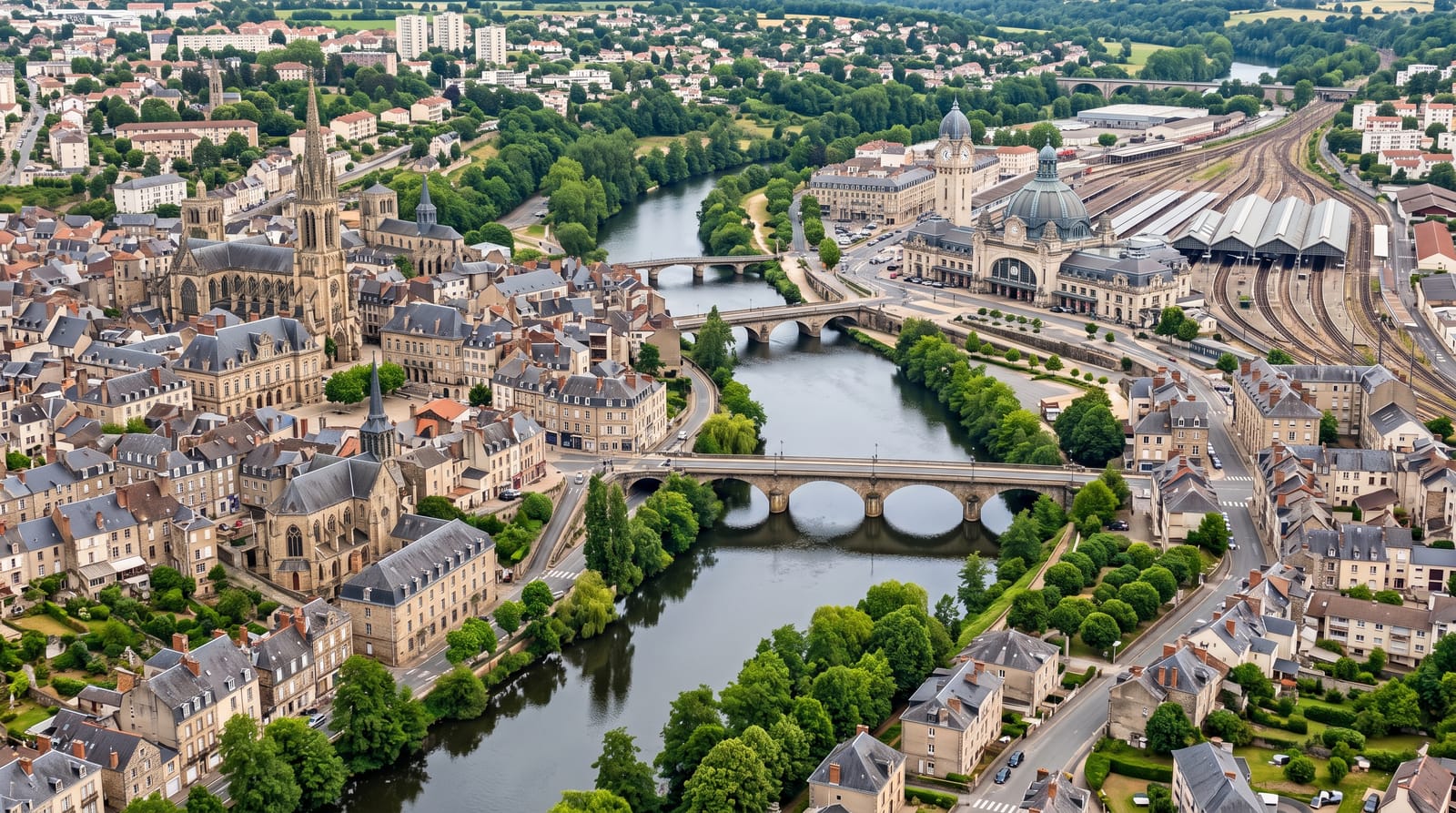
AI illustration
Hard-paste porcelain needs kaolin, and until a deposit was found at Saint-Yrieix near Limoges in 1768 France could not make it; within decades the city had become the national centre, and Limoges porcelain is still made here. The Musee Adrien Dubouche holds one of the largest ceramics collections in the world, tracing the material from China through Europe. Limoges also produced painted enamel on copper from the twelfth century, a technique with its own museum representation. The Benedictins railway station of 1929, with a copper dome and a sixty-seven-metre clock tower, is one of the more extravagant stations in France.
History
The Romans founded the town around 10 BC as Augustoritum, "rito" being Gaulish for a ford, with an amphitheatre 136 by 115 metres, a theatre, a forum and baths, and later renamed it after the Lemovices, from whom come Limoges and Limousin. Saint Martial is said to have brought Christianity around 250, and as the open city was abandoned in the late 3rd century people gathered on the more defensible Puy Saint-Étienne; from the 9th century another town grew around the Abbey of Saint-Martial, which from the 11th century made Limoges a flourishing artistic centre with its own school of music. By the 13th century the centre was two walled towns, the bishop's city by the Vienne and the castle around the abbey, and in 1370 the city was sacked by the Black Prince and never fully recovered (Wikipedia, Limoges).
What you'll find
- The Dubouche ceramics museum - a very large porcelain and ceramics collection.
- The Benedictins station - a domed 1929 station with a 60-metre tower.
- The enamel tradition - Limoges painted enamel on copper from the medieval period.
- The Chateau quarter - half-timbered lanes and the butchers' street.
When to go
April to October; the museum closes Tuesdays. Factory shops and some workshops run visits on weekdays. Autumn is quiet and pleasant.
What to expect
Working factories mostly show shops rather than production. Much porcelain sold as Limoges is decorated locally on imported blanks, so ask about the mark. The city is workaday outside the old quarters.
Nearby
Lake Vassiviere lies east; Oradour-sur-Glane is northwest.
Key facts
Source: Wikidata, item Q45656, read on 18 October 2026.
What to pack for Limoges
Chosen from what this place is for. Tap a kit for the full checklist.
- Comfortable walking shoes - Sightseeing means kilometres of pavement and cobbles daily. Find on Amazon
- Modest clothing - Shoulders and knees covered - the single most common requirement. Find on Amazon
- A slim anti-theft daypack - Zips that close properly; keep it in front in crowds and on transit. Find on Amazon
- A scarf or shawl - To cover the head or shoulders on entry; women especially at mosques. Find on Amazon
Some links on this page are Amazon affiliate links - if you buy through them we may earn a small commission at no extra cost to you.
All packing kitsPlan your trip
Where to start if Limoges is going on the list.
Booking links on this page are affiliate links - if you book through them we may earn a small commission at no extra cost to you. It never changes what we write about a place.
Opening times, ticket prices and seasonal closures change - check the official source before you go: official site.