Colmar
The prettiest town on the Alsace wine route - candy-coloured half-timbered lanes, the canals of Little Venice and one of art history's most powerful altarpieces.
Updated 19 October 2026

AI illustration
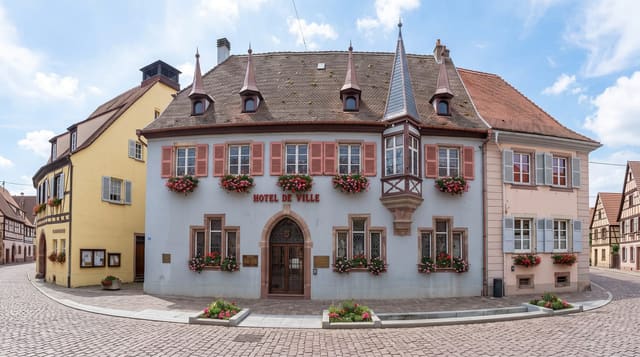
Colmar looks the way children draw fairy-tale towns: crooked half-timbered houses painted rose, mint and buttercup, window boxes overflowing, and the flower-hung canals of the Little Venice quarter reflecting it all back doubled. The town anchors the Alsace wine route and pours its rieslings and gewurztraminers in tasting rooms on every second lane - but it also guards one of European art's great shocks: the Isenheim Altarpiece in the Unterlinden Museum, a wrenching, visionary masterpiece painted for a plague hospital five centuries ago, worth the trip on its own. Add beautifully preserved merchant houses and a December market to rival Strasbourg's, and Colmar earns its postcard reputation honestly.
History
Colmar is first mentioned by Charlemagne in his chronicle of the Saxon wars, and in 884 the emperor Charles the Fat held a diet here. Frederick II made it a free imperial city in 1226, and in 1354 it joined the Décapole league of Alsatian cities; it adopted the Reformation in 1575, was held by the Swedish army for two years from 1632 during the Thirty Years' War, and gained its first town library in 1634. Louis XIV took the city in 1673 and it was ceded to France by the Treaties of Nijmegen in 1679. In 1863 the Colmar Treasure, a hoard of precious objects hidden by the town's Jews during the Black Death, was found here (Wikipedia, Colmar).
What to look for
- Little Venice - the canal quarter by flat-bottomed boat or slow foot.
- The Isenheim Altarpiece - the Unterlinden's devastating, unmissable masterpiece.
- The old town's merchant houses - Pfister House and its carved, painted neighbours.
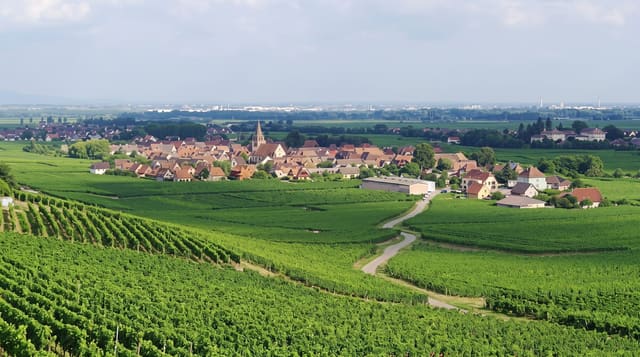
- The wine route villages - Eguisheim, Riquewihr and Kaysersberg minutes away by car or bike.
When to go
Spring through early autumn drapes the town in its famous flowers; the September harvest animates the villages around it; December's Christmas markets are storybook-grade. It is a year-round town - even foggy winter mornings flatter the colours.
What to expect
Colmar's beauty is no secret - summer and December middays move at shuffle pace through the narrowest lanes, and Little Venice boat queues grow long. Sleep in town and take the streets at eight in the morning to have the postcard to yourself. The town is compact; the second day belongs to the wine villages, which concentrate the same charm with fewer crowds. The altarpiece deserves an unhurried hour, not a glance.
Nearby
Eguisheim, Riquewihr and the wine route villages, Strasbourg up the line, and the Vosges ridge walks above the vineyards.
Key facts
Source: Wikidata, item Q130994, read on 18 October 2026.
What to pack for Colmar
Chosen from what this place is for. Tap a kit for the full checklist.
- Padded shorts - The one thing that makes a full day in the saddle bearable. Find on Amazon
- Comfortable walking shoes - Sightseeing means kilometres of pavement and cobbles daily. Find on Amazon
- Helmet - Bring your own if you have a good one; rentals vary wildly. Find on Amazon
- A slim anti-theft daypack - Zips that close properly; keep it in front in crowds and on transit. Find on Amazon
Some links on this page are Amazon affiliate links - if you buy through them we may earn a small commission at no extra cost to you.
All packing kitsPlan your trip
Where to start if Colmar is going on the list.
Booking links on this page are affiliate links - if you book through them we may earn a small commission at no extra cost to you. It never changes what we write about a place.
Opening times, ticket prices and seasonal closures change - check the official source before you go: official site.