Chateau des Ducs de Bretagne
A grey fortress outside and a white palace inside, holding the city museum of Nantes in thirty-two rooms.
Updated 12 October 2026
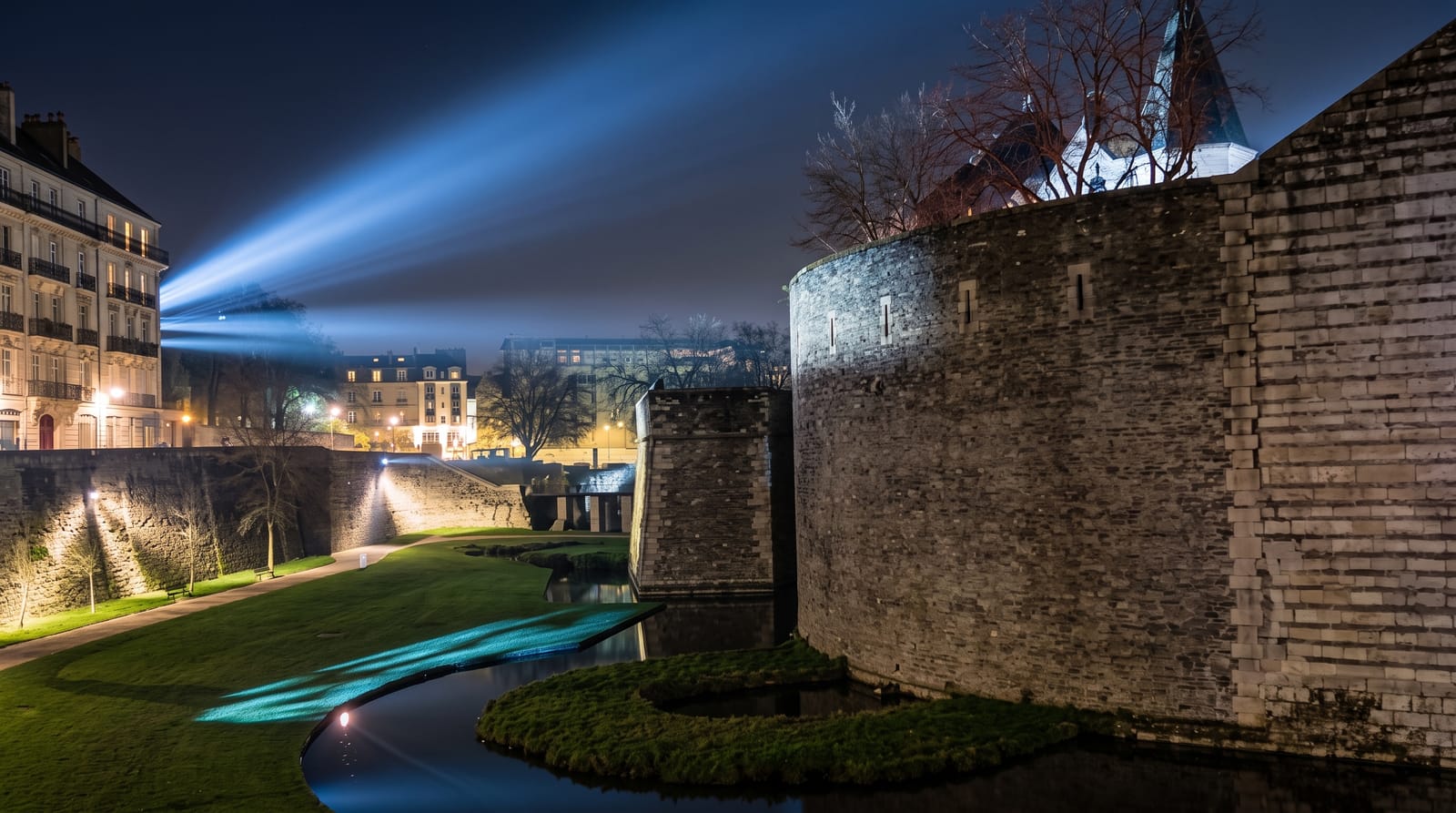
AI illustration
The castle was rebuilt from 1466 by Francis II, last duke of an independent Brittany, and finished by his daughter Anne, who became queen of France twice; the Edict of Nantes was signed here in 1598. Its two characters are striking: from outside it is a defensive ring of grey schist towers and a moat, and from the courtyard it is a light tuffeau limestone palace with dormers and a carved staircase. The ramparts can be walked for free around most of the circuit. Inside, the Nantes history museum runs to thirty-two rooms and does not avoid the city's role in the Atlantic slave trade, which it treats at length.
The main sights
- The two faces - grey fortress outside, white palace in the courtyard.
- The rampart walk - a free circuit of the walls above the moat.
- The city museum - thirty-two rooms on Nantes and its trade history.
- The slave trade rooms - the museum's direct treatment of the port's past.
When to go
Year-round; the courtyard and ramparts are open daily and free, the museum closes Mondays outside summer. Evenings light the walls well.
Practical notes
The museum is large and text-heavy, and English translation is partial in places. The rampart walk closes in high wind. Ticket queues build in July and August.
Nearby
The Machines de l'Ile lie across the river; Nantes cathedral is a short walk.
What to pack for Chateau des Ducs de Bretagne
Chosen from what this place is for. Tap a kit for the full checklist.
- Comfortable walking shoes - Sightseeing means kilometres of pavement and cobbles daily. Find on Amazon
- Modest clothing - Shoulders and knees covered - the single most common requirement. Find on Amazon
- A slim anti-theft daypack - Zips that close properly; keep it in front in crowds and on transit. Find on Amazon
- A scarf or shawl - To cover the head or shoulders on entry; women especially at mosques. Find on Amazon
Some links on this page are Amazon affiliate links - if you buy through them we may earn a small commission at no extra cost to you.
All packing kitsPlan your trip
Where to start if Chateau des Ducs de Bretagne is going on the list.
Booking links on this page are affiliate links - if you book through them we may earn a small commission at no extra cost to you. It never changes what we write about a place.
Opening times, ticket prices and seasonal closures change - check the official source before you go: official site.