Saaremaa
The largest island, and the one place Estonians themselves treat as a separate country - dolomite, juniper, windmills and a slower clock.
Updated 21 October 2026
AI illustration
Saaremaa is around 2,700 square kilometres, which makes it larger than several European countries' island holdings put together, and the mainland has always regarded it as its own place.
History
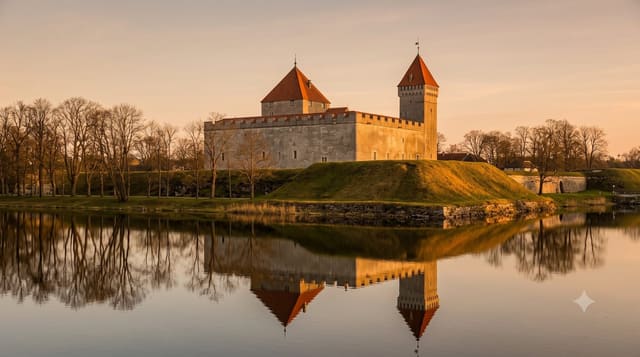
Saaremaa has been inhabited since at least 5000 BC, and ship burials of the Nordic Iron Age dated to 700-750 AD have been found on the Sõrve Peninsula. Known to the Icelandic sagas as Eysýsla, "the island district", and to most of the world as Ösel from the 13th century, it was the wealthiest county of ancient Estonia and home to seafaring raiders sometimes called the Eastern Vikings: the Chronicle of Henry of Livonia tells of sixteen ships and 500 islanders raiding what is now southern Sweden, and Saxo Grammaticus describes a battle off Öland in 1170 in which the Danish king Valdemar I gathered his whole fleet against raiders from Courland and Saaremaa. In 1227 the island was conquered in the Livonian crusade, and Kuressaare, at its southern end, grew up around the bishops' castle (Wikipedia, Saaremaa).
Highlights
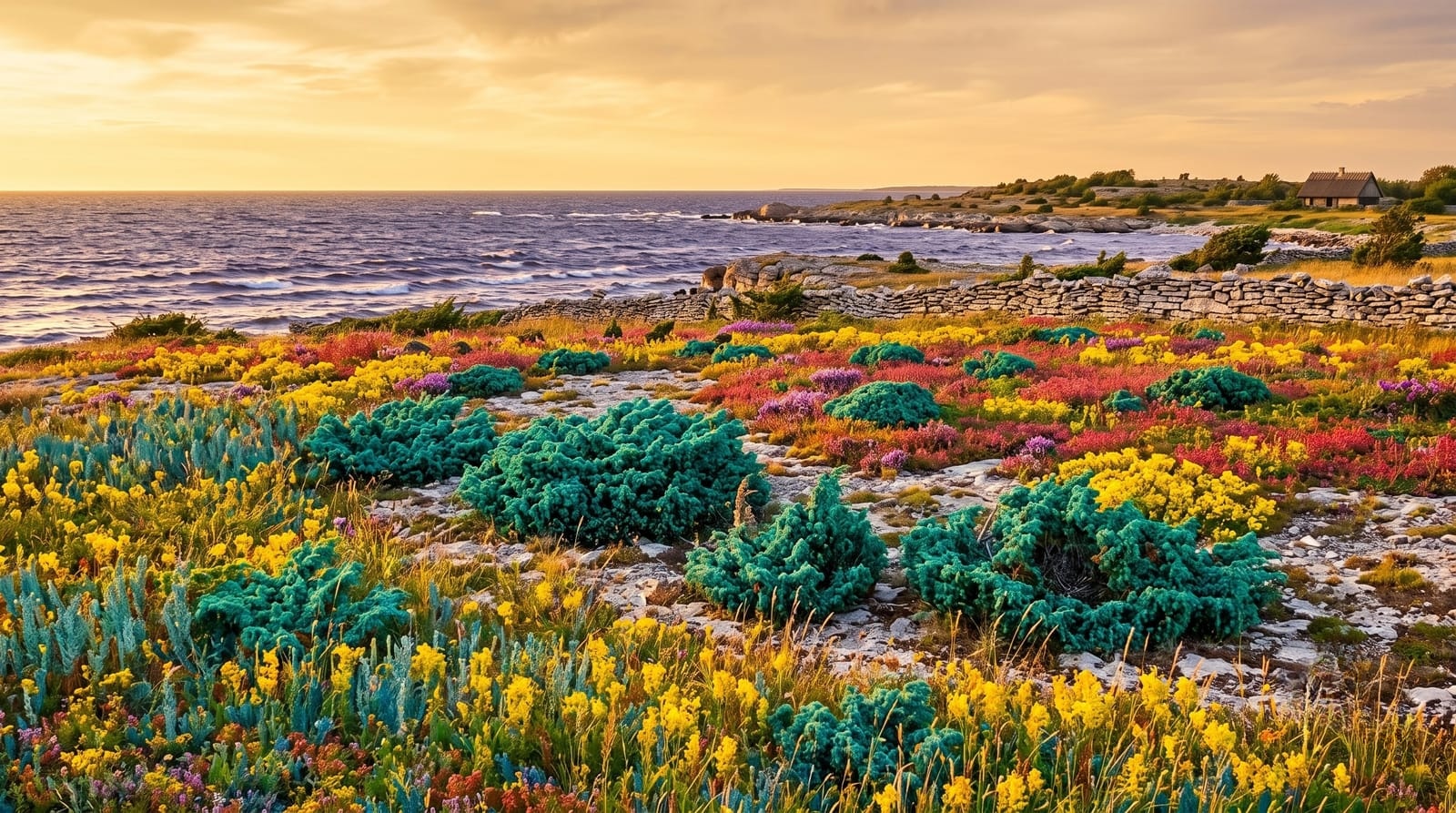
- The dolomite ground - flat to gently rolling country, with alvar meadow where thin soil sits directly on rock.
- The vegetation - juniper heath, pine and mixed forest, and a coastline alternating between stony shore and reed.
- The building tradition - stone walls and thatched roofs still common, and more windmills per square kilometre than anywhere else in the country.
- Kuressaare - the only real town, at the southern end with its castle and spa hotels, the rest of the island being villages, farms and long empty roads.
When to go
June to August has the full ferry schedule, a warm sea and everything open, with the busiest weeks in July. May and September are the island at its best, with light and space and no queue for the ferry. Winter is very quiet, some ferries are disrupted by ice, and most visitor businesses close.
Practical notes
The ferry is the bottleneck. In July and August vehicle places sell out well in advance, and turning up without a booking can cost hours.
Distances are longer than the map suggests and public transport is sparse. Without a car or a bike you will be limited to Kuressaare and its immediate surroundings.
Nearby
Muhu island, which you cross on the way in, has the Koguva village museum and is worth a stop rather than a drive-through. Hiiumaa is reachable by a separate ferry from the north of the island.
Key facts
Source: Wikidata, item Q951302, read on 18 October 2026.
Opening times, ticket prices and seasonal closures change - check the official source before you go: official site.
Plan your trip
Where to start if Saaremaa is going on the list.
Booking links on this page are affiliate links - if you book through them we may earn a small commission at no extra cost to you. It never changes what we write about a place.
What to pack for Saaremaa
Chosen from what this place is for. Tap a kit for the full checklist.
- Reef-safe sunscreen - High SPF that will not bleach the coral you are swimming over. Find on Amazon
- Padded shorts - The one thing that makes a full day in the saddle bearable. Find on Amazon
- Quick-dry towel - A microfibre towel packs small and dries in minutes. Find on Amazon
- Helmet - Bring your own if you have a good one; rentals vary wildly. Find on Amazon
Some links on this page are Amazon affiliate links - if you buy through them we may earn a small commission at no extra cost to you.
All packing kits