Otepää Nature Park
Estonia's winter capital - a hilly moraine landscape of ski trails, lakes and small farms that turns into hiking and mountain-bike country in summer.
Updated 1 September 2026
Illustration
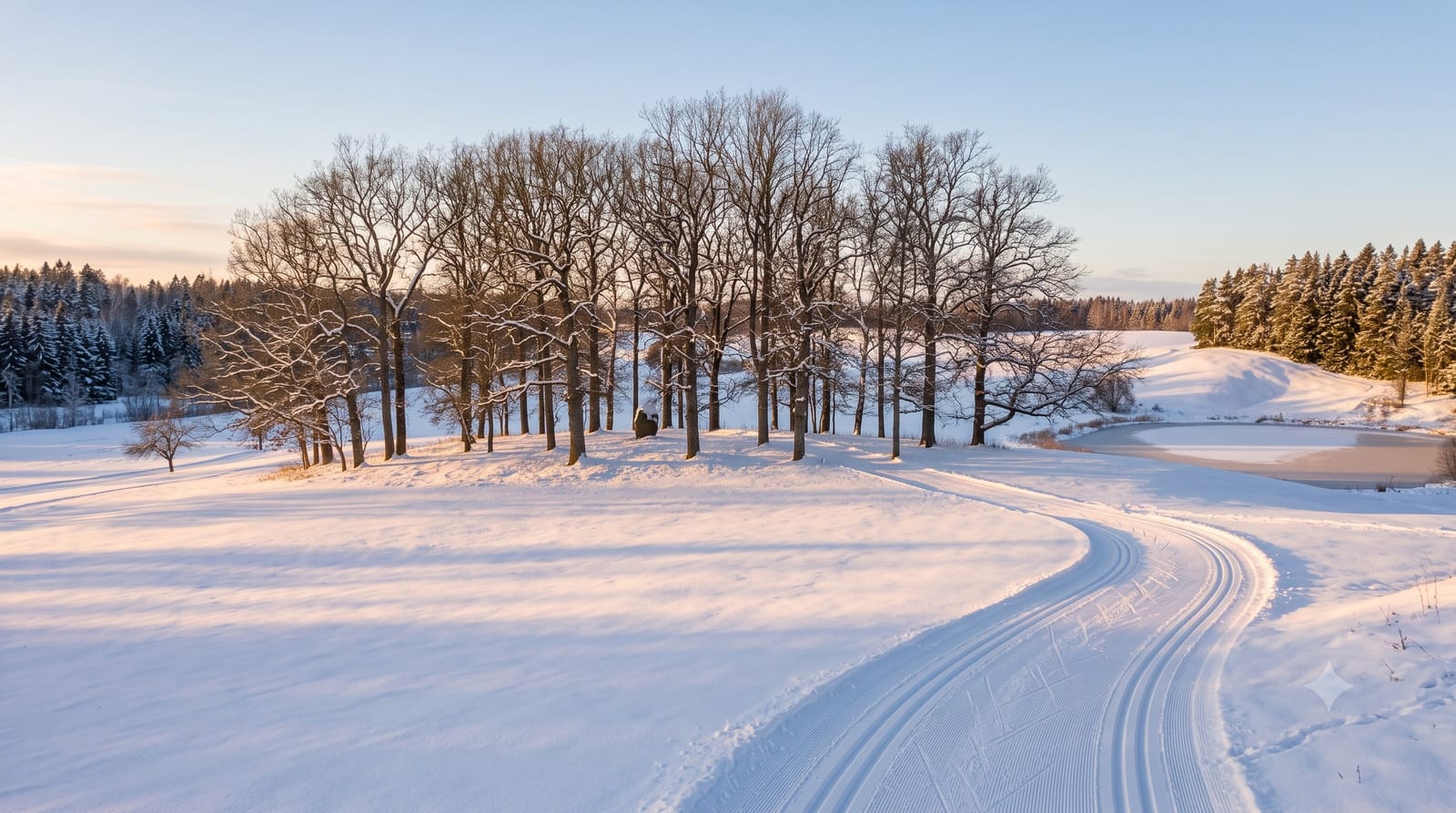
Otepää sits in some of the highest and most broken landscape Estonia has - short steep moraine hills, small lakes in the hollows, and enough relief to hold snow when the lowlands have none. It has been the country's winter sports centre since the 1930s, and the Tehvandi stadium hosts international cross-country and biathlon events.
What you actually see
- The ski network - prepared cross-country tracks through forest and over open hill, floodlit in places, with small downhill slopes alongside.
- The Tartu Marathon - Estonia's biggest recreational ski event, setting off from here each February on its 63 km run to Elva.
- Pühajärv - the largest lake, with a lakeside path and old oaks.
- The summer landscape - the same tracks as hiking and mountain-bike routes, through hay meadows and views that in Estonian terms count as sweeping.
When to go
January to March is the ski season, when the town is at its busiest and most alive. June to September is for swimming in Pühajärv, cycling, and the hills under green. Late September brings autumn colour across the moraine with almost nobody there. Thaw periods in December and March are the ones to avoid, when the tracks turn to slush.
Honest expectations
Snow is no longer reliable. Warm winters have cut the season short repeatedly, and artificial snow now covers the core stadium loops rather than the whole network - check conditions rather than the calendar.
The hills are small. This is rolling country, not mountains, and downhill skiing here is a nursery-slope affair.
Nearby
Pühajärv is on the edge of the town. Tartu is an hour north, and Karula National Park is about forty minutes southwest.
What to pack for Otepää Nature Park
Chosen from what this place is for. Tap a kit for the full checklist.
Plan your trip
Where to start if Otepää Nature Park is going on the list.
Booking links on this page are affiliate links - if you book through them we may earn a small commission at no extra cost to you. It never changes what we write about a place.
Opening times, ticket prices and seasonal closures change - check the official source before you go: official site.