Kama
A roasted flour mix of rye, barley, oat and pea, stirred into buttermilk - peasant survival food that turned into a national flavour and then into dessert.
Updated 1 September 2026
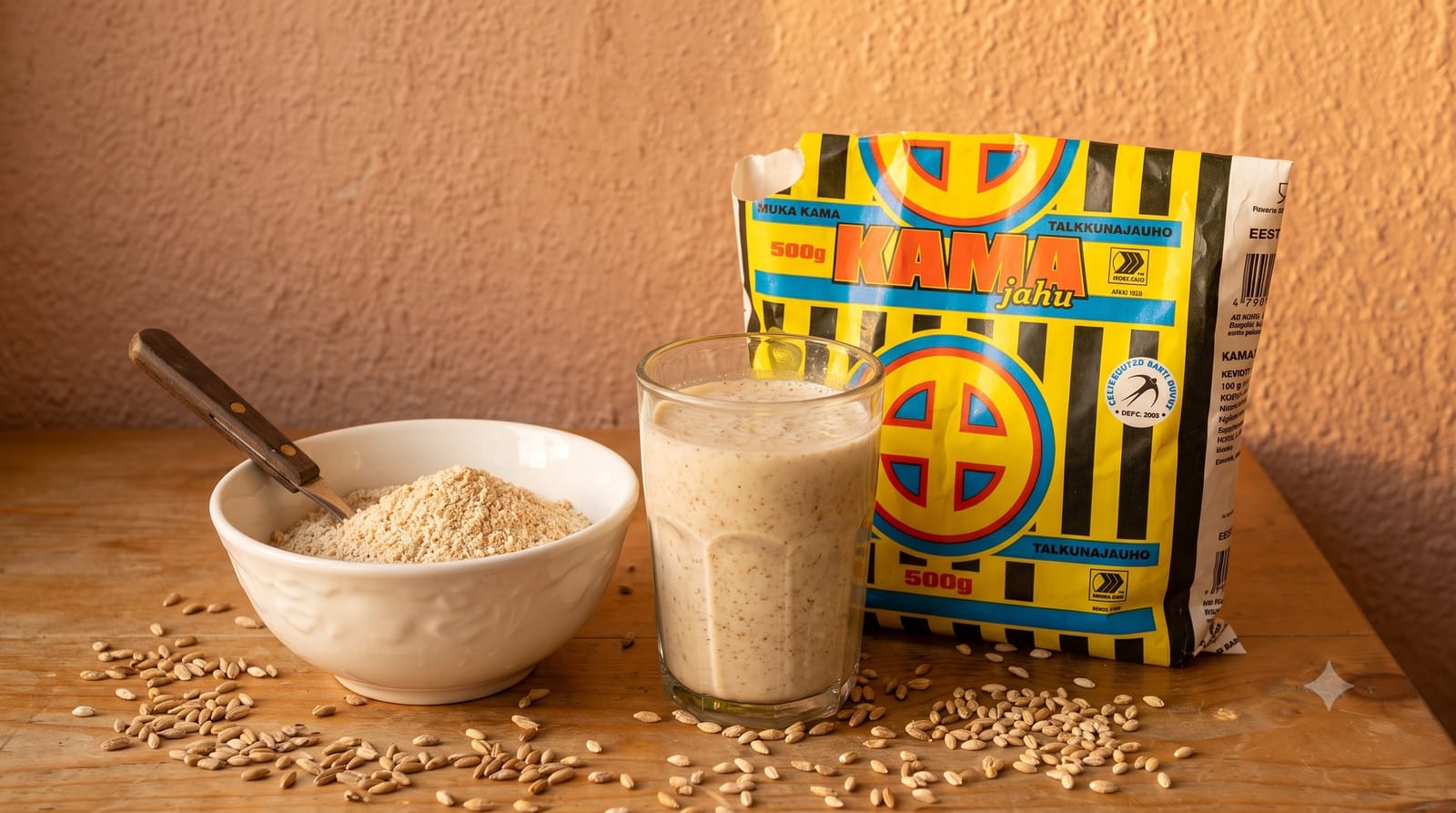
Illustration
Kama started as a way to make grain edible without cooking. The four grains - rye, barley, oat and dried pea - are roasted and milled together, and the resulting flour can be eaten straight, mixed with sour milk or buttermilk. It kept in a sack, needed no fire, and travelled with people working away from home.
What you actually see
- The flour - a fine tan-coloured powder that smells strongly of toasted grain.
- The four grains - rye, barley, oat and dried pea, roasted and milled together.
- The traditional dish - kama stirred into kefir or buttermilk with a little sugar, eaten cold as a summer meal or a breakfast.
- The modern versions - kama mousse, cheesecake, truffles and ice cream, all standard on dessert menus now.
When to go
Year-round, and it takes no planning. A packet of kama flour costs very little in any supermarket and travels well, which makes it one of the better edible souvenirs. Cafés and restaurants serve the mousse version most often, and it is the easiest introduction. Some market stalls sell it already mixed with cream or made up as a dessert.
Honest expectations
Plain kama in buttermilk is an acquired taste - dry, grainy and sour, and rarely loved on first contact by anyone who did not grow up with it. The dessert versions are much more approachable and are what most visitors actually enjoy.
The flour is not a drink mix. Stirred into water it is unpleasant; it needs a cultured dairy base.
Nearby
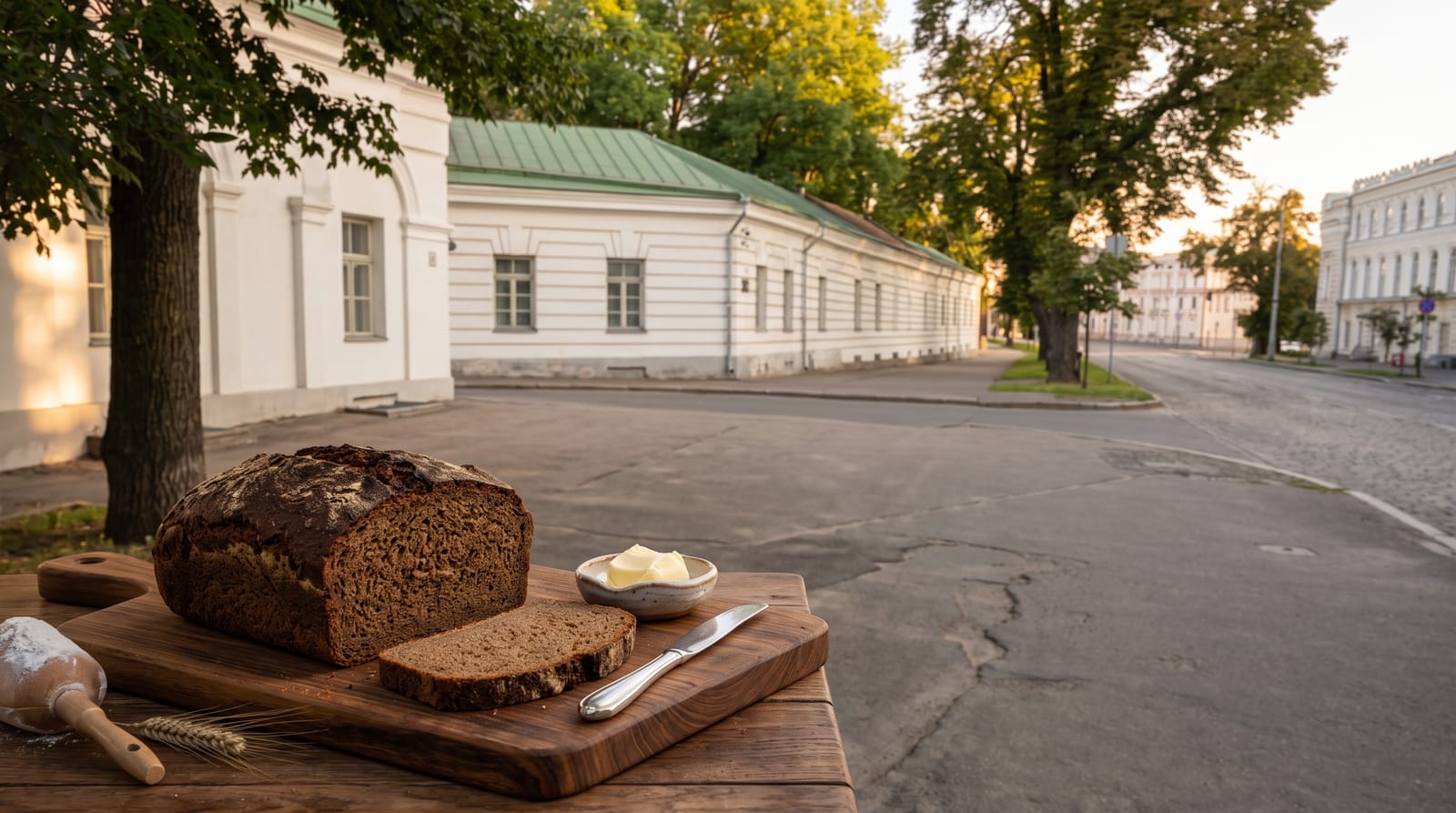
Both the Balti Jaam market in Tallinn and the Tartu market hall sell kama alongside the black bread and dairy it belongs with.
What to pack for Kama
Chosen from what this place is for. Tap a kit for the full checklist.
Plan your trip
Where to start if Kama is going on the list.
Booking links on this page are affiliate links - if you book through them we may earn a small commission at no extra cost to you. It never changes what we write about a place.
Opening times, ticket prices and seasonal closures change - check the official source before you go: official site.