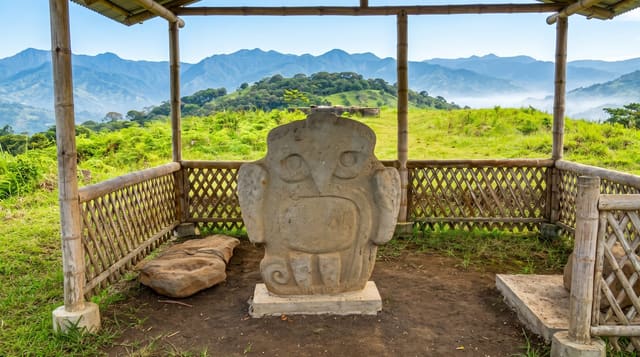
Cihuatan Archaeological Site
The largest archaeological site in El Salvador, a city founded after the Maya collapse and burned around 1100.
Updated 1 September 2026
Cihuatan covers around three square kilometres on a plain north of San Salvador, making it the largest archaeological site in the country, and it was founded around 900 AD after the collapse of the southern Maya cities, apparently by a population arriving from central Mexico, since the architecture and the ceramics show strong central Mexican influence. It had a ceremonial centre with a pyramid, ball courts, plazas and enclosures, and it was burned and abandoned around 1100. Excavation and consolidation have exposed the western ceremonial area, which is what visitors see, with the pyramid, two ball courts and platforms, and a small site museum. Much of the site remains unexcavated under grass.
Highlights
- The pyramid - the main structure of the ceremonial centre.
- The ball courts - two courts in the western ceremonial area.
- Plazas and platforms - the consolidated structures around them.
- The site museum - the small display of finds at the entrance.
When to go
November to April in the dry season; the rains make the grounds muddy and the grass high. Mornings are cooler; there is little shade on the site. It closes on Mondays.
Before you go
Only a small fraction of the site is excavated and most is grass-covered mounds. Interpretation is limited and largely in Spanish. There is very little shade. The museum is small.
Nearby
Aguilares lies south; Suchitoto is east.
What to pack for Cihuatan Archaeological Site
Chosen from what this place is for. Tap a kit for the full checklist.
- Comfortable walking shoes - Sightseeing means kilometres of pavement and cobbles daily. Find on Amazon
- A slim anti-theft daypack - Zips that close properly; keep it in front in crowds and on transit. Find on Amazon
- A refillable water bottle - Many cities have public fountains; save money and plastic. Find on Amazon
- A light layer + compact umbrella - For museum air-con and a sudden shower. Find on Amazon
Some links on this page are Amazon affiliate links - if you buy through them we may earn a small commission at no extra cost to you.
All packing kitsPlan your trip
Where to start if Cihuatan Archaeological Site is going on the list.
Booking links on this page are affiliate links - if you book through them we may earn a small commission at no extra cost to you. It never changes what we write about a place.
Opening times, ticket prices and seasonal closures change - check the official source before you go: official site.